Photo Ark Milestone Reveals Shifting Conservation Dynamics, Not Solutions, for Asia's Biodiversity
Documenting species under human care may reflect a loss of natural decision-making power in ecosystems.
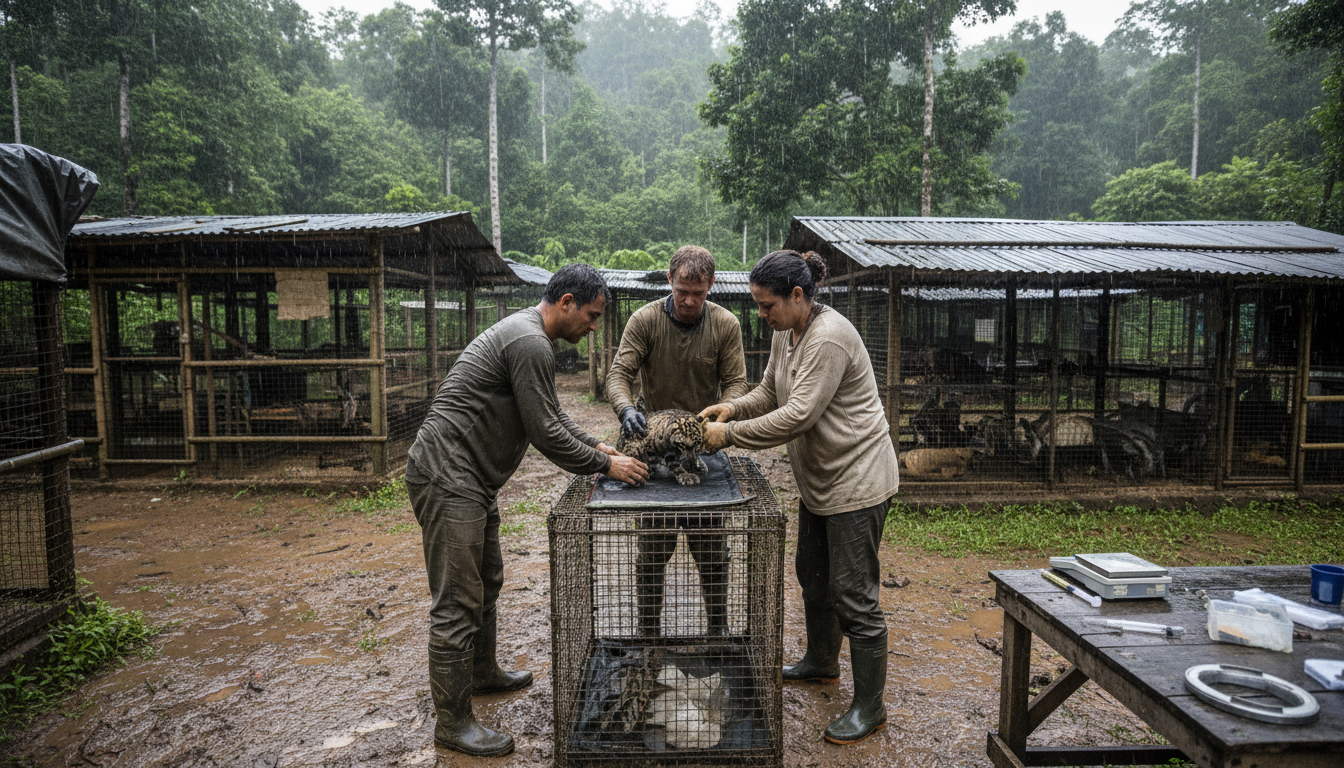
Joel Sartore’s Photo Ark, marking 20 years with 18,000 animal species photographed, represents a significant cataloging effort. The project’s recent milestone, reported by Mongabay Asia on August 28, 2026, highlights its longevity and reach, with the 18,000th animal photographed in Australia. While Sartore identified a critically endangered red handfish (Thymichthys politus) as a likely candidate for this designation and noted a small moth at his Nebraska home as his last subject, the sheer volume of documented species prompts a structural analysis of conservation efforts, particularly as they relate to Asia-Pacific economies.
This photographic inventory, though extensive, primarily reflects the consequences of declining biodiversity rather than a fundamental shift in the underlying forces driving it. The project documents animals largely within human care, implying a reliance on ex-situ conservation—zoos, captive breeding programs, and rehabilitation centers. This approach, while critical for species on the brink, does not address systemic pressures on wild populations, which are pronounced across Southeast Asia.
The structural challenge in the region remains the expansion of resource extraction, agricultural conversion, and infrastructure development. These activities, often pursued for economic growth, directly impact natural habitats. A photographic record, however comprehensive, does not alter land-use policies, mitigate deforestation rates, or reduce the illegal wildlife trade. It serves as a visual record of what is being lost, but not a mechanism to prevent that loss.
The notion of ‘human care’ itself warrants examination. It indicates a scenario where species can no longer thrive independently, necessitating intervention. While the Financial Times, on an unspecified date, noted DC’s new National Geographic Museum of Exploration as a triumph, this institutionalization of conservation highlights a reactive posture. The decision-making power, which once resided with natural ecosystems, has effectively shifted to human institutions and, by extension, economic and political structures.
Furthermore, the Photo Ark’s focus on documenting individual species, irrespective of their origin, implicitly treats biodiversity as a collection of discrete units. This risks overlooking the complex, interconnected ecosystems that define the Asia-Pacific. The interdependence of species within a habitat is often more critical for long-term survival than the solitary existence of a few individuals in a controlled environment. The absence of a fundamental change in these larger environmental management policies means that while records accumulate, wild populations continue to face threats.
Some might argue that such high-profile projects raise public awareness, which in turn influences policy and funding. Mongabay Asia itself focuses on sustainability reporting, suggesting a perceived link between information dissemination and environmental action. However, the evidence for a direct, widespread structural shift in conservation policy driven solely by awareness campaigns remains limited in many parts of the Asia-Pacific. Governments frequently acknowledge environmental concerns while simultaneously approving projects with significant ecological footprints.
The real leverage for conservation in the region lies not in documenting the problem, but in fundamentally altering the economic incentives and regulatory frameworks that permit habitat destruction. Until the economic calculus for natural resource use shifts to fully internalize the costs of ecological degradation, the inventory provided by projects like the Photo Ark will continue to grow, primarily reflecting species maintained by human intervention, rather than those thriving in their natural state. The unresolved constraint remains the political will to prioritize ecological integrity over short-term economic gains, a decision still largely unmade across much of the continent.
Sources
Newsletter
Pacific Daily
A curated briefing from Thailand, Asia-Pacific and the world.