Philippine Impeachment Politics: A Structural Test of Judicial Independence
Senator-judge Pia Cayetano's expressed pressures highlight the systemic vulnerability of impeachment processes to political maneuvering, challenging the judiciary's perceived autonomy.
SINGAPORE
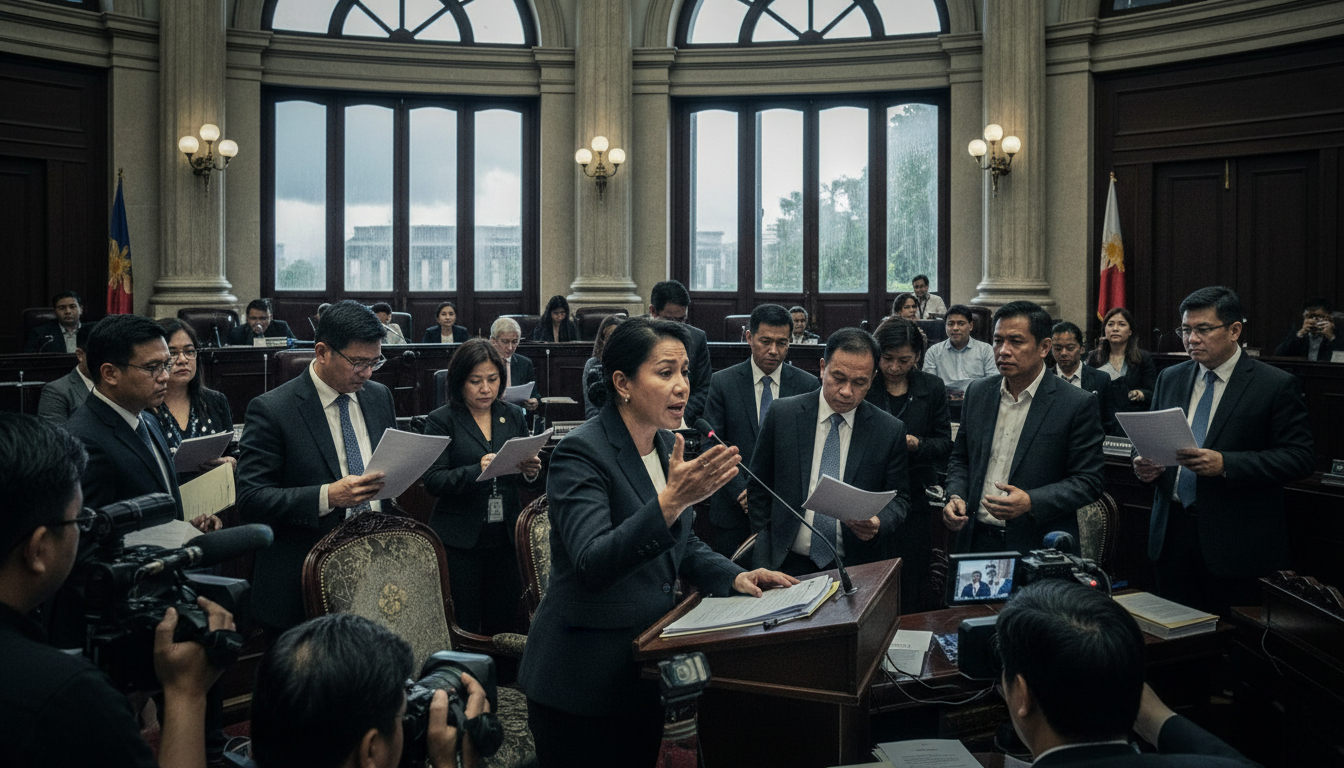
The reported emotional statement by Senator-judge Pia Cayetano to the impeachment court's amici curiae, expressing uncertainty amid legal actions against fellow minority senators, reveals a structural vulnerability within the Philippine political system. Her admission, made on 2026-09-17, that she 'genuinely didn't know what to do' underscores how political pressures can intersect with judicial roles, potentially compromising the impartiality of impeachment proceedings.
Impeachment trials in the Philippines are inherently politicized, as senators serve as judges. This dual role creates a direct conduit for political dynamics to influence judicial outcomes. The pressure on Senator Cayetano is not an isolated incident. Her earlier actions, such as amplifying a video, an action that led to an ethics complaint against her, illustrate how political alignments and public perception management can become entangled with judicial responsibilities. The context of minority senators facing cases, as she described, suggests a broader environment where political opposition may be subject to legal challenges, whether perceived or actual, intensifying the pressure on those in judicial roles.
This situation echoes historical precedents where the line between political accountability and judicial independence has blurred. The removal of a Philippine Chief Justice in 2012 over asset report omissions, as reported by The New York Times, demonstrated the potent political dimensions of such proceedings. While the current context involves a senator-judge grappling with personal and political pressures, the structural issue remains: can members of a political body effectively serve as impartial arbiters in a process that directly impacts political power?
The principal argument against this interpretation is that senators, as elected representatives, are expected to balance their political mandate with their constitutional duties. Their understanding of the political landscape could be argued to provide a more nuanced perspective in complex cases. Furthermore, legal mechanisms like amici curiae are designed to offer objective legal insights, theoretically insulating senator-judges from undue political influence. Senator Cayetano's engagement with amici curiae could be seen as an attempt to seek such insulation.
However, the perceived threat of legal action against political allies, as articulated by Senator Cayetano, inherently alters the decision-making calculus for a senator-judge. It shifts the focus from purely legal merits to considerations of political repercussions and solidarity. This dynamic raises questions about the long-term impact on judicial credibility and the separation of powers in the Philippines. The structural design of impeachment in the Philippines, where political actors are also judicial arbiters, consistently places immense pressure on individuals like Senator Cayetano.
The outcome of this particular impeachment trial, and the manner in which Senator Cayetano navigates her role, will depend on the resilience of institutional checks against political pressure and the willingness of individual actors to prioritize judicial impartiality over political expediency. The core constraint remains the inherent conflict of interest embedded in a system where political officeholders are tasked with judicial functions in politically charged proceedings.
Sources
Newsletter
Pacific Daily
A curated briefing from Thailand, Asia-Pacific and the world.