Persistent Violence Against Philippine Environmental Defenders Reflects Enduring Regional Policy Gap
The Philippines’ long-standing status as Asia's deadliest nation for environmental defenders highlights a tension between national development priorities and local ecological stewardship.
SINGAPORE
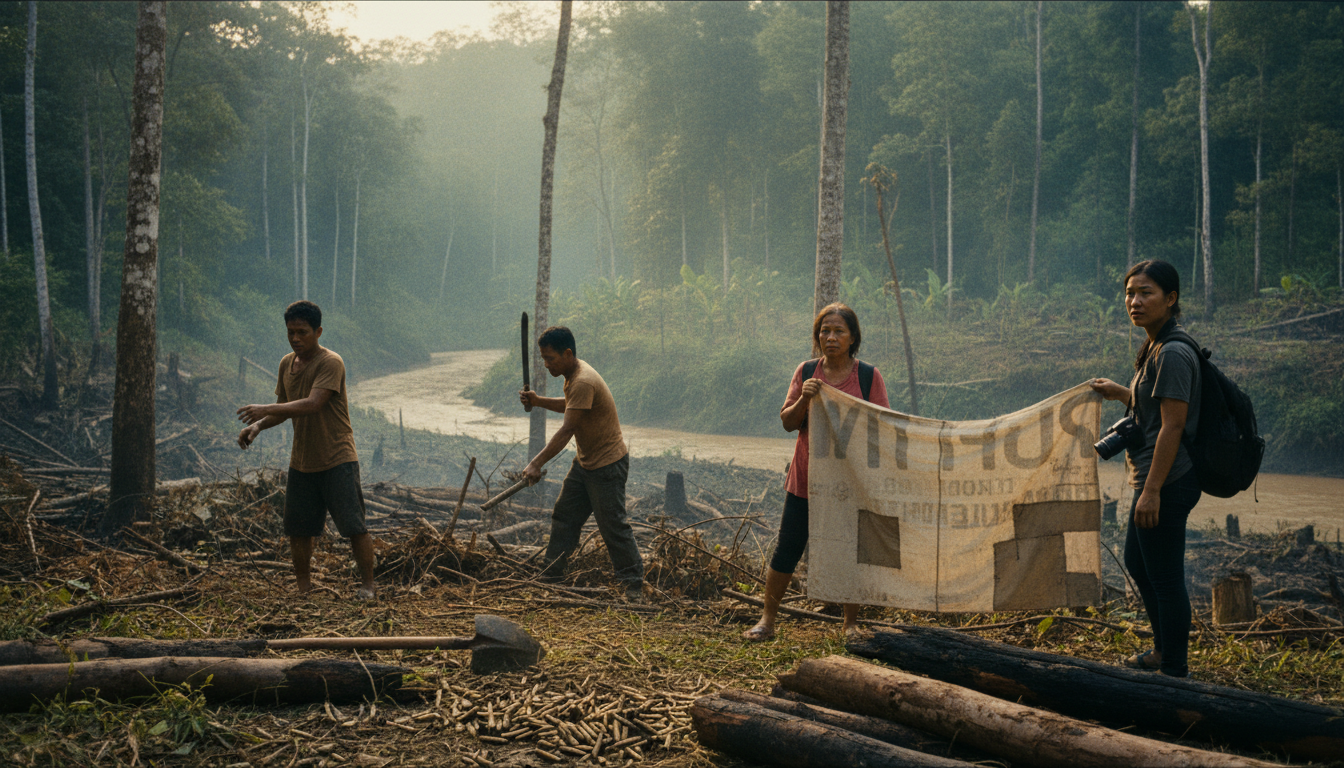
For thirteen consecutive years, the Philippines has been identified as the deadliest country in Asia for environmental defenders. The latest report, covering 2025, from the watchdog group Global Witness, indicates a continued pattern where violence is linked to government counterinsurgency programs and extractive projects. This persistent finding, drawn from various reports by Rappler over more than a decade—from 2017's observations to those in 2023, 2024, and 2025—signals a deep-seated regional challenge that extends beyond any single year’s events.
This pattern reflects a fundamental tension in the Asia-Pacific region: the pursuit of economic development, often through resource extraction, against the backdrop of local environmental concerns. Policies crafted in national capitals frequently intersect with, and sometimes override, the interests of communities directly dependent on natural resources. The reported linkages between state-led counterinsurgency efforts and violence suggest a framing where environmental advocacy is conflated with broader security threats, a dangerous convergence for those protecting their lands and livelihoods.
The repeated designation of the Philippines underscores a regional policy vacuum regarding the protection of those who resist ecologically damaging projects. While the specific context of the Philippines involves particular governmental programs and extractive industries, the underlying dynamic—where state apparatuses and corporate interests meet community resistance—is not unique. Neighboring countries, including Thailand, face similar pressures, albeit with varying manifestations of conflict.
It is reasonable to argue that the reported figures primarily reflect a specific situation within the Philippines, influenced by its internal political landscape and resource management practices. The data does not inherently detail violence levels in other Asian nations with similar development ambitions. However, dismissing the trend as purely idiosyncratic to the Philippines overlooks the shared structural conditions across the region where centralized economic planning often disproportionately impacts peripheral communities and ecosystems. The issue is not merely one of domestic law enforcement but of regional governance models that, intentionally or otherwise, marginalize environmental concerns in favor of industrial expansion.
The reported linkages between state-led counterinsurgency efforts and violence suggest a framing where environmental advocacy is conflated with broader security threats.
While the focus remains on the Philippines, the broader implication for the Asia-Pacific is that economic strategies favoring large-scale industrial or resource projects continue to generate conflict at the local level. Without a regional framework that robustly defends environmental advocates and integrates ecological safeguards into development planning, the costs of such policies will continue to be paid by those on the frontlines of environmental protection. The unresolved challenge remains how to reconcile national economic growth with the protection of local ecosystems and the communities reliant upon them, especially when policy decisions are made far from the affected coastlines and communities.
Sources
Newsletter
Pacific Daily
A curated briefing from Thailand, Asia-Pacific and the world.