Pacific Islands Forum Confronts the Cost of External Alignment
Former regional leaders warn that granting partner status to Israel compromises foundational positions on territorial self-determination
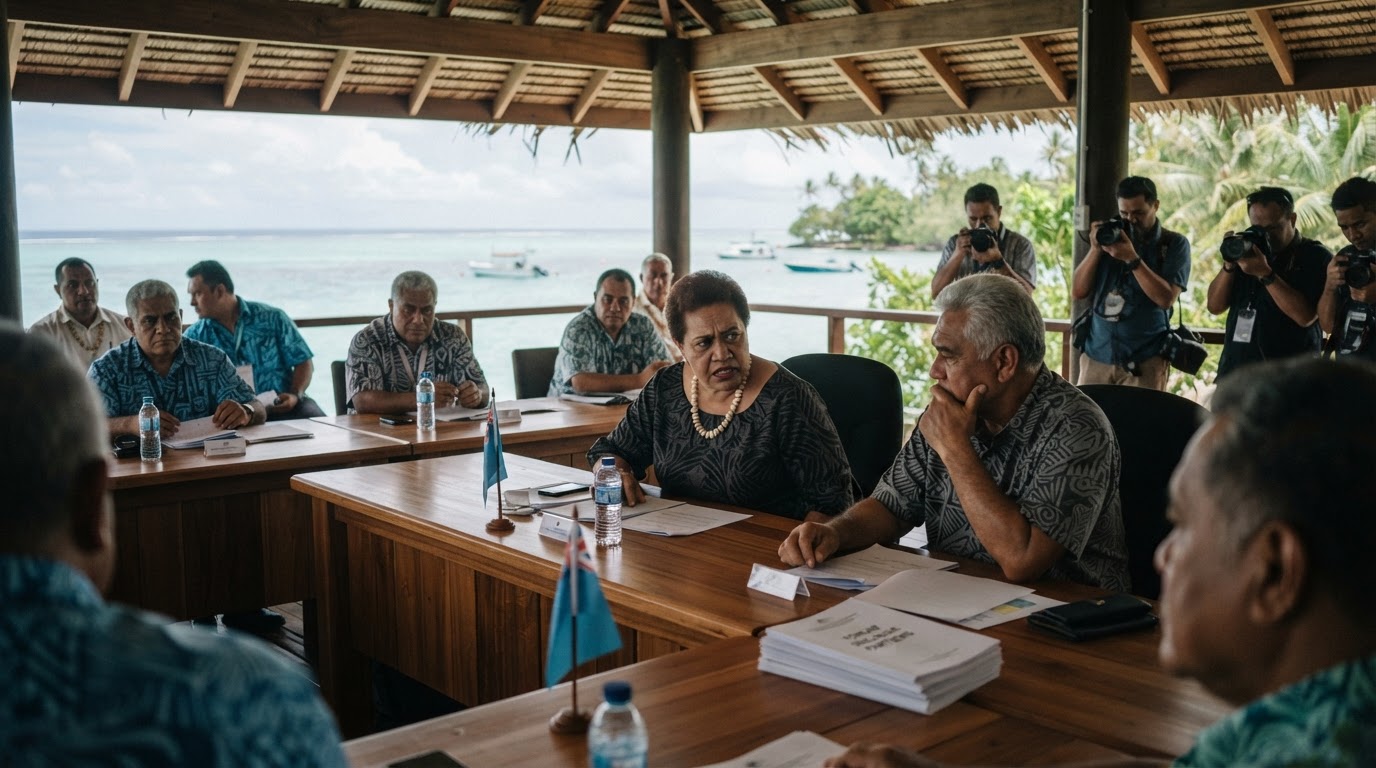
Diplomatic credibility behaves like balance sheet collateral. Once an intergovernmental body commits its standing to an external alliance, existing partners discover their relative leverage has been diluted.
The Pacific Islands Forum faces that structural correction following its decision to designate Israel as a sectoral partner. In response, the Pacific Elders' Voice—a council comprising former Pacific prime ministers, presidents and senior diplomats—formally called on the Forum to review and reverse the partnership agreement. The council's core assessment is direct: admitting Israel into formal regional mechanisms conflicts with regional commitments regarding international law and self-determination.
Institutional signals indicate an administrative trade-off. The Forum's primary historical currency has been moral cohesion around decolonisation and territorial sovereignty. Over decades, that agenda framed Pacific advocacy across forums such as the United Nations, shaping regional stances regarding Kanaky New Caledonia, French Polynesia, Bougainville and West Papua. By formalising sectoral partner status for a state actively constructing Israeli settlements across the occupied West Bank and conducting military operations in Gaza, the Forum introduces an institutional contradiction.
The Incentive Structure
External partnership agreements follow measurable transactional mechanics. For external states, securing sectoral status inside the Pacific Islands Forum provides diplomatic legitimacy across multilateral voting blocs. In exchange, regional secretariats typically anticipate technical engagement and strategic access. The transaction appears advantageous when evaluated purely as bilateral access.
Yet that balance sheet logic conceals an uneven distribution of costs. The Pacific Elders' Voice identified this asymmetry in its formal statement, warning that the agreement undermines the region's integrity.
The Forum's decision raised questions about the consistency of the region's positions on colonialism, human rights and self-determination.
The strategic dividend flows entirely to executive offices seeking immediate geopolitical resources. Conversely, the price is paid by movements relying on the Forum's ethical consistency to challenge metropolitan authorities such as France. An intergovernmental body cannot logically penalise territorial overreach within its home basin while validating settlement policy elsewhere. When foundational principles are subordinated to transactional access, smaller self-determination campaigns are effectively priced out of the regional agenda.
Divided Mandates
The central policy tension rests between executive expediency and institutional governance. Proponents of widening Forum partnerships contend that small island jurisdictions cannot afford diplomatic isolation in an era of constrained development resources. Securing formal channels with innovative external states delivers specialized capabilities directly to governing administrations. On that reading, strict adherence to ideological tests creates an unaffordable barrier to technical cooperation.
That argument mistakes short-term operational yield for long-term institutional solvency. The Forum's regional leverage has never derived from fiscal scale or military weight. Its singular institutional value in international bodies, including the United Nations, stems from collective solidarity on sovereign rights. If Forum leadership signals that foundational positions on territorial law can be set aside for technical partnerships, its authority to adjudicate territorial disputes in the Pacific Rim evaporates.
The resulting friction exposes a growing division between sitting administrations pursuing immediate bilateral partnerships and former statesmen defending the region's historical charter. That division will determine whether the Forum functions as an enduring normative bloc or merely as a transactional platform for rotating governments.
The immediate outcome now depends on whether sitting Forum leaders treat the elders' demand for a review as an enforceable constraint or dismiss it as ceremonial static.
Sources
Newsletter
Pacific Daily
A curated briefing from Thailand, Asia-Pacific and the world.