Nagoya's Asian Games logistics signal broader regional infrastructure strain
The challenge of housing athletes in Nagoya points to an underlying issue of readiness for large-scale events across Asia-Pacific economies, affecting future investment and tourism flows.
SINGAPORE
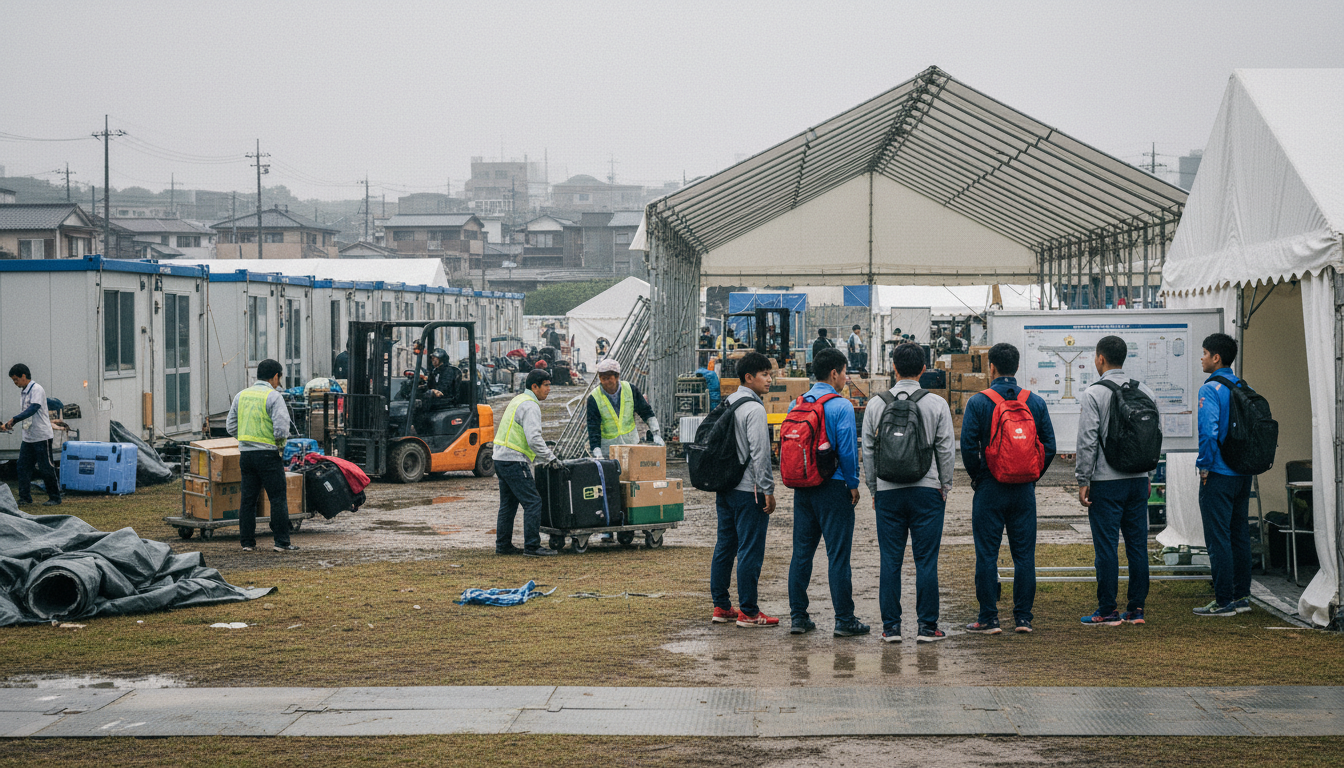
The Aichi-Nagoya 2026 Asian Games organizing committee has opted for unconventional athlete accommodation, including a chartered cruise ship and shipping-container huts. This decision, reported on 2026-09-17 by Rappler, follows an unexpected increase in participant numbers and the abandonment of initial Athletes' Village plans. The committee indicated a commitment to addressing complaints and improving living conditions, even as athletes face mixed-gender room assignments and entry delays.
This logistical pivot in Nagoya, a major Japanese city, represents more than a temporary workaround for a single event. It acts as a signal of a broader structural constraint impacting the Asia-Pacific region: the readiness of its urban infrastructure to absorb sudden, large-scale demands. Japan, a developed economy with a history of hosting international events, resorting to such measures suggests that even established players face limits. The incentive driving this shift is clear: a surge in participant numbers exceeding original projections, necessitating ad-hoc solutions to fulfill hosting obligations. This situation reflects a recalibration of expectations for event organizers across the region.
For economies like Thailand, currently positioning itself as a hub for both tourism and regional events, Nagoya's experience offers a critical lesson. The ability to host large influxes of people — whether for sports, conferences, or even sustained tourism growth — requires robust, scalable infrastructure. This includes not just accommodation but also transport, public services, and emergency response capabilities. Where a city like Nagoya struggles to meet a foreseen, albeit underestimated, demand for a major sporting event, it raises questions about the preparedness of other regional players that might be pursuing similar ambitions with fewer existing structural advantages.
The winners in this scenario are likely to be developers and logistics providers capable of delivering rapid, flexible, and modular solutions, much like the shipping-container huts now employed. The market for temporary, scalable infrastructure will see increased demand as host cities prioritize adaptability over fixed, long-term investments that may not always align with fluctuating event scales. Conversely, cities that rely solely on conventional, slow-to-adapt infrastructure may find themselves at a disadvantage in bidding for and executing major international events.
Looking ahead, the constraint remains the capacity of existing urban infrastructure. The Nagoya situation could influence investment patterns. Capital may increasingly flow towards projects that enhance flexibility and surge capacity, rather than solely permanent structures. For Thailand, this suggests an imperative to review its own infrastructure development plans, particularly for areas slated for significant tourist or event growth. A focus on resilient, adaptable systems will be key to avoiding similar logistical pressures and maintaining competitive advantage in the regional tourism and events market.
One counterargument suggests that Nagoya's situation is an isolated incident, a specific miscalculation rather than a systemic issue. The city, it could be argued, simply underestimated participant numbers, and its swift, if unconventional, response demonstrates adaptability. However, even an isolated miscalculation by a host of Japan's caliber indicates a narrow margin for error. If a developed economy faces such challenges for an event like the Asian Games, which involves established planning cycles, it implies that less mature markets could encounter even greater difficulties. The incentive to manage costs and timelines always exists, but this event highlights the tangible consequences when those incentives clash with unexpected scale. The outlook is that future event bids across the Asia-Pacific will likely feature more stringent scrutiny of accommodation and logistical contingency plans, driving a market shift towards more agile infrastructure solutions.
Sources
Newsletter
Pacific Daily
A curated briefing from Thailand, Asia-Pacific and the world.