Monsoon’s structural grip reveals underlying vulnerabilities in the Philippines
Persistent weather patterns, not individual systems, dictate long-term impact and policy response.
SINGAPORE
The Philippine Atmospheric, Geophysical and Astronomical Services Administration (PAGASA) reported on August 27, 2026, that a new low pressure area (LPA) has entered the Philippine Area of Responsibility (PAR). This LPA has a ‘medium’ chance of developing into a tropical depression, which would be named Pilandok. However, the primary weather influence affecting Luzon and Western Visayas remains the southwest monsoon, or ‘habagat’.
This recurring pattern of the southwest monsoon dominating weather across significant portions of the Philippines, independent of individual LPA developments, reveals a critical structural reality. It is not the potential naming of a tropical depression that holds the long-term decision-making power, but the sustained atmospheric condition. PAGASA has consistently identified the southwest monsoon as a major factor, as evidenced by reports on August 13, and August 4, 2026, which highlighted its ongoing impact even as various LPAs formed or dissipated.
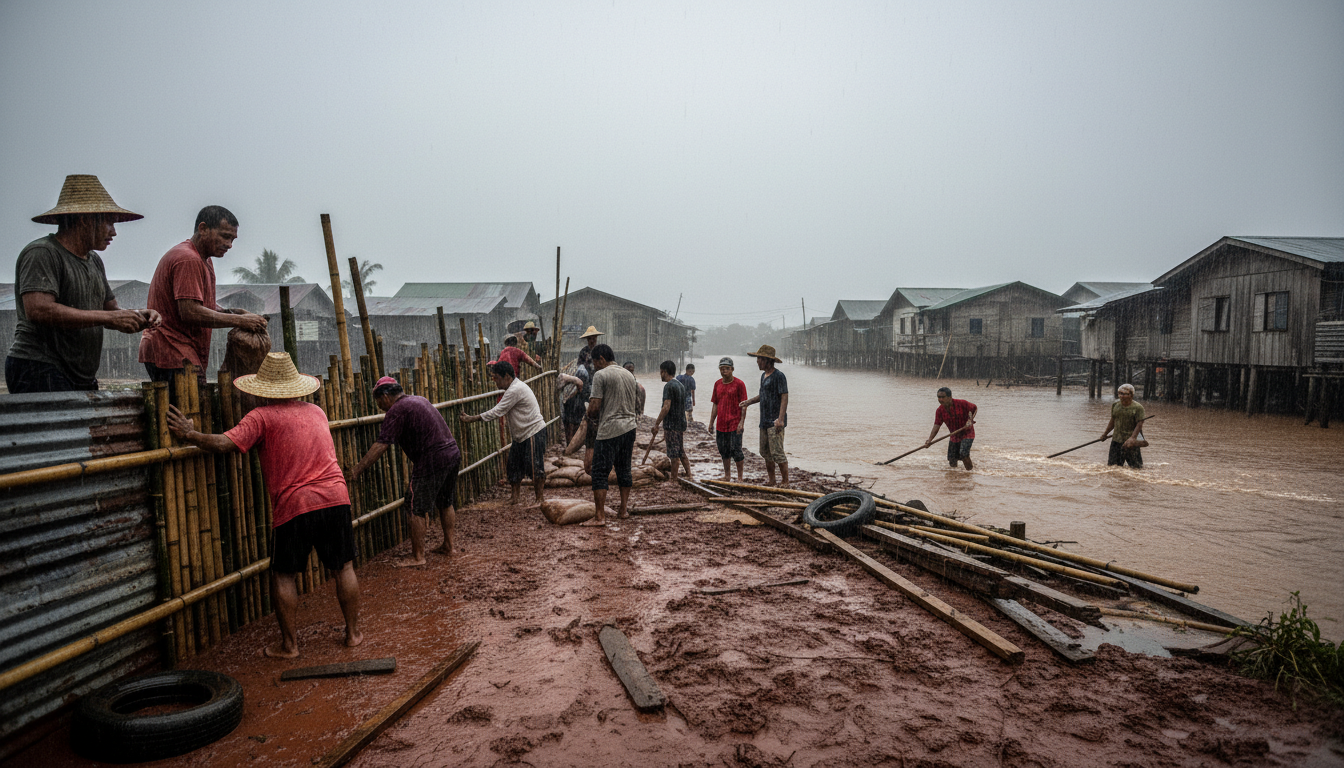
The implication is clear: while tropical depressions generate immediate alerts, the sustained southwest monsoon requires a different scale of policy and infrastructure adaptation. The focus often shifts to the acute threat of a named storm, yet the chronic effects of prolonged monsoon rains – on agriculture, infrastructure resilience, and public health – are arguably more significant in shaping the regional economy and societal stability. For an archipelago like the Philippines, sustained weather systems translate directly into structural challenges. Economic sectors are perpetually exposed, requiring a reassessment of land use, urban planning, and emergency preparedness beyond the immediate storm cycle.
One might argue that focusing on named storms provides clear, actionable targets for disaster response and international aid. This is a defensible position, particularly in the immediate aftermath of severe events. Named storms offer a singular point of focus for mobilization of resources and public awareness campaigns. However, this approach risks diverting attention and resources from the more fundamental, ongoing adaptation required to mitigate the cumulative impact of seasonal weather patterns. The challenge is not merely to survive individual typhoons but to build enduring resilience against a predictable, persistent force. The southwest monsoon is not a discrete event; it is a fundamental environmental condition that necessitates continuous, not episodic, policy interventions.
The unresolved constraint is therefore the perennial challenge of moving from reactive disaster response to proactive, structural adaptation. The outcome now depends on whether policymakers shift their focus from the episodic drama of named depressions to the underlying, persistent reality of the monsoon, and allocate resources accordingly.
Sources
Newsletter
Pacific Daily
A curated briefing from Thailand, Asia-Pacific and the world.