Michelle Yeoh’s Busan Honor Reveals Shifting Narratives Beyond Hollywood
The Busan International Film Festival’s recognition of Michelle Yeoh highlights a cultural juncture where Asian actors are asserting greater agency over their screen portrayals, moving beyond historical typecasting.
SINGAPORE
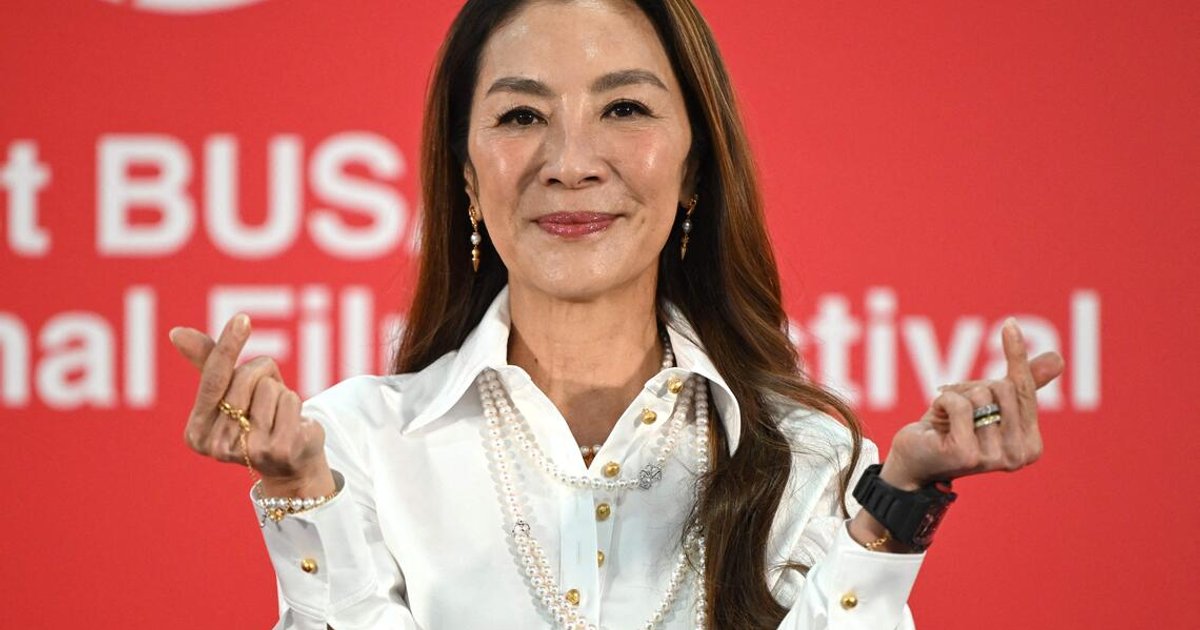
The Busan International Film Festival (BIFF) recently recognized Michelle Yeoh as its Asian Filmmaker of the Year. This acknowledgment extends beyond a singular career achievement, marking a particular juncture as she appeared at the 31st BIFF to present her film It's My Time. Her reflections on navigating Hollywood provide a lens into evolving perceptions of Asian representation in global cinema.
Yeoh’s journey, culminating in her 2023 Oscar win and an immortalisation on the Hollywood Walk of Fame in February 2026, has been defined by confronting Hollywood’s historical stereotypes. She cited the scarcity of complex roles for Asian actors and stated her desire to avoid promoting narrow images of Asian women. This perspective resonates across the Asia-Pacific region, where diverse cultural identities often struggle against simplified screen depictions.
Her career trajectory highlights a broader shift: Asian talent is increasingly moving from being seen primarily through a Western lens to actively shaping their own narratives. BIFF’s choice to celebrate her underscores this, aligning with Yeoh’s own stated goal of taking Asian cinema global. It suggests a growing acknowledgment within the industry that the “global” audience is increasingly diverse, demanding stories that reflect more than a single, dominant cultural viewpoint. This is not merely about more roles, but about richer, more authentic ones.
However, the path remains complex. While Yeoh’s prominence offers a powerful symbol, the systemic issues of typecasting and limited opportunities persist for many aspiring Asian actors. The industry continues to grapple with authentically integrating diverse voices without tokenism, a challenge extending from casting decisions to the fundamental storytelling process.
The conversation around representation must move beyond celebrating individual breakthroughs. It requires examining the underlying structures that have historically restricted the breadth of Asian stories on screen.
Malaysia's The Star newspaper observed in February 2026 that Yeoh's success meant "Malaysia's star shines in Hollywood." This observation points to the national pride associated with such achievements. Yet, it also hints at the burden placed upon a few prominent figures to carry the torch for an entire continent or cultural group. The question remains whether the industry is ready to support a broad ecosystem of Asian talent, allowing for a multitude of voices and experiences to emerge, rather than just a select few who break through the most formidable barriers.
Yeoh’s return with It’s My Time, her first Chinese-language film since her Oscar, carries a message: "Never give up." This sentiment, while personal, mirrors the collective striving within Asian cinema to gain wider recognition and respect. The BIFF honor, therefore, is not merely a retrospective nod to a distinguished career but an affirmation of a wider, ongoing cultural negotiation in film, reflecting an aspiration for stories that are globally accessible, yet deeply rooted in the specificities and complexities of Asian experiences, pushing back against the simplification often imposed by external gazes.
Sources
Newsletter
Pacific Daily
A curated briefing from Thailand, Asia-Pacific and the world.