Malaysia's Rule of Law Tested by Najib's Legal Maneuvers
A request to stay a 15-year sentence highlights ongoing tensions between legal procedure and public accountability, with regional implications.
SINGAPORE
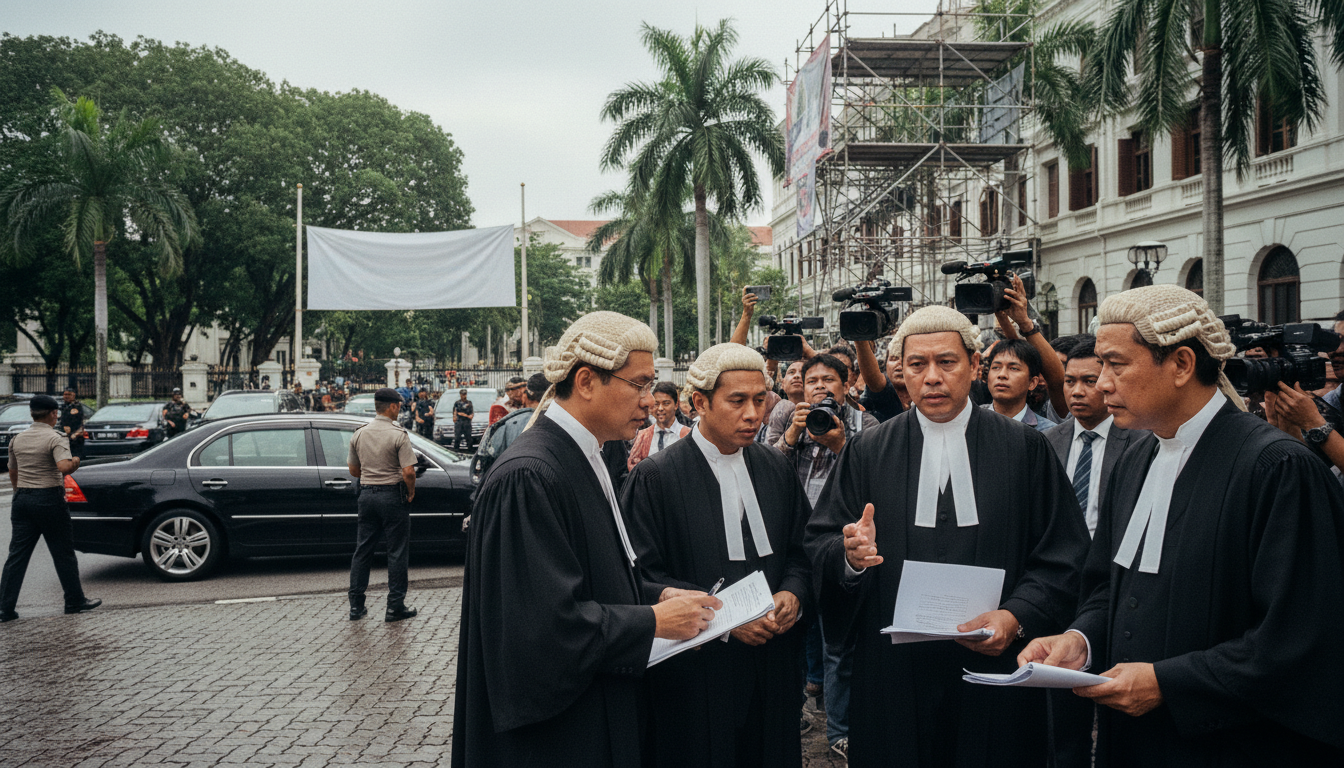
Former Malaysian Prime Minister Najib Razak, 73, has asked the Kuala Lumpur High Court to suspend a 15-year prison sentence. This sentence is related to his involvement in a multibillion-dollar corruption scandal. His lawyer, Muhammad Shafee Abdullah, stated this request was made on September 25, following a royal pardon Najib received a week prior for a separate conviction. The Kuala Lumpur High Court will decide on October 14 whether to grant the stay, which would be pending an appeal against his conviction.
This legal proceeding extends beyond a routine procedural matter. It signals ongoing pressures on Malaysia's judicial institutions. Najib has been in jail since April 17, 2024. The Straits Times reported on September 25 that Najib's lawyer claims he cannot afford a $15.6 million house arrest fine due to frozen accounts. This sequence of events suggests a strategy to mitigate his incarceration duration.
The incentive for such a request is to avoid further prison time. The subsequent factor that follows is a test of Malaysia's legal system's independence and its capacity to uphold its previous rulings. The royal pardon, while a distinct event, has already introduced complexity to the perception of justice within the country. The current request for a stay amplifies this scrutiny.
Implications for Regional Governance
Should the stay be granted, Najib Razak would be the immediate beneficiary, receiving temporary relief from incarceration. The broader implications, however, extend to perceptions of institutional strength within Southeast Asia. Other nations in the region, including Thailand, observe such developments. A decision to grant the stay could be interpreted as either judicial flexibility or susceptibility to political influence, depending on the court's transparency and reasoning. Conversely, a rejection of the stay would reinforce the court's independence.
A counterargument suggests that a request for a stay is a standard legal procedure available to any defendant. The court's willingness to hear the request on October 14, and to deliberate upon it, could be presented as evidence of a functioning, impartial legal system. However, the timing, coupled with the recent royal pardon for a separate conviction and the ongoing narrative regarding his financial capability for fines, complicates this interpretation. The specific context of a former prime minister involved in a high-profile corruption case means that any procedural step carries weight beyond its technical legal definition.
The outlook depends on the court's decision on October 14. Should the court deny the stay, it would underscore judicial independence. If granted, observers will focus on the rationale. The constraint that remains unresolved is the persistent question of how Malaysia balances legal due process for prominent figures with public demand for accountability, particularly in cases of grand corruption. This balance will continue to shape investor confidence and regional perceptions of governance standards.
Sources
Newsletter
Pacific Daily
A curated briefing from Thailand, Asia-Pacific and the world.