Luxury Cars and Hawker Stalls: The Economics of Digital Marketing in Singapore's Food Scene
A hawker's viral video stunt, featuring a borrowed Rolls-Royce, highlights the tension between traditional food culture and the demands of modern marketing in a competitive market.
SINGAPORE
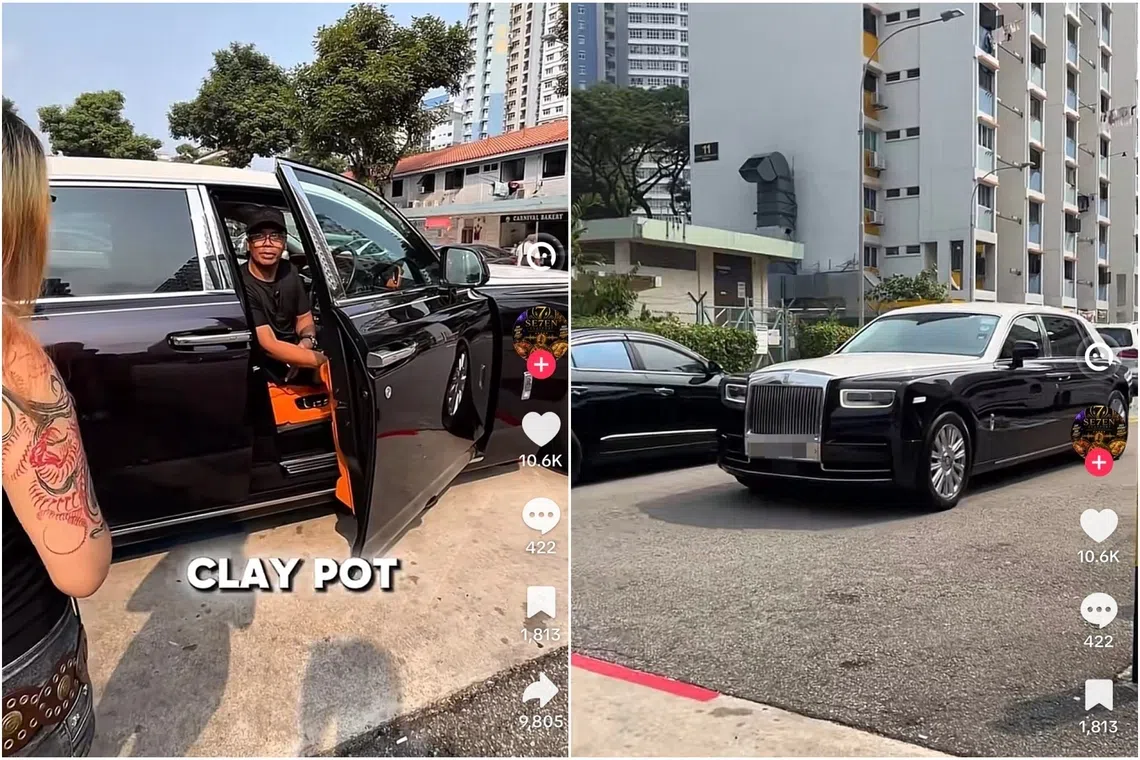
The image of a hawker, Muhammad Ezam Abdul Gani, driving a Rolls-Royce Phantom to promote his aunt's claypot assam pedas stall at Upper Boon Keng Food Centre is more than an anomaly. It represents a precise calculation in Singapore's food landscape.
Mr. Ezam borrowed a friend’s Rolls-Royce, linked to a $3 billion money-laundering probe, for a TikTok video. This marketing stunt, according to Mr. Ezam, doubled his daily sales. The immediate effect on revenue is clear.
Singapore’s hawker culture received UNESCO recognition in 2020. This formal acknowledgement underscores its cultural significance and economic role. Yet, this cultural emblem exists within a challenging commercial reality. Reports indicate that eateries in Singapore face closures due to rising costs and falling spending. The economic pressure on these establishments is substantial.
The core of Mr. Ezam’s strategy is simple: visibility. In a market where traditional word-of-mouth may no longer suffice, digital virality offers a pathway to immediate customer attention. The Rolls-Royce, a symbol of extreme luxury, creates a stark contrast with the humble hawker stall. This juxtaposition is designed to capture attention and convert it into sales. The success of this approach is measured directly in increased daily sales, a concrete metric in the often-precarious food business.
However, this method raises questions about the sustainability and authenticity of marketing in a sector built on tradition. Is the long-term viability of a hawker stall now tied to its ability to generate digital spectacles, rather than the consistent quality of its food alone? The initial surge in sales for Mr. Ezam’s aunt’s stall demonstrates the power of such tactics. Yet, relying on such extreme measures suggests a deeper struggle for small, independent food businesses to compete in an environment where attention is a scarce commodity.
Mr. Ezam plans to open a cafe and expand his food and beverage business with multiple outlets. This ambition signals an understanding that the viral moment is a springboard, not a permanent solution. The challenge remains how to translate ephemeral digital fame into a stable, profitable enterprise. The underlying economic model of hawker stalls, often characterized by thin margins, is pressured further when significant resources—whether borrowed luxury cars or substantial marketing budgets—are perceived as necessary for survival.
The incident highlights a growing tension: preserving the cultural essence of hawker food while adapting to contemporary market forces. The cost of standing out, even if borrowed, becomes part of the operational calculus. Whether future success will depend on culinary skill or marketing ingenuity remains an unresolved question for Singapore's distinctive food scene.
Sources
Newsletter
Pacific Daily
A curated briefing from Thailand, Asia-Pacific and the world.