Local Conflict in Makira Signals Broader State Capacity Challenges for Solomon Islands
The burning of 13 homes, including essential infrastructure, in East Makira highlights persistent underlying issues of governance and resource allocation that external assistance has yet to adequately address.
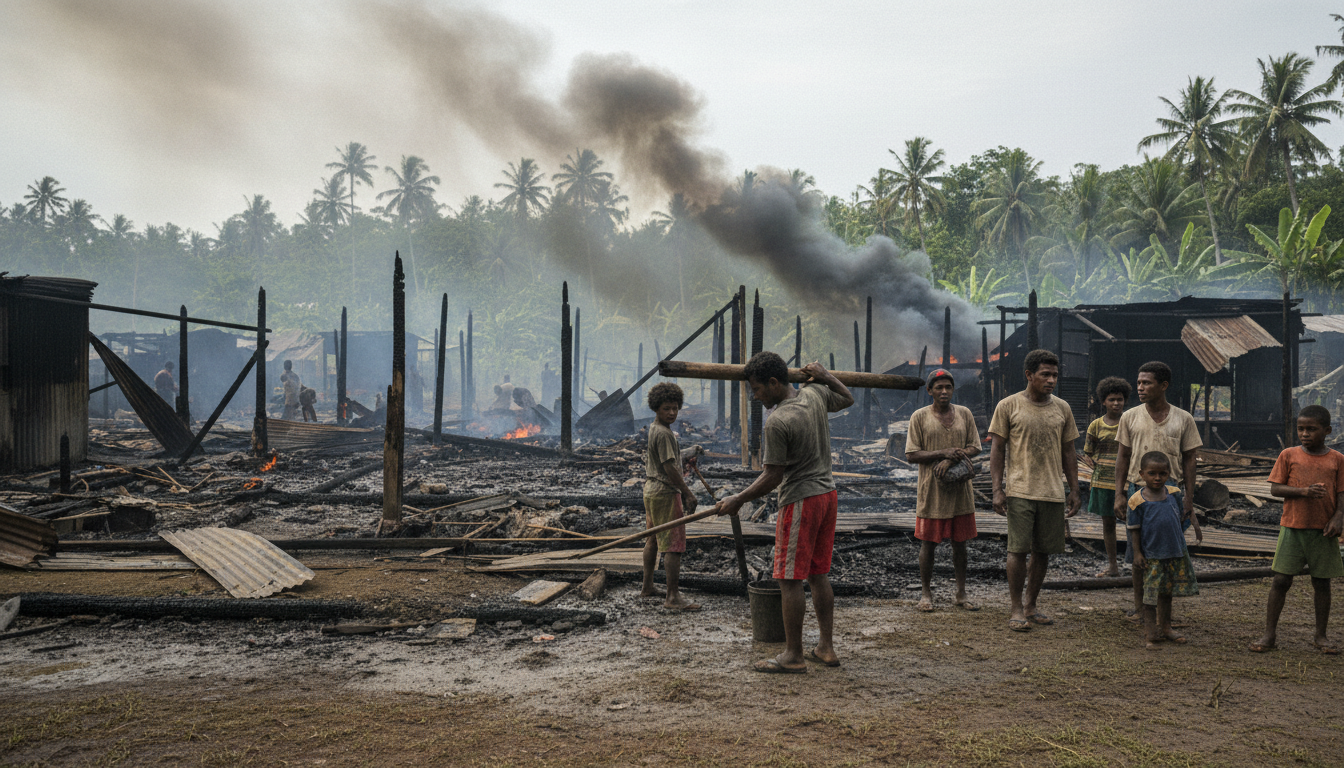
The reported burning of 13 homes, a fuel depot, and kitchens, alongside the destruction of food gardens in Naharahau village in East Makira on Sunday, reflects a pattern of local grievances escalating into significant material damage. Royal Solomon Islands Police Force (RSIPF) commander Gordon Horomae stated that officers have engaged with both parties, noting allegations that the incident may have been a retaliation for a death attributed to sorcery from a Naharahau villager. This event, investigated by RSIPF, serves as a signal of enduring local conflict resolution deficits within the Makira-Ulawa Province.
The immediate incentive for the arson appears rooted in perceived injustice and a breakdown in traditional or state-sanctioned dispute resolution mechanisms, particularly concerning a death believed to be caused by sorcery. Such beliefs, while deeply held, indicate a reliance on informal justice systems when formal state structures are either inaccessible, mistrusted, or perceived as ineffective. The destruction of essential assets like a fuel depot and food gardens suggests that the conflict is not merely symbolic but aims to inflict significant economic and logistical hardship on the targeted community. The police involvement, while present, points to the reactive nature of state intervention rather than proactive prevention.
The immediate losers are the residents of Naharahau village who have lost their homes, food sources, and infrastructure. The incident also undermines local stability and social cohesion. Broader implications for governance emerge, as incidents of this nature, whether rooted in land disputes, resource competition, or traditional grievances, reveal gaps in state authority and its ability to maintain order and dispense justice effectively outside of major urban centers. External actors like Australia have pledged stronger ties and provided billions of dollars, as noted in recent reports on Solomon Islands development challenges. However, the persistence of such localized violence suggests that these investments have yet to translate into robust local governance or improved dispute resolution capacity in remote provinces like Makira-Ulawa.
The outlook for immediate stability in Naharahau remains uncertain, despite police engagement. The allegations of sorcery-related motivations highlight a complex challenge where customary beliefs intersect with legal frameworks. For the Solomon Islands government, these events underscore the ongoing imperative to extend state authority and justice mechanisms effectively across its archipelago. The challenge is not merely one of policing, but of fostering trust in institutions and providing accessible, credible avenues for resolving disputes that prevent them from escalating into destructive acts. The recurring nature of such incidents suggests that deeper structural reforms in governance and justice delivery are still an unresolved constraint on national stability.
Sources
Newsletter
Pacific Daily
A curated briefing from Thailand, Asia-Pacific and the world.