Legal Precision Challenges Political Outcomes in Asia-Pacific Impeachments
The Philippine debate over impeachment conviction thresholds underscores a recurring regional tension between constitutional frameworks and political expediency.
SINGAPORE
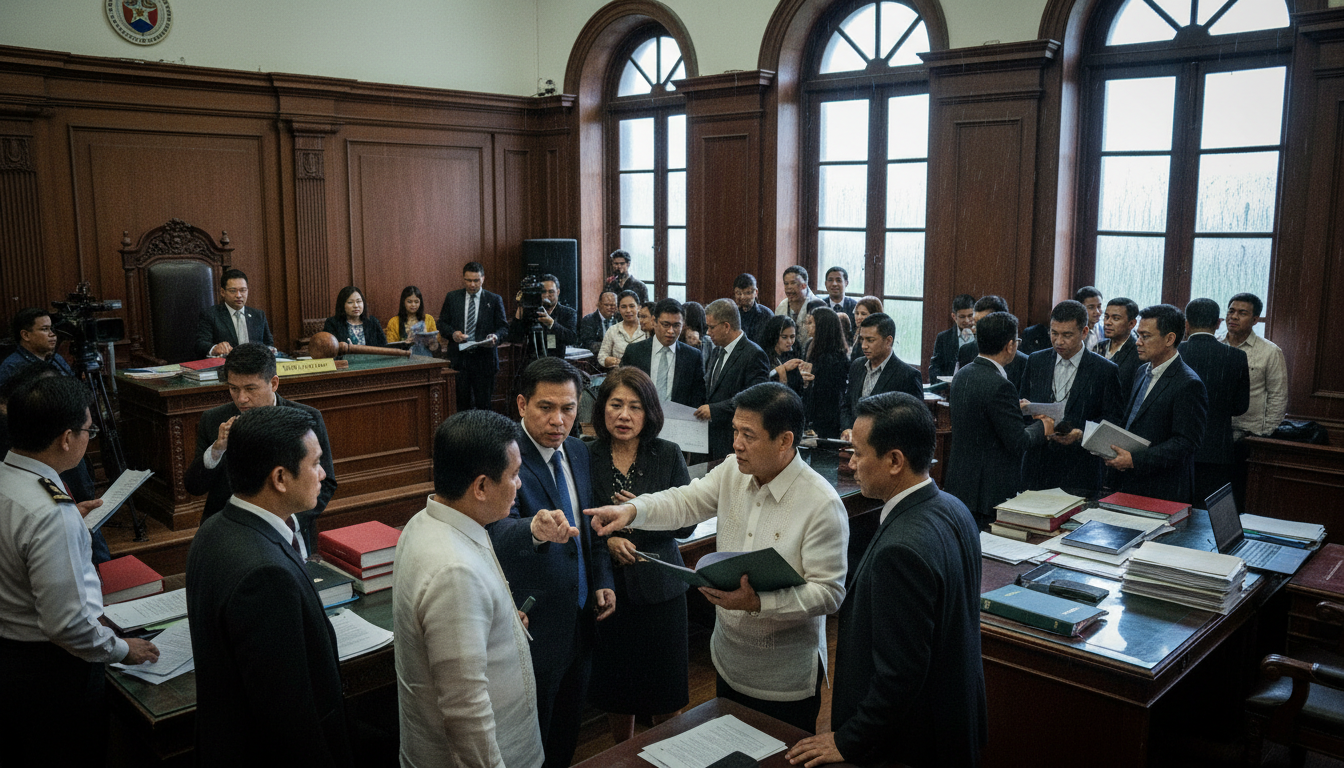
The impeachment proceedings against Philippine Vice President Sara Duterte have brought into sharp focus a fundamental legal question: the precise conviction threshold required for impeachment. Three former Supreme Court justices, among four initially designated as ‘amici curiae’ for the trial, have stated that the constitutional requirement of a two-thirds Senate vote for conviction is not necessarily a fixed number of 16. This nuanced interpretation could alter the path to a conviction. While this debate is specific to Manila, it reflects broader challenges to the rule of law and judicial independence evident across various Asia-Pacific states.
At the core of the dispute is whether a conviction necessitates 16 votes, representing two-thirds of the 24-member Senate, or if the threshold can shift based on the number of senators present and voting. The prosecution’s argument, supported by some former high court members, suggests a potentially lower threshold could be applied. Such an interpretation would increase the probability of Duterte's removal from office. This legal parsing is not merely academic; it carries significant political weight, particularly in a region where constitutional frameworks are frequently tested by political dynamics.
Historically, legal systems across Asia have contended with similar pressures, where the precise application of law can become entangled with political expedience. In 2026, a high-profile sentencing in South Korea for martial law charges demonstrated the severe consequences of legal judgments intersecting with political power. While the specific contexts differ, both instances highlight the instrumental role of the judiciary in defining the boundaries of political authority. The Rappler reports on the Philippine impeachment cite Duterte's defense, which includes her assertion of President Marcos' approval of her confidential funds. This statement further intertwines the legal process with high-level political endorsement.
The Philippine situation illustrates how interpretations of procedural rules can become critical junctures. This dynamic is not unlike how constitutional amendments or electoral laws are sometimes re-interpreted to suit prevailing political currents in other Southeast Asian nations. The implication for regional stability resides in the precedent such legal fluidity establishes. If the mechanisms designed to ensure accountability become subject to flexible interpretation, it could embolden political actors to push the boundaries of their authority, potentially weakening institutional checks and balances. The focus on the exact numerical requirement for conviction, rather than the merits of the case itself, indicates a strategic calculation at play.
The ongoing deliberation on the conviction threshold in the Philippines represents an unresolved tension. It poses the question of whether the procedural precision demanded by constitutional law can withstand the pressures of political outcomes. The debate over a simple numerical threshold reveals a deeper contest over the integrity and independence of judicial processes in defining political accountability in the Asia-Pacific.
Sources
Newsletter
Pacific Daily
A curated briefing from Thailand, Asia-Pacific and the world.