Kaua‘i Storm Recovery Exposes the Fiscal Limits of Island Disaster Planning
Electoral pledges across Pacific island municipalities collide with the intractable capital costs of rebuilding vulnerable infrastructure
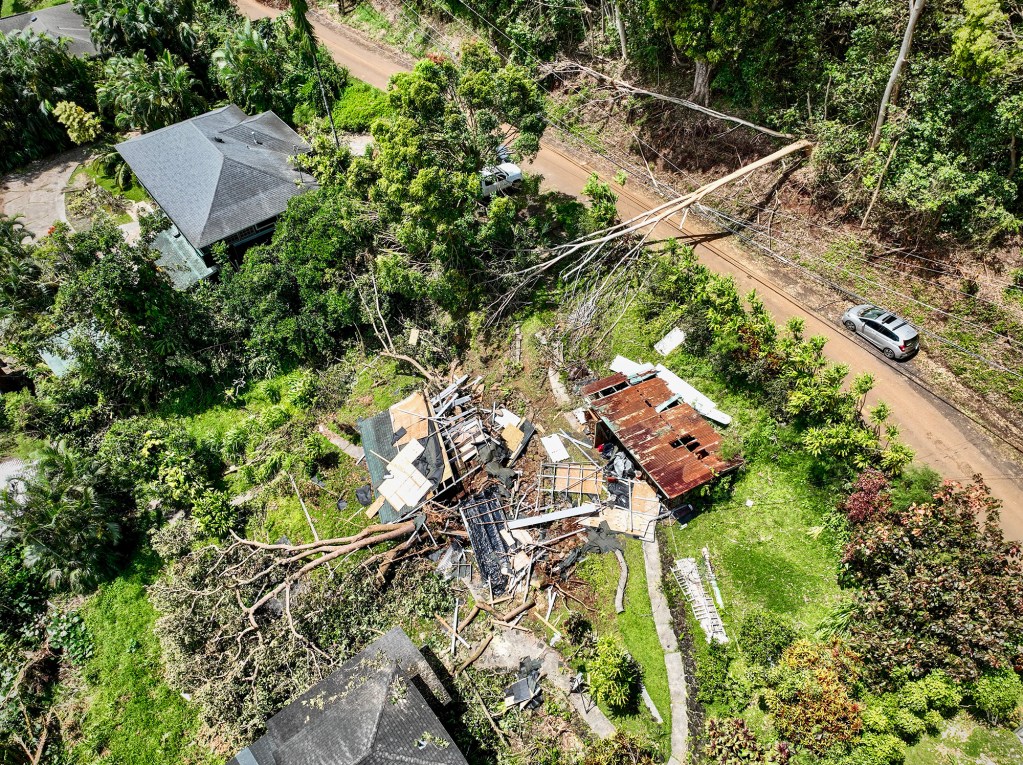
Municipal disaster resilience frequently dissolves at the boundary where political rhetoric meets local public balance sheets. A month after Hurricane Lowell crossed Kaua‘i, bringing down trees and utility lines that blocked roads, local political debate has shifted toward institutional preparedness. The category 2 storm registered as the largest system to strike the island since Hurricane ‘Iniki in 1992. Fourteen candidates are now contesting seven seats on the Kaua‘i County council, each asserting that disaster mitigation and funding must dominate upcoming legislative priorities. The structural dilemma confronting the island is not a lack of awareness regarding severe weather. It is the enduring friction between local recovery mandates and the capital mechanisms required to harden isolated island grids.
Across the Pacific Rim, insular jurisdictions confront identical physical exposure paired with constrained revenue bases. When a storm system damages lifeline infrastructure on island terrain, the cost of restoration is magnified by geographical isolation and dispersed utility networks. Kaua‘i’s immediate post-disaster landscape illustrates the vulnerability common to remote archipelagos. Downed power lines and obstructed road corridors paralyze local commerce and civil movement far longer than comparable damage across contiguous continental territories. Yet municipal campaign commitments to finance comprehensive resilience inevitably confront rigid budgetary limits. County councils oversee restricted taxing authority and must allocate operating funds between immediate public services and preventative capital expenditure.
The Capital Deficit in Island Adaptation
Calls for enhanced disaster readiness sound pragmatic during an active recovery cycle, but public budgets cannot simply absorb sweeping mitigation projects without trade-offs. Hardening utility corridors against high winds, clearing heavy biomass adjacent to arterial roads, and establishing distributed emergency infrastructure demand sustained multi-year capital outlays. In an island economy, recurrent maintenance alone commands a substantial share of annual public expenditure. Candidates vying for legislative seats routinely pledge greater fiscal readiness, yet municipal revenue tools remain largely inelastic.
Disaster pledges during local election cycles routinely collapse when forced to compete with structural capital budgets.
The political dynamic operates on short cycles, while physical adaptation requires generational financing. A local council can debate administrative preparedness, draft emergency protocols, and propose targeted grants. None of those measures, however, substitutes for the extensive capital allocations required to underground transmission lines or elevate exposed transport links. If county governments rely primarily on post-disaster external assistance rather than solvent municipal pre-funding, local governance remains fundamentally reactive. Disaster planning that depends on external bailouts after catastrophic impact merely defers structural insolvencies rather than resolving them.
Strategic Governance Beyond Recovery
A counterargument raised by local governance proponents suggests that policy reform, community-level networks, and improved coordination offer substantial protective value without massive capital mobilization. Enhanced municipal planning can accelerate clearing operations, coordinate civil defense assets, and prioritize essential road access without requiring immediate wholesale reconstruction of basic infrastructure. Administrative efficiency matters, particularly during the initial phases of post-storm recovery.
That administrative capacity remains insufficient when the underlying physical assets cannot withstand baseline storm forces. The fundamental constraint demonstrated by Hurricane Lowell is physical fragility, not bureaucratic confusion. Lines fail under mechanical stress from falling trees, and access corridors close because peripheral road networks lack redundancy. While institutional coordination mitigates immediate civilian distress, it leaves systemic exposure intact until physical infrastructure is systematically upgraded.
Kaua‘i’s fourteen council aspirants will shortly see seven members take office with mandates dominated by the aftermath of Lowell. The unresolved tension is whether those officials will identify concrete revenue streams capable of sustaining long-term capital programs, or whether disaster mitigation will remain confined to post-event cleanups until another storm makes landfall.
Sources
Newsletter
Pacific Daily
A curated briefing from Thailand, Asia-Pacific and the world.