Individual influence and systemic change in Southeast Asian governance
The sustained prominence of legal figures like Lorna Kapunan, described as maintaining 'perfect form' after decades, offers insight into the interplay between personal reputation and institutional development across the region.
SINGAPORE
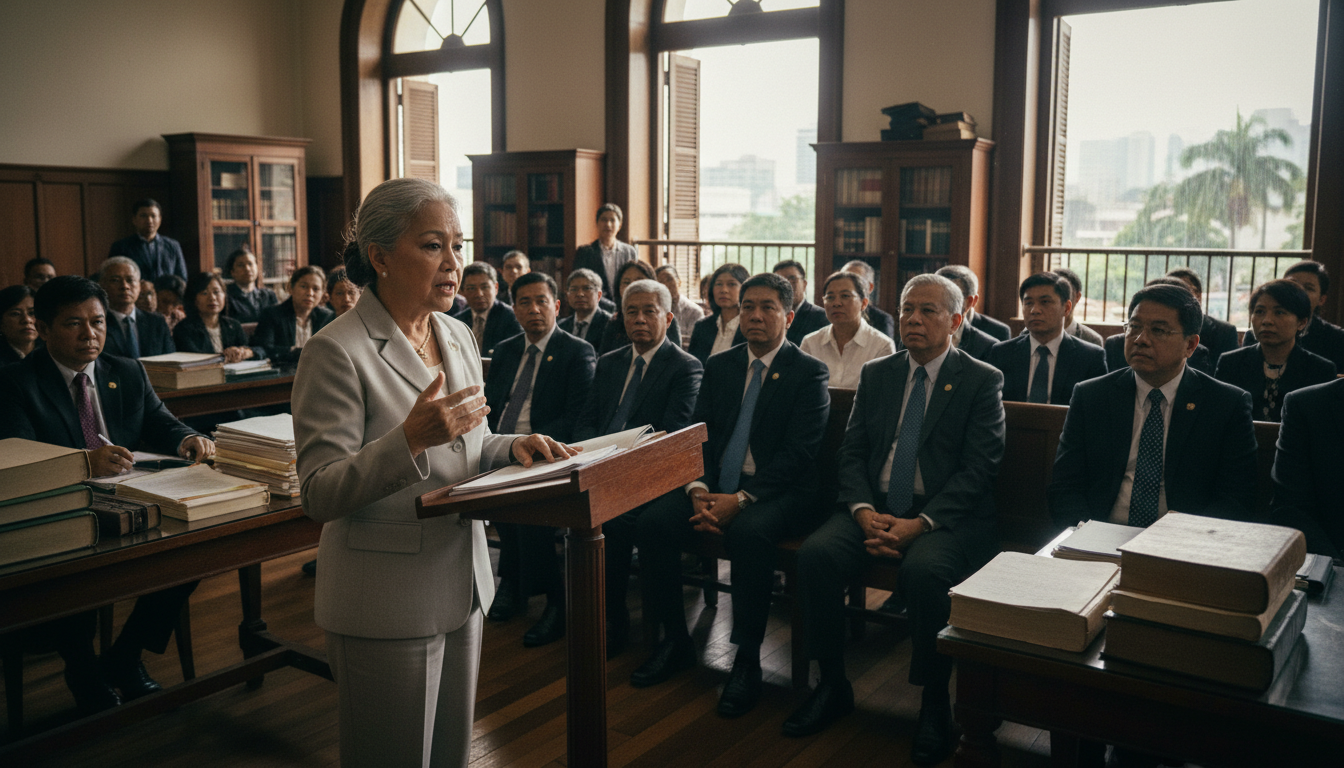
The persistent visibility of figures like Lorna Kapunan, described by Rappler on September 14, 2026, as remaining in 'perfect form' after nearly half a century of practice, suggests that personality continues to exert considerable influence within judicial and political spheres across the Asia-Pacific. While direct, quantified data on the impact of individual lawyers on national political outcomes is not readily available, the extended careers of such figures demonstrate a public and media engagement that extends beyond specific cases. This engagement can shape public discourse, functioning as a qualitative force in political narratives.
Kapunan's enduring presence in litigation, characterised by Rappler as that of a 'terror', points to a type of legal professional who, by virtue of reputation and long-standing activity, becomes an actor in the political landscape. This phenomenon, where individual identities become deeply embedded within public consciousness, can shift attention from specific policy platforms. Rappler's mention of a 'Ninoy constituency' on August 26, 2023, for instance, underscores this. Similarly, Rappler reported on May 7, 2024, on Rodrigo Duterte. Their continued relevance can alter political narratives during electoral periods, such as the 2025 overseas absentee voting mentioned by Rappler on May 9, 2025. This suggests that while formal political structures exist, the perceived integrity or combativeness of individuals can influence public trust and electoral dynamics.
However, attributing broad systemic changes solely to individual legal personalities presents a methodological challenge. While these figures are prominent, it is difficult to isolate their impact from wider socio-political currents, economic shifts, or the evolving media landscape. For example, the establishment of entities like the Progresibong Bangsamoro Party, reported by Rappler on April 23, 2026, or the focus on the National Center for Mental Health by Rappler on June 5, 2024, indicate systemic developments that operate independently of any single legal advocate. These institutional changes reflect shifts in public policy and governance that are not merely reflections of high-profile legal battles. Such developments often stem from broader societal needs or policy imperatives rather than individual legal advocacy.
Despite the clear prominence of veteran legal personalities, their influence often remains concentrated within the legal system's confines or specific public debates. The question, therefore, becomes not whether such figures exert influence, but how this influence translates into quantifiable shifts in public policy, electoral outcomes, or systemic reforms. Without direct metrics correlating individual legal careers with national political statistics, their impact, while discernible, largely functions as an interpretive layer over broader societal trends. This limits the ability to draw definitive conclusions about their long-term effect on the foundational democratic processes in the region, including in nations like Thailand, where similar legal and political personalities often command significant public attention without necessarily altering fundamental governance structures.
Sources
Newsletter
Pacific Daily
A curated briefing from Thailand, Asia-Pacific and the world.