Hawaiʻi Election Integrity Debate Signals Deeper Pacific Challenges
A local voting controversy in Hawaiʻi highlights regional struggles with regulatory efficacy and public trust in political processes, with implications for Thailand.
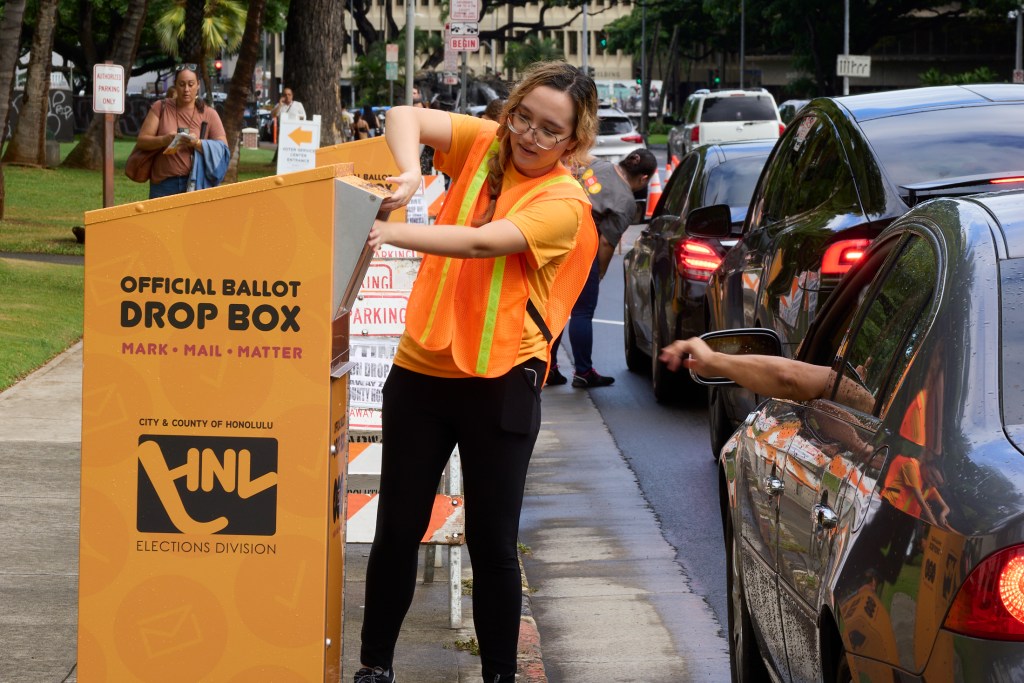
The reported sentiment among Hawaiʻi voters regarding what has been termed 'lauhala-and-plastic-egg silliness' in their electoral system is not merely a local curiosity but a significant indicator. Honolulu Civil Beat reported on September 20, 2026, that voters perceive these measures as serving to protect politicians rather than their ballot box rights. This perception, while specific to Hawaiʻi, reflects a broader regional challenge concerning the alignment of electoral regulations with their stated purpose and public confidence in governance.
The specific mechanisms of this reported 'silliness' — its characterization of lauhala and plastic eggs — are less critical than the underlying voter interpretation. The critical fact is that a segment of the electorate views electoral processes not as a safeguard of their franchise but as a shield for incumbents. This suggests a disconnect where policy, intended to uphold democratic integrity, is instead seen as a tool for political self-preservation. Such a divergence between regulatory intent and public reception carries implications for jurisdictions across the Asia-Pacific.
Considering Thailand, the observed pattern in Hawaiʻi resonates with ongoing discussions regarding electoral transparency and the perceived neutrality of institutions. Thai voters have similarly navigated periods where the practical implementation of regulations has been questioned for its ultimate beneficiary. For example, amendments to election laws or the establishment of independent commissions, while ostensibly aimed at improving fairness, have sometimes faced scrutiny for their potential to consolidate power rather than distribute it. The perception in Hawaiʻi of regulations protecting politicians, not voters, mirrors a potential pitfall in any system where the letter of the law can be interpreted as overriding its spirit.
The challenge is not necessarily a flaw in the design of specific regulations, but in the trust placed in their administration. When the public believes the rules are engineered to protect those in power, apathy or disgust, as suggested by the Honolulu Civil Beat headline, can become prevalent. This erodes the foundational contract between the governed and the governing. In maritime terms, it is analogous to a vessel where the navigation rules are ostensibly clear, but the crew believes the captain is charting a course based on personal advantage rather than the safety of the journey.
However, a counterargument would assert that such perceptions are often exaggerated or based on incomplete information. Electoral systems, by their nature, are complex, and the implementation of any regulation can have unforeseen side effects or be misinterpreted by a public less familiar with the granular details of election administration. The 'silliness' might be a legitimate attempt to address a specific issue, however clunky its execution, and voters' interpretations could be driven by broader political dissatisfaction rather than the specific regulation itself. This argument suggests that the problem lies more with public education and engagement than with regulatory malfeasance.
Despite this, the report from Hawaiʻi indicates a clear lack of public confidence in the stated aims of electoral provisions. For Thailand and other nations in the Pacific Rim, this situation underscores the ongoing need for regulatory frameworks that are not only robust in their design but also transparent in their application and perceived by the populace as genuinely serving their interests. The constraint that remains unresolved is how to bridge the gap between regulatory intention and public trust, especially when the implementation of rules is viewed as serving those who legislate them.
Sources
Newsletter
Pacific Daily
A curated briefing from Thailand, Asia-Pacific and the world.