Hanoi's Reclamation Protest and Regional Maritime Strategy
Vietnam’s diplomatic stance on the Paracels signals a shift in focus amid broader regional challenges.
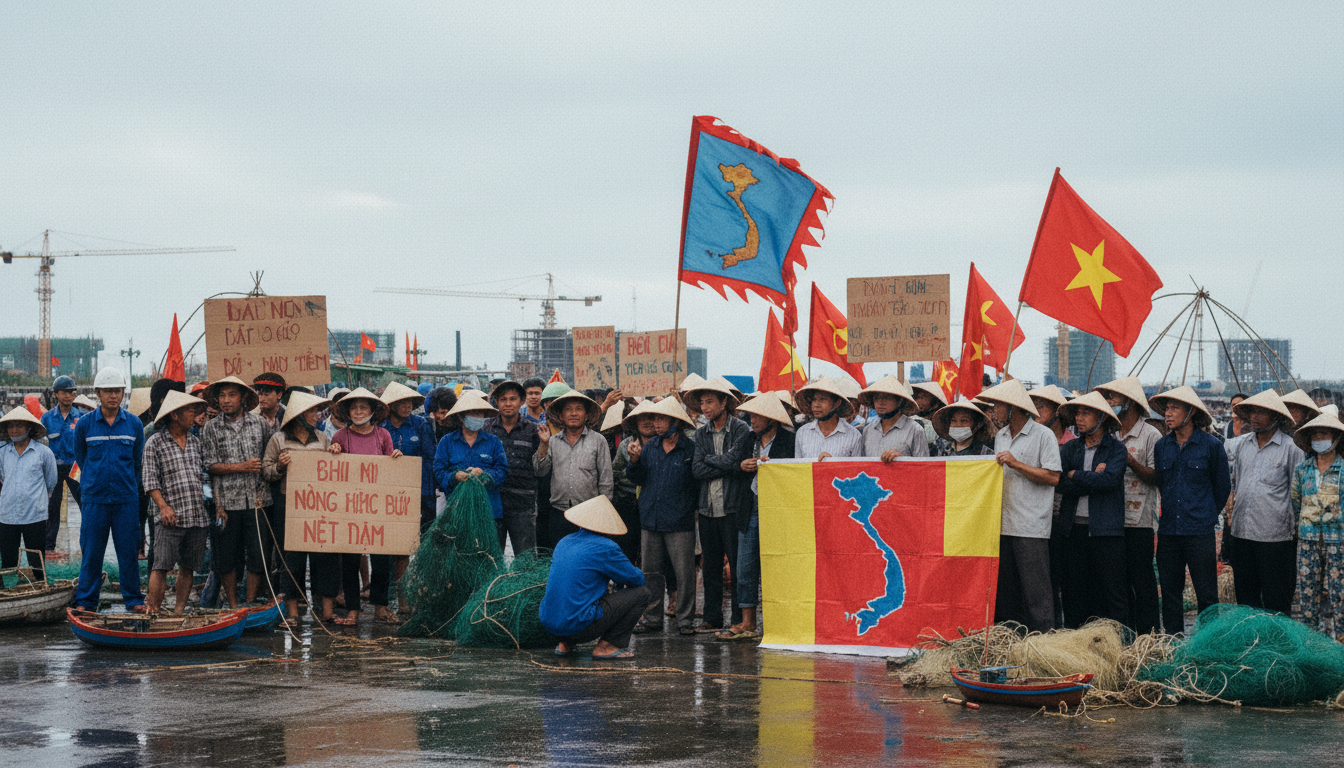
HANOI
Vietnam's Ministry of Foreign Affairs, through Spokesperson Pham Thu Hang, affirmed on August 28 its opposition to reclamation and construction activities in the Paracel Islands, issuing a diplomatic representation and reiterating its established position. This public statement follows earlier reports concerning Hanoi's foreign minister visiting Myanmar and a continued focus on economic development, including preferential visas for foreign tourists.
While Vietnam's protest against activities in the disputed Paracel Islands is consistent with its long-held territorial claims, the timing and specific emphasis warrant regional consideration. Historically, Vietnam has balanced its maritime claims with a pragmatic approach to economic growth and regional engagement. The current environment, marked by an stated 'tourism boom' — with Vietnam emerging as 'one of IHG's best-performing Asia Pacific markets' — and significant foreign investment interest, suggests Hanoi is navigating multiple complex priorities.
The challenge for Southeast Asian states like Thailand, which shares maritime interests and faces similar pressures in other disputed areas, lies in interpreting Hanoi’s current strategy. The public assertion of opposition to reclamation acts as a re-statement of sovereignty. However, it also serves as an indicator of Hanoi's broader diplomatic calculus. On one hand, Vietnam is actively pursuing economic integration and attracting capital, as evidenced by reports of BNP Paribas and KB Kookmin discussing a $2 billion stake in Techcombank. On the other, it must address persistent geopolitical realities in the South China Sea.
The emphasis on 'illegal reclamation' highlights a specific and permanent form of territorial alteration. For Thailand, the situation underscores the ongoing necessity of clear, consistent diplomatic postures regarding international law and maritime boundaries. The broader Asia-Pacific region observes such statements for indicators of both resolve and strategic flexibility. Whether the diplomatic representation on the Paracels represents a singular, targeted response or a recalibration of Vietnam's maritime strategy amid its economic successes remains to be fully assessed. The challenge of balancing economic imperatives with security concerns is not unique to Vietnam; it is a fundamental tension across the region, including for Thailand, that continues without an evident resolution.
Sources
Newsletter
Pacific Daily
A curated briefing from Thailand, Asia-Pacific and the world.