Hanoi Fatalities Signal Unaddressed Urban Fire Risks Across Southeast Asia
Repeated residential fire deaths in Vietnamese cities highlight a regional vulnerability, with building codes and urban density data suggesting similar outcomes are probable elsewhere.
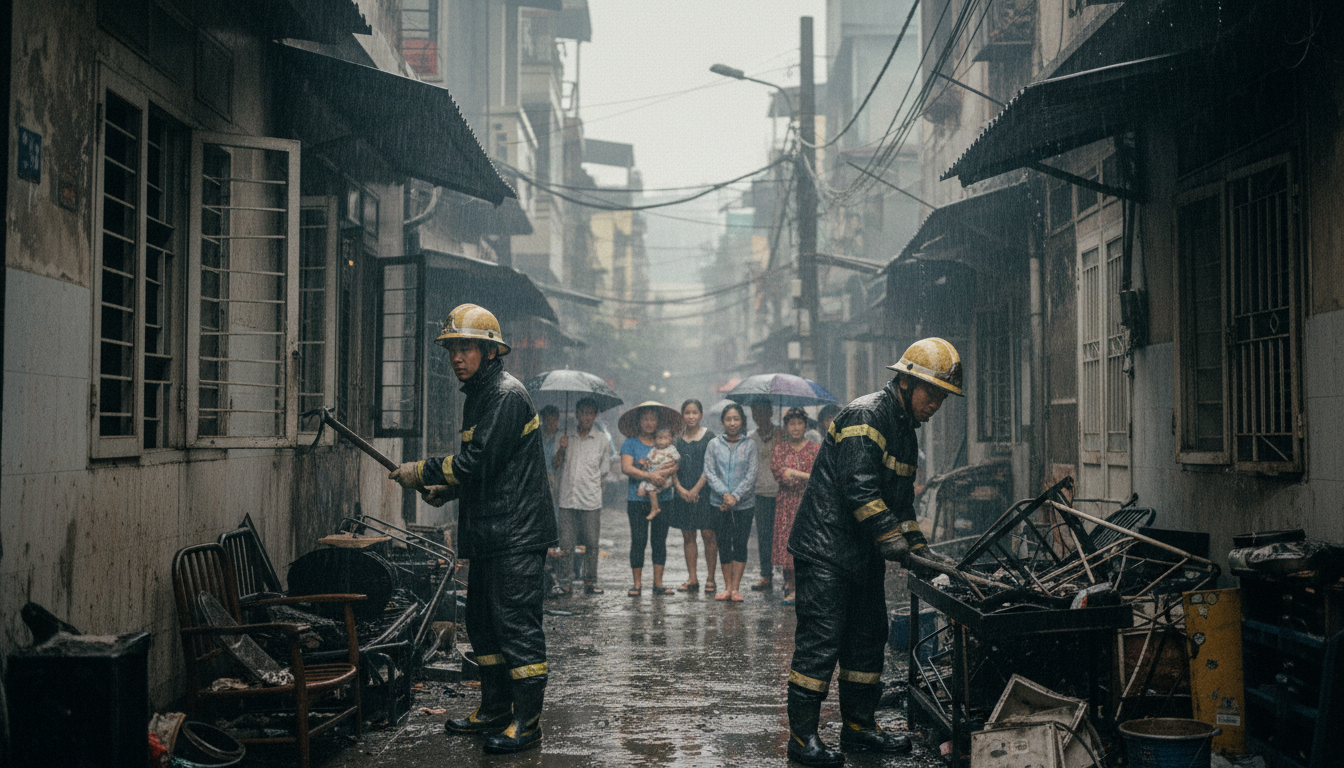
HANOI
The deaths of five individuals in an early-morning Hanoi house fire on Van Cao Street in Tay Ho Ward on September 16, 2026, mark a recurring cost of urban development in Vietnam. This incident, where four others escaped, follows another fire in Hanoi that killed 14 people, and a Da Lat fire on June 24, 2024, which killed three children. The consistent reporting of multiple fatalities in residential fires in Vietnamese cities merits examination beyond individual tragedy.
The immediate data point is the human cost: 5 deaths on September 16, 2026, an additional 14 deaths in Hanoi, and 3 children killed in Da Lat on June 24, 2024. This aggregate figure points to a systemic vulnerability within the residential building stock in urban centers. While specifics of the structures involved are not detailed in each report, the repeated occurrences in high-density areas, such as the alley on Van Cao Street, suggest that rapid urbanization has outpaced comprehensive safety infrastructure and enforcement. The BBC noted in February 2026 that "Hanoi's most popular street could kill you," indicating a known risk environment.
### Regional Vulnerability
The implications extend beyond Vietnam. Across the Asia-Pacific, many rapidly urbanizing cities share similar characteristics: dense housing, often informal or semi-formal construction, and a prevalence of multi-story residential buildings in narrow alleys. While direct comparative data on fire fatalities from other Southeast Asian nations is not provided, the architectural and developmental parallels are considerable. The ongoing incidents in Hanoi act as a bellwether, suggesting that other cities in the region facing similar urban density and developmental pressures may be exposed to analogous fire risks if mitigation strategies are not robust. Without standardized regional fire incident data or comparative urban planning metrics, quantifying this specific cross-border risk is challenging.
An alternative view might suggest that these incidents, while tragic, are isolated events within a large, rapidly growing population, and that improvements in emergency response or public awareness could mitigate future occurrences. This perspective holds some validity; localized factors, such as specific building materials or occupant behaviors, could contribute to individual fire outcomes. However, the pattern of multiple fatalities in separate incidents across different Vietnamese cities over a relatively short period, rather than single-casualty events, indicates a deeper issue than isolated misfortune. The scale of the repeated loss of life suggests that underlying structural, regulatory, or infrastructural deficiencies are more likely contributors than sporadic bad luck.
The data available points to a recurring pattern of severe residential fires in Vietnamese urban areas. The constraint that remains unresolved across the wider Asia-Pacific region is the adequacy of fire safety regulations and their enforcement in the face of ongoing rapid urban densification. The outcome now depends on whether these frequent tragedies in Vietnam prompt a data-driven review of urban fire safety standards and their practical application across the region, especially in locales with comparable demographic and construction trends.
Sources
Newsletter
Pacific Daily
A curated briefing from Thailand, Asia-Pacific and the world.