Handball Development in Pacific Nations: A Signal for Broader Incentives
The inaugural Oceania Women's Handball Championship reveals more than just sporting ambition; it reflects a regional shift in engagement priorities.
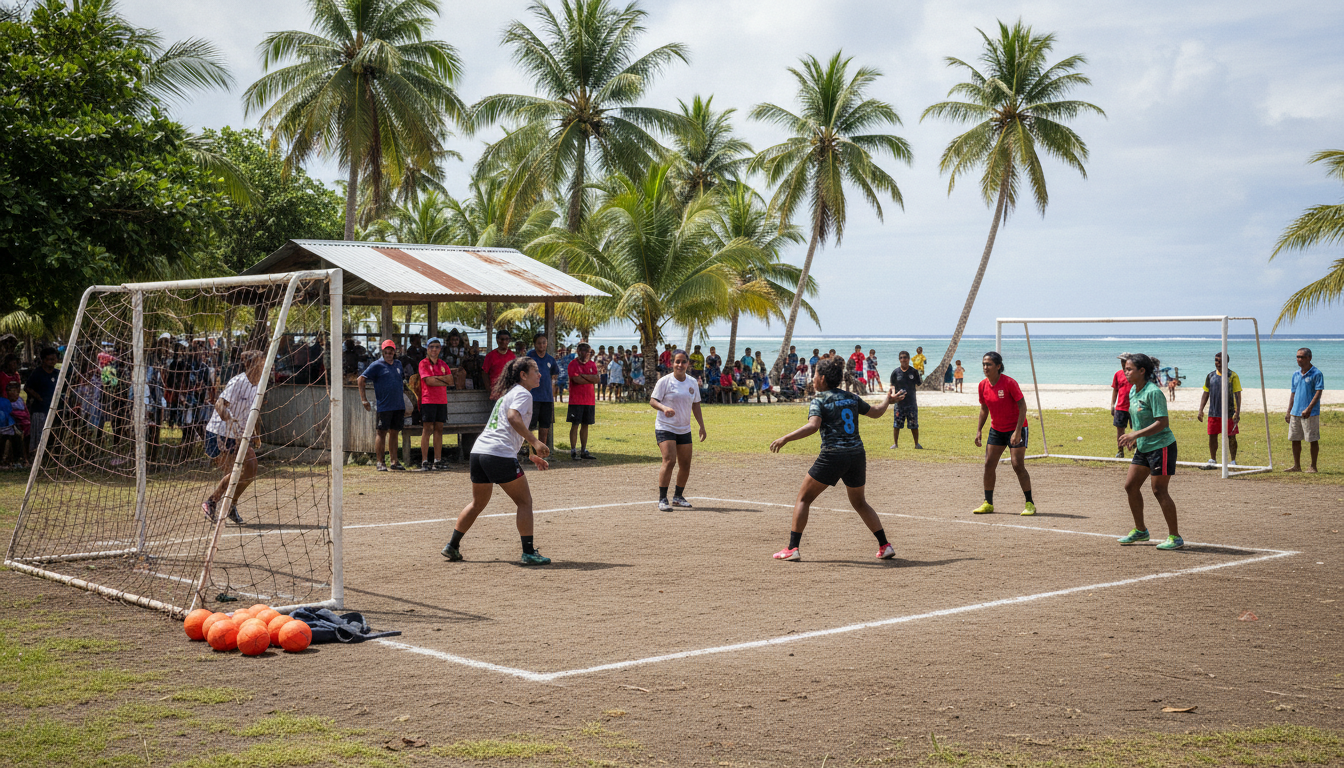
The conclusion of the first Oceania Women's Handball Championship offers a specific data point: Fiji finished fifth, defeating the Cook Islands 17-15 and Kiribati 37-16. These results led tournament director David Ireland, also president of New Zealand Handball, to state that Fiji, Cook Islands, and Kiribati are on a 'right path' in the sport. This assessment, made after Fiji's initial international event, occurred following their losses of 41-10 to Tahiti and 49-8 to Australia, the eventual winners.
While the scores reflect early-stage development, the incentive structure governing such an inaugural regional championship merits closer examination. The explicit support for sports development in smaller Pacific nations, evidenced by participation from Fiji, Cook Islands, and Kiribati in their first international event, signals a broader investment in regional soft power and diplomatic ties. These tournaments, while ostensibly about sport, function as platforms for international engagement and resource allocation.
Historically, the Pacific has been viewed through the lens of larger geopolitical contests, with various external actors vying for influence. The U.S., for instance, has recently backed new Pacific cable initiatives, directly linking infrastructure development to geopolitical rivalry. These sporting initiatives, however, operate on a different plane, fostering direct human-to-human and nation-to-nation connections that complement larger strategic objectives. The question is not merely athletic achievement but the externalities generated by such events.
An alternative perspective might argue that these sporting events are primarily about sports development and community engagement, with any geopolitical implications being secondary or unintended. This view is supported by the direct statement from the tournament director regarding the 'right path' for these teams, implying a focus on the sport's organic growth. However, this interpretation overlooks the capital investment and logistical coordination required to host such an event and ensure participation from multiple, geographically dispersed island nations. The costs, borne by various entities including New Zealand Handball, suggest a calculus beyond immediate sporting returns. The broader incentives often manifest in such 'soft' initiatives, building foundational relationships that can underpin future economic and political cooperation.
For Thailand and the wider Asia-Pacific, these developments indicate a continued diversification of engagement strategies within the Pacific. While direct commercial links with these specific sporting initiatives may not be immediately apparent, the pattern of increased regional activity, whether through infrastructure or sport, necessitates a re-evaluation of existing diplomatic and economic frameworks. The unresolved constraint remains the long-term sustainability of these engagements, particularly as the initial enthusiasm wanes and more substantial resource commitments are required. The outlook now depends on whether the underlying strategic objectives align with sustained investment beyond the initial 'promise' observed.
Sources
Newsletter
Pacific Daily
A curated briefing from Thailand, Asia-Pacific and the world.