French Football Sustains Normalcy Amid Deep Civic Discord
Results in Lyon and Paris highlight the persistent operational continuity of elite sport while wider domestic institutions face acute strain
SINGAPORE
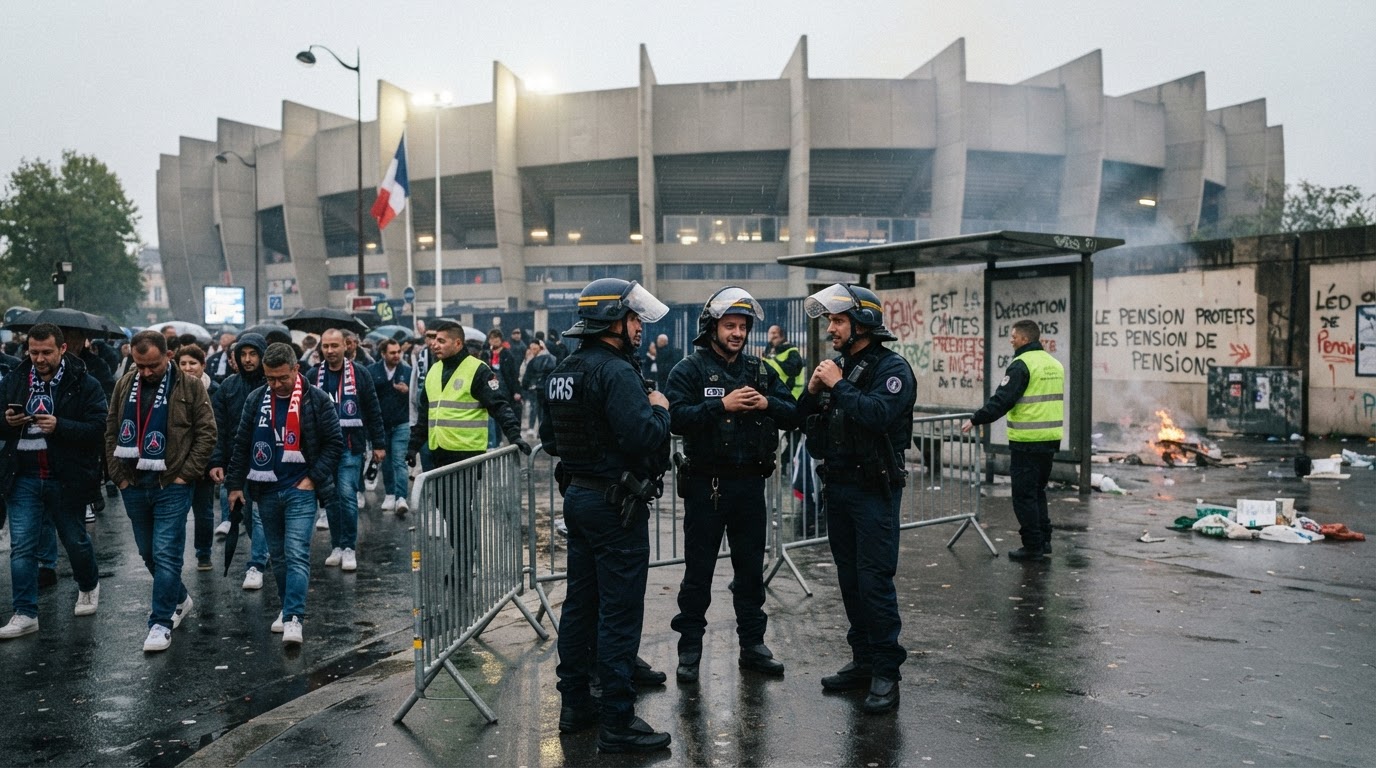
Domestic football fixtures proceeded across France on November 1, 2026, delivering routine scorelines alongside deep administrative unease. Groupama Stadium in Lyon hosted Olympique Lyonnais against Angers SCO, culminating in a home victory sparked by Ernest Nuamah. Across the capital at Stade Jean-Bouin, Paris FC defeated AS Monaco following a decisive second goal from Lassine Sinayoko, while Marseille registered sustained competitive progress. These athletic outcomes unfolded merely days after French authorities acknowledged security shortcomings and deployed military personnel to contain widespread municipal disturbances.
Professional sports operations rely on an insulated commercial apparatus that functions independently of ambient civil friction. The contrast between orderly turnstiles and street-level unrest presents an instructive economic divergence. In October 2026, government ministers attempted conciliation after ten consecutive days of student demonstrations, yet protest marches repeatedly escalated into violent confrontation across multiple urban centers. Reuters documented cabinet admissions of procedural failure after weekend riots prompted emergency troop assignments to restore baseline order. Despite this volatility, top-flight Ligue 1 fixtures maintained their standard broadcast and spectator schedules without reported postponement.
Insulated Operations
Public order crises generally disrupt municipal transit, leisure consumption, and secondary business activity within metropolitan cores. The rapid containment of risk within stadium perimeters demonstrates the heavy private security architecture underpinning European club athletics. Stadiums like Groupama Stadium and Stade Jean-Bouin operate as semi-autonomous zones capable of managing dense crowds through dedicated private stewarding, access-control software, and segregated perimeter cordons. Local authorities prioritize the stability of these commercial spectacles because fixture cancellations signal a broader collapse of municipal control.
Skeptics may argue that athletic fixtures merely reflect ordinary weekend recreation rather than an organized institutional shielding effort. Sport has historically continued during civil friction without deeper economic intent. However, treating these events as simple sporting leisure overlooks the sheer volume of municipal resources diverted to protect commercial perimeters while student protests face heightened enforcement elsewhere. Routine operations at Jean-Bouin and in Lyon generate significant fiscal receipts through concessions, media carriage, and sponsorship obligations that neither clubs nor municipalities can afford to forfeit.
Stadium perimeters operate as segregated commercial bubbles, preserving operational revenue while broader civic services absorb the fallout of institutional strain.
The Divergence of Urban Stability
The apparent continuity within Ligue 1 masks unresolved structural friction across French cities. Marseille continues its athletic improvement, yet the broader metropolitan environments supporting these clubs endure protracted civil disputes. When state institutions deploy armed personnel to enforce civil order following weekend riots, the normalcy exhibited by commercial sport becomes artificial. Athletic scheduling generates an appearance of regular civic rhythm that the wider economy does not currently share.
This balance remains precarious for organizers and civic authorities alike. Elite European football requires predictable logistics, functioning public transport networks, and safe thoroughfares for regional and overseas supporters. While Lyon, Paris FC, and Marseille achieved their competitive objectives on the pitch, the operational viability of top-flight sport ultimately depends on whether central authorities can stabilize municipal governance beyond the stadium gates.
Sources
Newsletter
Pacific Daily
A curated briefing from Thailand, Asia-Pacific and the world.