Fiji's HIV Emergency Signals Regional Vulnerability Beyond Borders
The declaration of a national health crisis in Fiji underscores a broader pattern of interconnected challenges across the Asia-Pacific, impacting health, development, and regional stability.
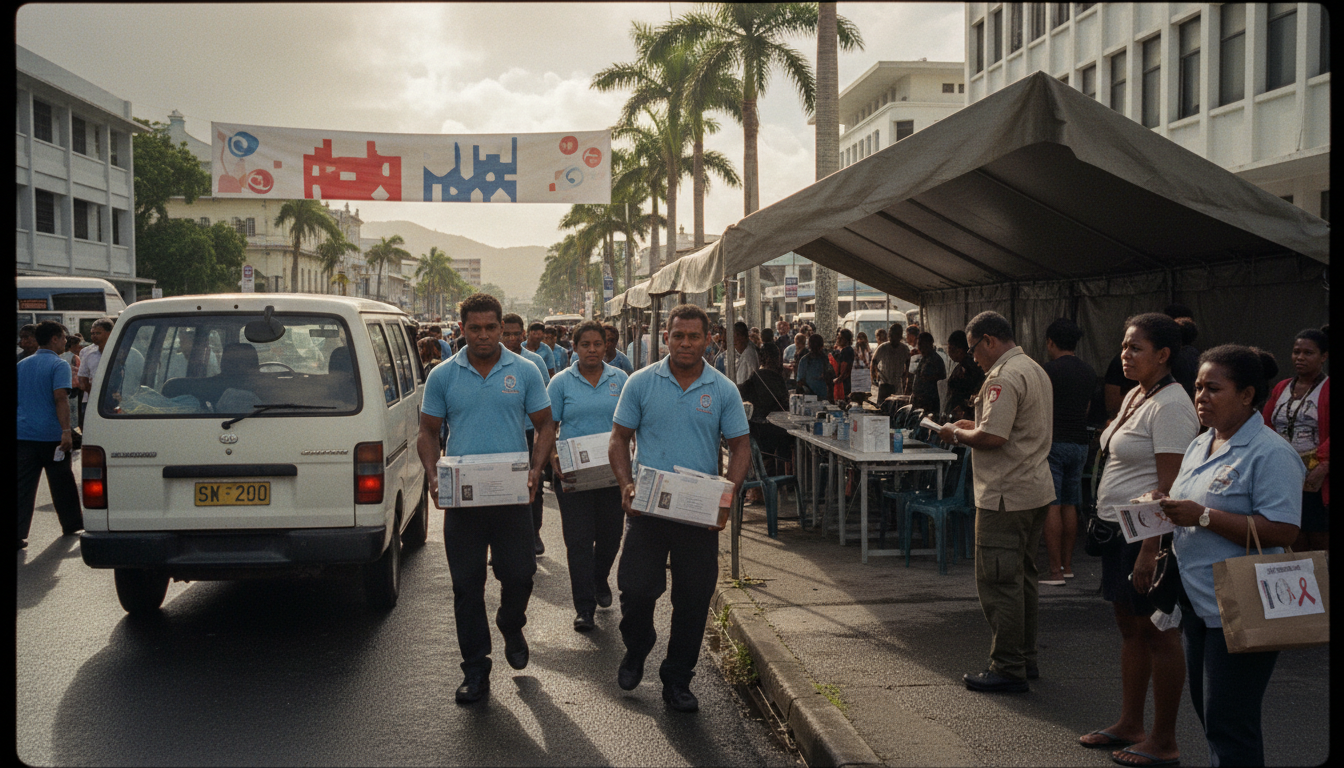
Fiji’s formal declaration of a national HIV emergency on September 15, 2026, by Health Minister Dr. Atonio Lalabalavu, marks a significant disruption to public health stability in the Pacific. This decision, backed by Prime Minister Sitiveni Rabuka and his Cabinet, comes as the government reports one in every 60 Fijian adults living with HIV. The gravity of this figure is amplified by historical data: five years prior, the estimate was one in 1667 adults. Further, 2060 new HIV diagnoses were recorded in 2024, and HIV prevalence among women attending antenatal care reached approximately two percent, meaning one out of 50 pregnant women now has HIV. These statistics underscore a rapid and severe escalation.
While this immediate crisis is centered in Fiji, its implications extend beyond the archipelago. The Asia-Pacific region, despite its geographical and developmental diversity, frequently experiences interconnected health and social challenges. Public health crises, whether infectious disease outbreaks or the rise of non-communicable diseases, rarely respect national boundaries. A rapid increase in HIV prevalence in one Pacific island nation suggests underlying systemic vulnerabilities – potentially in public health infrastructure, access to education, or social determinants of health – that may also exist in other states within the region. The specific mechanisms that allowed for such a dramatic increase in Fiji warrant close examination, as similar factors could be at play elsewhere. For Thailand, a country with its own complex history of public health responses and regional migration patterns, such a development in the Pacific could serve as a leading indicator for potential shifts in disease epidemiology or the efficacy of preventative measures.
The declaration of an emergency is a policy decision designed to mobilize resources and attention. It implies that existing mechanisms were insufficient to contain the spread. This situation differs from, for instance, sports victories like the Flying Fijians defeating Canada to play Japan in the Pacific Nations Cup final, or diplomatic engagements like the Australia-Fiji alliance signed shortly before China tested a missile in the Pacific. These events, while significant in their own domains, do not carry the same immediate weight of a public health system under severe strain. The fact that the Pacific Islands Forum meeting experienced turmoil with leaders withdrawing from a Palau summit shortly before this declaration might indicate a distracted or fragmented regional leadership, potentially hindering coordinated responses to shared challenges.
The historical trajectory of public health in the Pacific, often characterized by resource constraints and external dependencies, suggests that an internal emergency declaration might be a necessary, yet insufficient, step. The specific vulnerabilities that allowed HIV prevalence to jump from one in 1667 to one in 60 adults in five years are not isolated to Fiji. These may include socioeconomic factors, limitations in healthcare access, or cultural dynamics surrounding sexual health education. Without a clear understanding of these root causes and a regionally coherent strategy, the risk of similar trajectories in other Pacific or Southeast Asian nations remains. The ongoing challenge is to translate emergency declarations into sustained, effective, and regionally coordinated interventions that address both the immediate crisis and its underlying conditions. The specific policy responses Fiji implements will bear scrutiny for their replicability and effectiveness across the wider Asia-Pacific, particularly given the distinct developmental contexts of different states, from small island nations to larger continental economies.
Sources
Newsletter
Pacific Daily
A curated briefing from Thailand, Asia-Pacific and the world.