Fiji HIV Crisis Signals Broader Regional Policy Failure
The alarming rise in infant HIV infections in Fiji underscores a critical lapse in public health policy across the Asia-Pacific, moving beyond isolated outbreaks to systemic vulnerabilities.
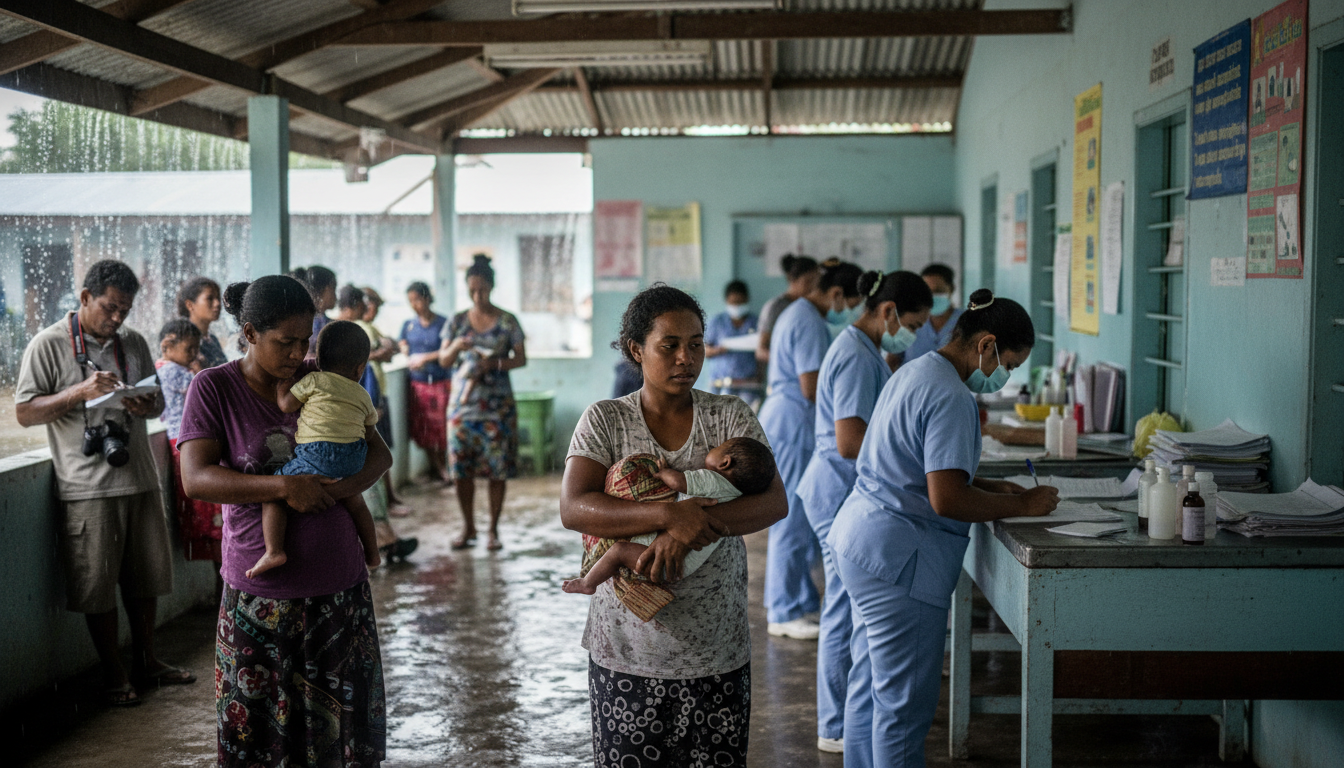
The report from RNZ Pacific, detailing a "horrendously high" number of HIV infections among babies in Fiji, signals a disruption to established public health patterns. One infant death per month from HIV-related complications and one new infection every week in Fiji are figures that demand a re-evaluation of regional health strategies. This situation, described by a health researcher as "pretty bad" and driven partly by increased drug use and needle sharing, highlights a failure to contain a preventable public health crisis.
Historically, countries across the Asia-Pacific have grappled with infectious diseases, often through a combination of public awareness campaigns, vaccination programs, and targeted interventions. The current situation in Fiji, where an estimated 9,000 Fijians were living with HIV in March of this year, with high-risk drug use cited by officials as contributing to a rapid rise, suggests a deviation from effective containment. While other regions have contended with outbreaks of measles in multiple states or concerns over whooping cough deaths, the specific challenge in Fiji points to a failure in preventing mother-to-child transmission and managing community-level infection vectors, particularly intravenous drug use.
For markets like Thailand, a key hub for regional tourism and trade, and other Southeast Asian nations, the Fijian experience offers a sobering lesson. While Fiji is geographically distant, the underlying factors—increased drug use and the associated health risks—are not unique. Policy responses often focus on border controls for disease vectors or large-scale vaccination drives, but the Fijian data suggests a need for more granular, community-level interventions. The New Zealand government’s SafeTravel advice, recommending travelers to Fiji avoid activities increasing infection risk, indicates an official acknowledgment of the pervasive nature of the issue.
What this means differently across separate markets varies significantly. In economically developed nations, robust health infrastructure and public education campaigns might mitigate such a rapid rise. However, in smaller island nations or regions with strained public health resources, the Fijian scenario could be replicated. The emphasis on high-risk drug use as a primary driver, as stated by a senior health researcher from Victoria University, points to a socio-economic and public health challenge that transcends national borders. A comprehensive regional strategy would require not just medical intervention but also addressing the social determinants of health, including drug policy and harm reduction programs.
The immediate consequence is a critical humanitarian concern for Fiji’s vulnerable population. The broader regional consequence is the exposure of vulnerabilities within public health systems that may have been overlooked or underfunded. While the precise mechanisms of transmission and spread differ from disease to disease, the failure to protect the most vulnerable underscores an unresolved tension between national health priorities and the interconnected nature of public health challenges in the Asia-Pacific.
Sources
Newsletter
Pacific Daily
A curated briefing from Thailand, Asia-Pacific and the world.