FC Barcelona's Long-Term VIP Strategy Signals Revenue Shift for Global Brands
The club's €700 million projected revenue from long-term VIP licences at Camp Nou indicates a broader trend of leveraging brand equity through structured, multi-year commitments, moving beyond traditional sponsorship models.
SINGAPORE
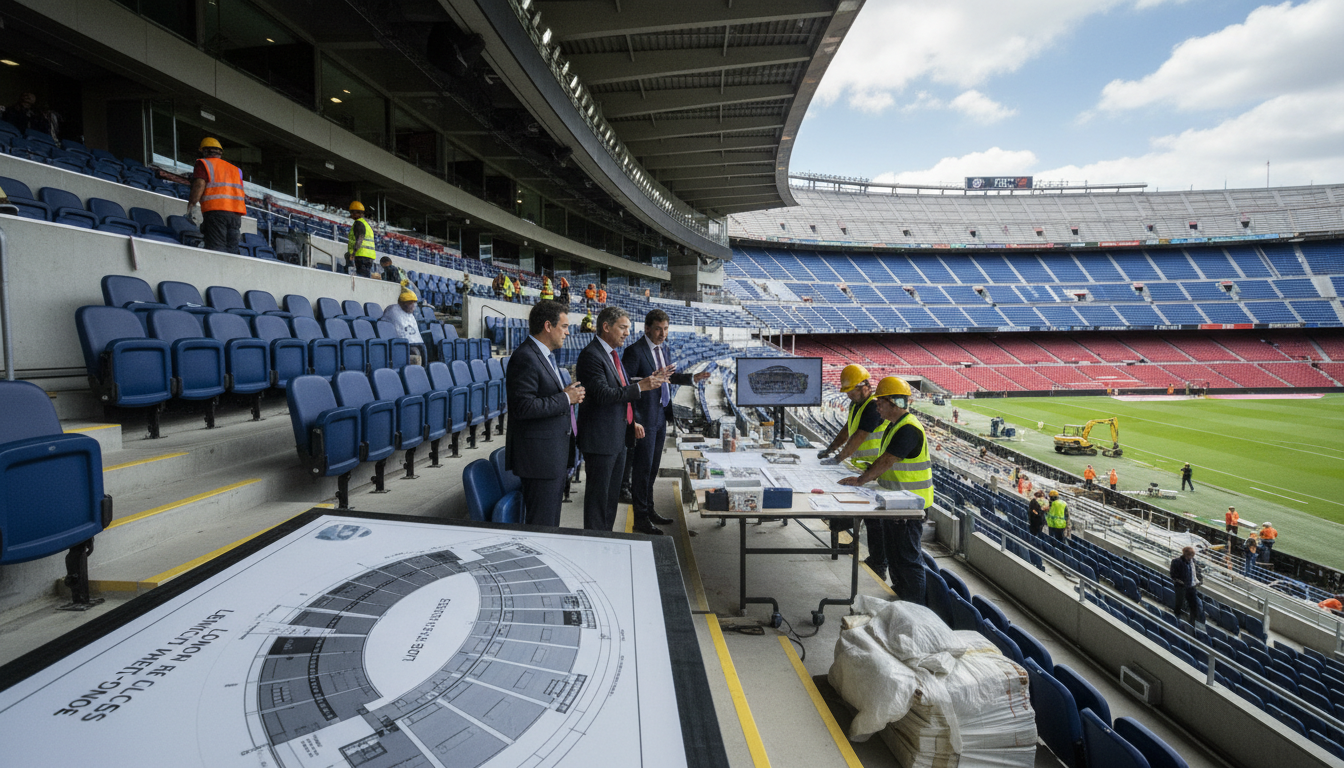
FC Barcelona's expectation to generate €700 million in revenue from 2,000 long-term VIP seat licences at the revamped Camp Nou stadium provides a quantifiable insight into evolving commercial strategies. The LaLiga club stated this projected revenue would come from 15- or 30-year licences, with buyers making an upfront payment. Barcelona expects all seats to be sold over the next two-and-a-half seasons, generating the €700 million over the duration of the contracts, according to the club. This move represents a direct monetisation of fan loyalty and premium access, distinct from the brand's established sponsorship portfolio.
Incentive Shift
The incentive for Barcelona is clear: secure substantial, committed capital over extended periods. This model reduces reliance on cyclical revenue streams like annual gate receipts or short-term sponsorships. For buyers, the incentive lies in guaranteed access and status, a premium that can justify significant upfront investment. This strategy operates in parallel with, rather than replacing, existing revenue streams such as multi-year foreign exchange partnerships with entities like EBC Financial Group, as secured in 2024, or renewals with SK Lubricants in 2021 and Head & Shoulders in 2021. These varied approaches demonstrate a segmentation of commercial opportunities.
This VIP seat initiative represents a structural shift in how large, globally recognised brands are approaching revenue generation. It moves beyond simple brand association or advertising placements towards creating high-value, long-term engagements with a specific segment of their consumer base. The upfront payment model transfers some financial risk from the club to the buyer, while providing immediate capital injection.
Implications for Asia-Pacific
While this particular initiative directly concerns Barcelona, its underlying logic holds implications for brands with significant reach in the Asia-Pacific. Regional entities, particularly those in sports, entertainment, or luxury sectors, often look to established global models for innovation in commercialisation. Barcelona's reported efforts for global expansion in India in 2019 signal a strategic interest in the region, positioning it as a market for potential replication or adaptation of such models.
The long-term VIP licence model demonstrates a clear incentive to unlock committed capital from a high-value customer segment, a pattern that transcends geographical boundaries.
For businesses in Thailand and the broader Asia-Pacific, particularly those with strong brand affinity or unique assets, this structured long-term commitment model offers an alternative to traditional, shorter-term commercial agreements. The constraint that remains unresolved for any aspiring regional brand is the necessity of cultivating a sufficiently strong and affluent customer base willing to commit to such long-duration, high-value packages. The outcome now depends on whether regional brands can build brand equity capable of sustaining such premium offerings.
Sources
Newsletter
Pacific Daily
A curated briefing from Thailand, Asia-Pacific and the world.