Duterte's ICC Hearing Appearance: A Regional Anomaly
The former Philippine president's presence at the September 2026 hearing signals a deviation from established regional practices regarding international legal engagement.
SINGAPORE
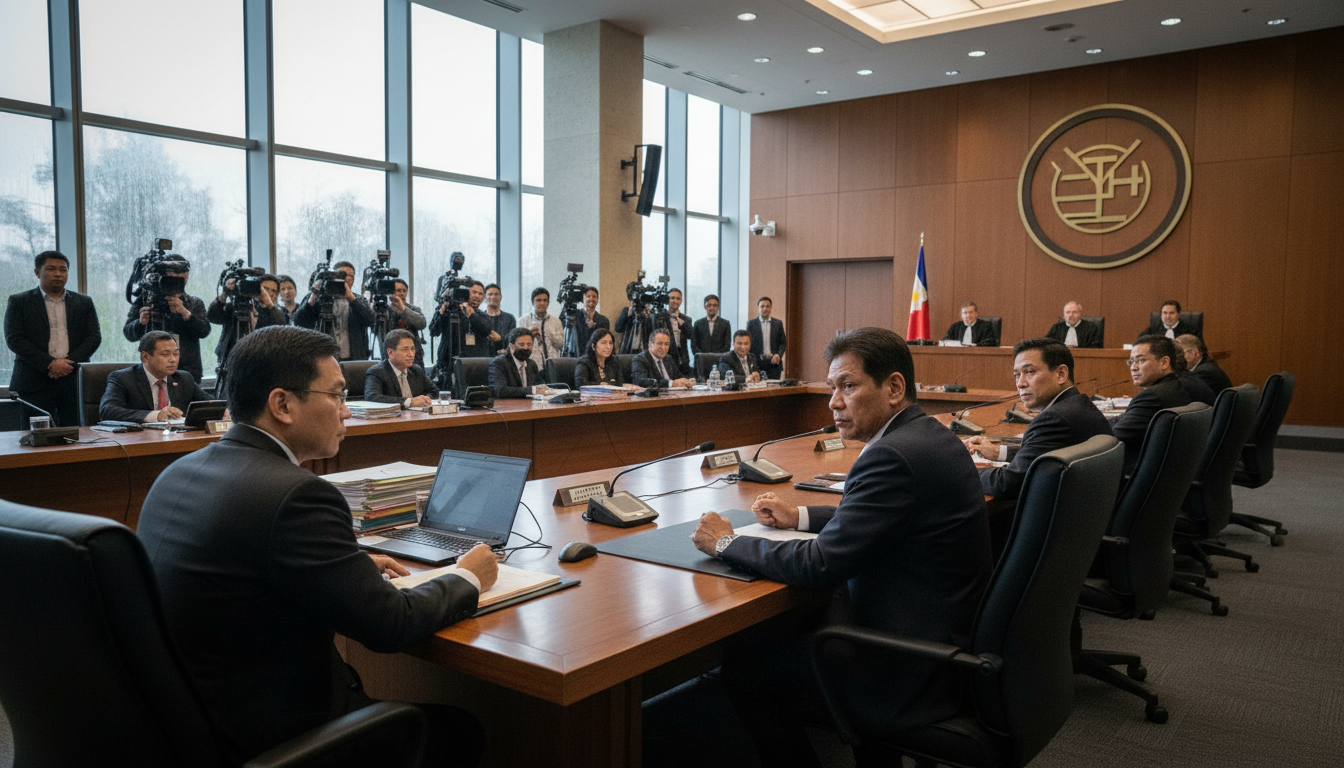
Rodrigo Duterte's attendance at the September 16, 2026, hearing represents a departure from the historical inclination of former heads of state in the region to avoid international judicial scrutiny. This event is not merely a legal proceeding; it signals a shift in the regional calculus concerning state sovereignty and individual accountability.
Leaders in the Asia-Pacific have historically asserted national sovereignty to maintain distance from international oversight. The Philippines, under Duterte, previously initiated a withdrawal from a specific international court in 2019. His appearance at a hearing in 2026, however, suggests a potential re-evaluation of this stance or at least an acknowledgement of sustained pressure for international engagement. The confirmation of an arrest warrant for Bato dela Rosa on May 11, 2026, an individual associated with Duterte, illustrates the persistent pursuit of cases originating from the Philippines, independent of state actions.
This development raises questions for other nations in the region. Thailand, like many of its neighbours, has historically maintained a cautious approach toward international legal frameworks that could be perceived as impinging on domestic affairs. The precedent set by a former president attending a hearing, even one who previously distanced their nation from the court, challenges the perception of absolute immunity for leaders who have left office. While it does not compel other states to engage, it introduces a new dynamic to regional considerations of accountability.
Conversely, this attendance could be a strategic choice, designed to influence the court's proceedings or public perception rather than being an acceptance of international legal authority. One might contend that by appearing, Duterte aims to present a narrative intended to complicate the prosecution's case. The political landscape within the Philippines, as seen with Jed Mabilog, once a target of Duterte, joining an unspecified government department on May 13, 2026, indicates a fluidity that could factor into such strategic decisions. This suggests that complex internal dynamics might inform external actions.
The unresolved tension lies in whether this appearance signals a shift towards greater acceptance of international judicial oversight for high-level officials, or if it merely represents a new tactical approach to navigating international legal processes. The immediate consequence is a disruption to a pattern of non-engagement, but the long-term impact on regional adherence to international legal norms remains unclear.
Sources
Newsletter
Pacific Daily
A curated briefing from Thailand, Asia-Pacific and the world.