Curriculum Changes Signal Future Skills Gap for Asia-Pacific Climate Adaptation
New Zealand's educational shift away from early climate change education could disadvantage its future workforce in a warming region.
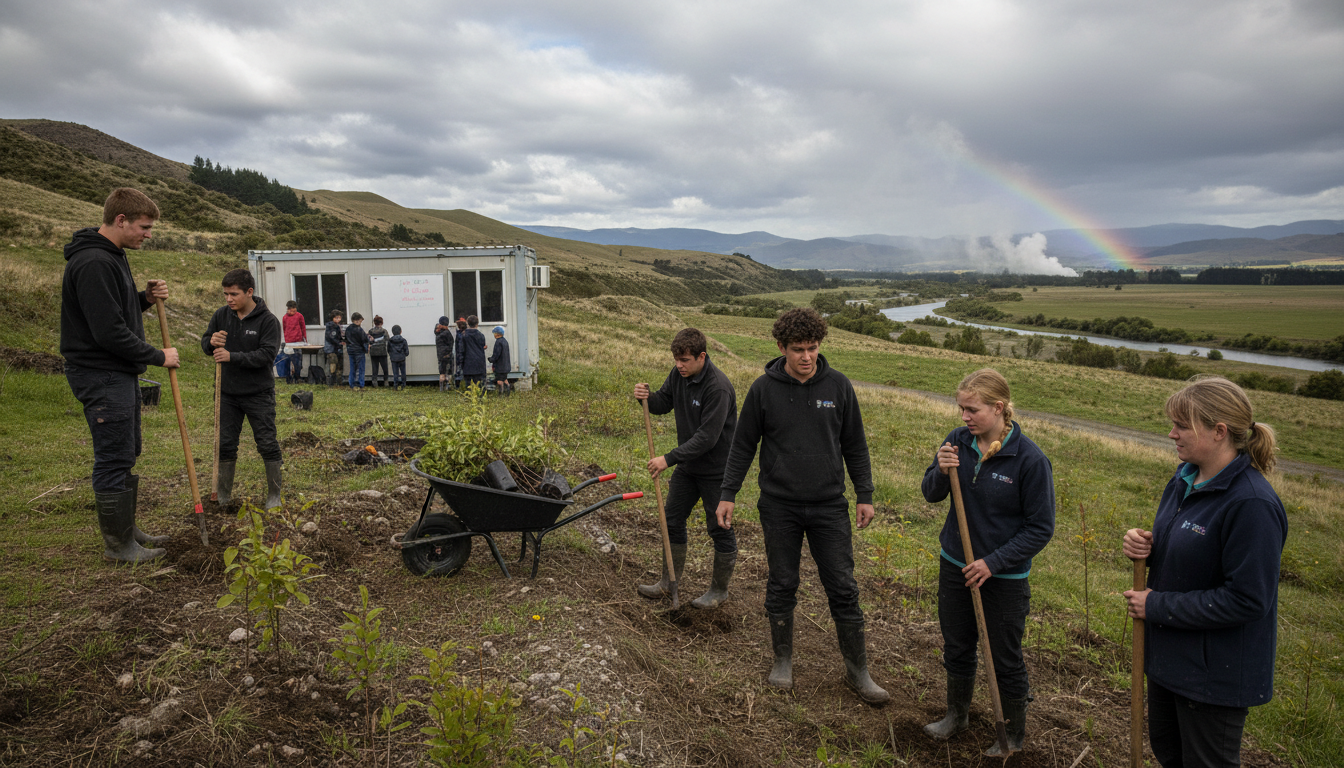
New Zealand’s updated school curriculums, published in August 2026, have removed specific climate change mentions before senior secondary school, a decision a science education expert described as 'incomprehensible'. Waikato University’s Chris Eames observed a lack of emphasis on the link between human behavior and climate change within these new guidelines. The Ministry of Education, however, maintains that students will learn about climate change causes and community responses over time.
This policy shift creates a specific challenge for the Asia-Pacific region. As climate change intensifies, the demand for specialized skills in climate adaptation, green technology, and sustainable infrastructure is projected to increase. Other nations, such as the US, are actively 'greening' their career education, with states like Connecticut making climate change studies compulsory. This divergence in educational priorities creates an incentive for future talent migration, particularly among those equipped with in-demand climate competencies. Students in regions with earlier and more integrated climate education may gain an advantage in the global labor market for climate-related fields.
While the Ministry of Education asserts that climate education is still present, the absence of explicit, early-stage instruction on human impact could limit the foundational understanding necessary for developing innovative solutions. The argument that the social sciences document, updated in response to concerns, addresses geography's role in climate change, still leaves a gap for scientific understanding of causality. For instance, the 2019 observation that school curriculums globally failed to reflect the urgency of the climate crisis, or the 2023 approval of climate science-denying videos in Florida's state curriculum, demonstrates varied and sometimes contradictory approaches to this critical subject. This highlights the risk of inconsistent educational standards across different jurisdictions.
From a market perspective, a delayed or diluted curriculum may lead to a workforce less prepared for the financial and infrastructural demands of climate mitigation and adaptation. Companies operating in the Asia-Pacific will require professionals capable of navigating complex environmental regulations, designing resilient systems, and developing sustainable business models. If the local talent pool lacks these specific skills, firms will either need to invest heavily in retraining or seek expertise from international markets. This would raise operating costs for businesses and potentially slow down the region’s overall adaptive capacity.
The immediate financial implications for New Zealand are not quantifiable from the available data, but the long-term impact on human capital development and economic competitiveness remains a significant concern. The outcome now depends on whether the Ministry of Education's general approach sufficiently equips students, or if it inadvertently prices a generation out of the emerging climate economy, forcing them to seek opportunities where such skills are valued and taught earlier.
Sources
Newsletter
Pacific Daily
A curated briefing from Thailand, Asia-Pacific and the world.