Cotabato violence indicates political instability costs rise for regional stability
Election-related incidents in Cotabato City signal an escalating challenge to governance frameworks and economic predictability in the Bangsamoro Autonomous Region in Muslim Mindanao, with broader implications for Southeast Asia.
SINGAPORE
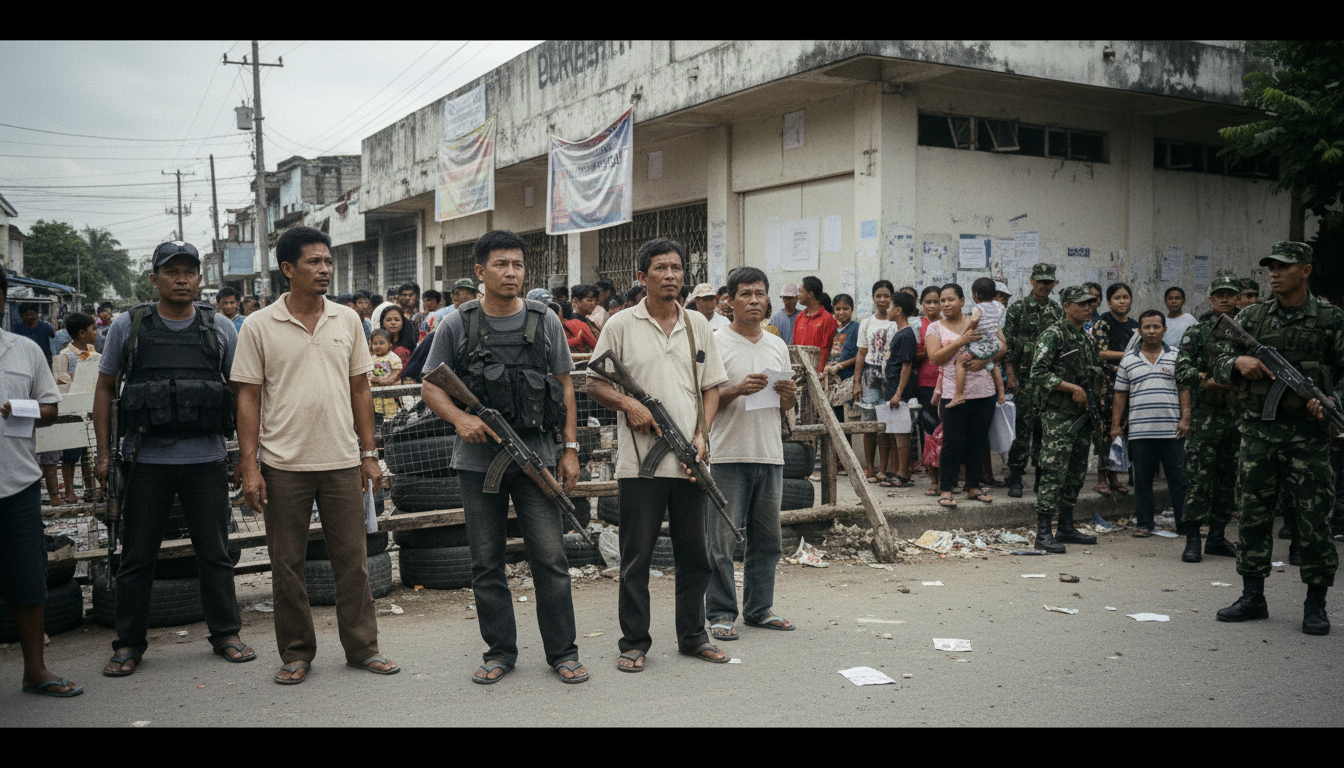
The reported election-related violence in Cotabato City, which resulted in 4 deaths and 19 injuries on 2026-09-14, followed by the placement of the city under Comelec control, signals a concerning pattern. This is not an isolated event but part of a documented sequence of incidents within the Bangsamoro Autonomous Region in Muslim Mindanao (BARMM). Prior to this, violence had already "marred election morning" in the regional center, and a 2025-06-19 report detailed continued post-election violence in Cotabato and Basilan, involving a gunman killed and 7 others injured.
The incentive structure within BARMM appears to encourage conflict during electoral processes. The repeated occurrence of violence around elections suggests that political actors perceive non-peaceful means as viable, or even necessary, to secure power. This perception undermines the formal democratic mechanisms that regional autonomy was intended to solidify. The declaration of Comelec control over Cotabato City, a regional center, is a direct response to this perceived failure of local governance to ensure order. This intervention indicates that the state apparatus acknowledges the inadequacy of existing local controls to manage electoral contention.
The beneficiaries of this instability are primarily those who gain power through extra-legal means or who exploit the resulting chaos. Conversely, the economic stability and developmental trajectory of BARMM suffer. Investment, both domestic and foreign, requires a predictable security environment and stable political institutions. The recurring violence, alongside other documented tragedies such as a road mishap in Cotabato killing 17 in March 2024 and an earthquake-induced landslide claiming 32 lives in June 2026, cumulatively signal an environment with elevated risk perceptions. While natural disasters are distinct from political violence, their combined effect on investor confidence is negative, as both contribute to an unpredictable operational landscape.
### Incentive shifts and regional implications
The pattern of violence suggests a systemic issue, not merely sporadic criminal acts. The state's response—Comelec control—is a formal mechanism to restore order, but it also highlights the limitations of the existing political settlement. The continued reliance on direct intervention by a national body to manage regional electoral processes indicates that the institutional framework designed for BARMM autonomy is not yet robust enough to withstand internal political pressures without external oversight. This creates a disincentive for long-term strategic investment, as political risk premium calculations will rise. Foreign direct investment, particularly for infrastructure and resource development, will likely face higher hurdles.
For the broader Asia-Pacific, such persistent instability in a nascent autonomous region carries implications for regional security cooperation and counter-terrorism efforts. A region prone to internal conflict can become a vector for wider instability, complicating the strategic calculus for neighboring states like Thailand. While the immediate impact on Thailand is indirect, the underlying conditions — political contestation escalating into violence, state intervention, and compromised rule of law — present a precedent that other developing regions might observe. The unresolved constraint remains the persistent political incentive for violence during elections, despite formal autonomy and regulatory oversight. The outcome now depends on whether the interventions can fundamentally alter these incentives, beyond simply managing the symptoms of conflict.
Sources
Newsletter
Pacific Daily
A curated briefing from Thailand, Asia-Pacific and the world.