Contract Bargaining Collides With Athlete Health Safeguards at Bayern Munich
The dispute between FIFPRO and German football executives marks a structural clash over public leverage and medical recovery
SINGAPORE
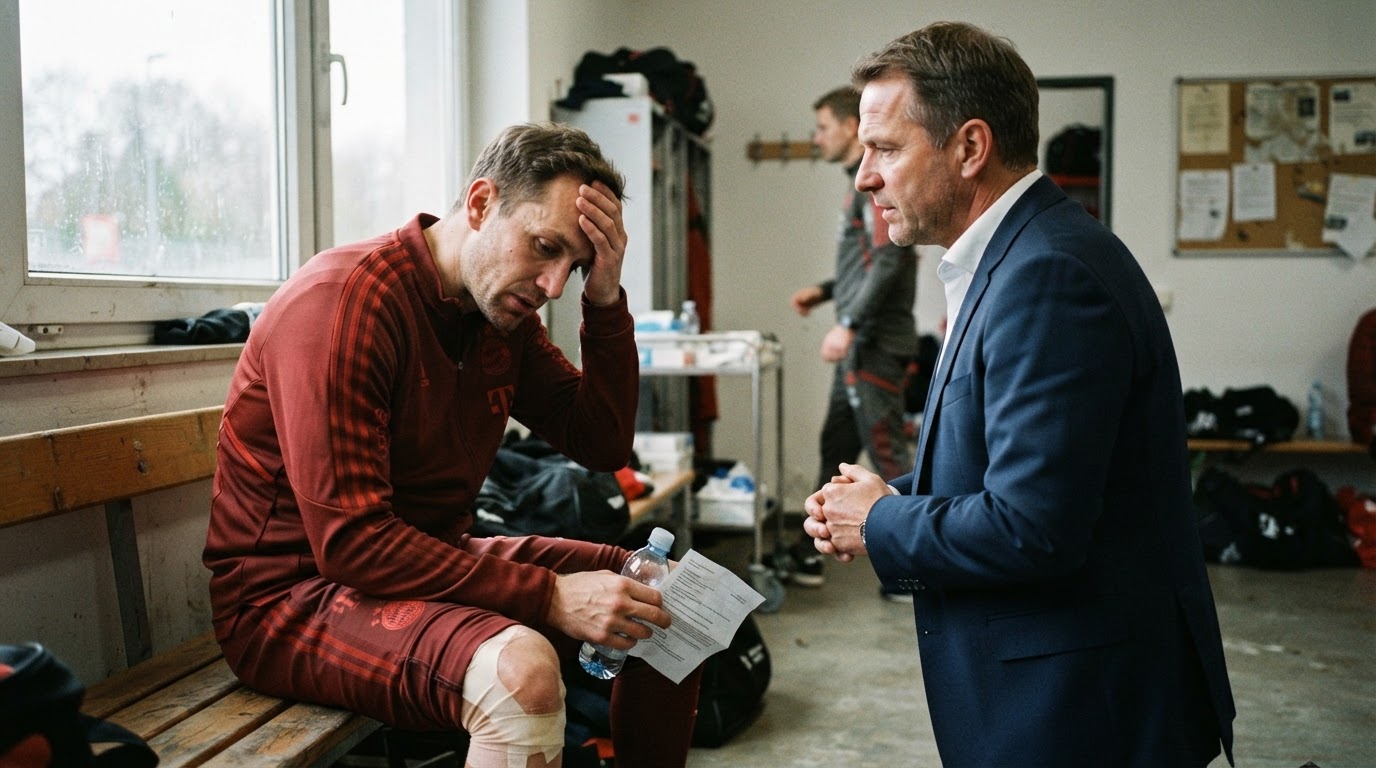
Institutional leverage in professional football has long operated through public signaling, yet that informal mechanism has encountered a sharp regulatory challenge from organized labor. On Saturday, global players union FIFPRO announced it was deeply concerned by public commentary from Bayern Munich leadership regarding the contract of midfielder Jamal Musiala. The union accused the German champions of exerting undue pressure on Musiala while he recovers from health problems, challenging remarks delivered by honorary president Uli Hoeness, CEO Jan-Christian Dreesen, and supervisory board member Karl-Heinz Rummenigge.
Historically, European sporting clubs have treated senior executive commentary as an accepted extension of administrative negotiations. When figures who carry supervisory and executive standing such as Dreesen, Hoeness, and Rummenigge communicate contract expectations through public media, their remarks function as institutional signaling rather than casual opinion. What changes with the union objection is the formal boundary between strategic executive communication and labor coercion. By defining managerial statements about contract timelines during medical recuperation as improper workplace pressure, FIFPRO seeks to restrict how club directors deploy their institutional standing against players navigating health setbacks.
Supervisory Authority and Asymmetric Power
Corporate hierarchies in elite sport face commercial incentives to secure asset value long before player registrations reach expiration. Within executive offices in Germany, public declarations by established figures reflect an attempt to project organizational stability and control asset depreciation risks. The structural asymmetry in this dynamic remains clear, however. Club leadership maintains direct access to media infrastructure and supervisory authority, whereas an individual employee undergoing physical rehabilitation lacks comparable institutional platforms to manage public expectation.
The intervention establishes that executive speech constitutes active workplace pressure when directed at an injured employee.
This tension highlights the divided status of modern athletic labor. Even as high-profile performers compete on premier stages, such as the Bundesliga fixture on November 20 at the Allianz Arena in Munich where Musiala played against Isak Johannesson of FC Cologne, their fundamental legal classification remains that of contracted personnel entitled to workplace health safeguards. The union position infers that medical rehabilitation cannot be subordinated to corporate bargaining strategies without violating established workplace welfare expectations.
Unresolved Institutional Friction
Across international sports governance, this dispute illustrates the operational gap between administrative prerogative and cross-border labor representation. Club hierarchies argue implicitly that organizational stewardship justifies speaking publicly about contractual assets. Conversely, international player bodies maintain that medical recovery must be quarantined from corporate posturing, regardless of an athlete's market prominence.
Neither side has relinquished institutional ground. Bayern Munich retains its established executive authority, while FIFPRO maintains its formal objection to public bargaining leverage. The structural tension between administrative communication and employee health protections remains unresolved across global sporting governance.
Sources
Newsletter
Pacific Daily
A curated briefing from Thailand, Asia-Pacific and the world.