Conflict Photography Reveals Structural Shifts in Human-Wildlife Coexistence
Federico Borella's work in Sri Lanka highlights a changing dynamic with implications for Southeast Asia.
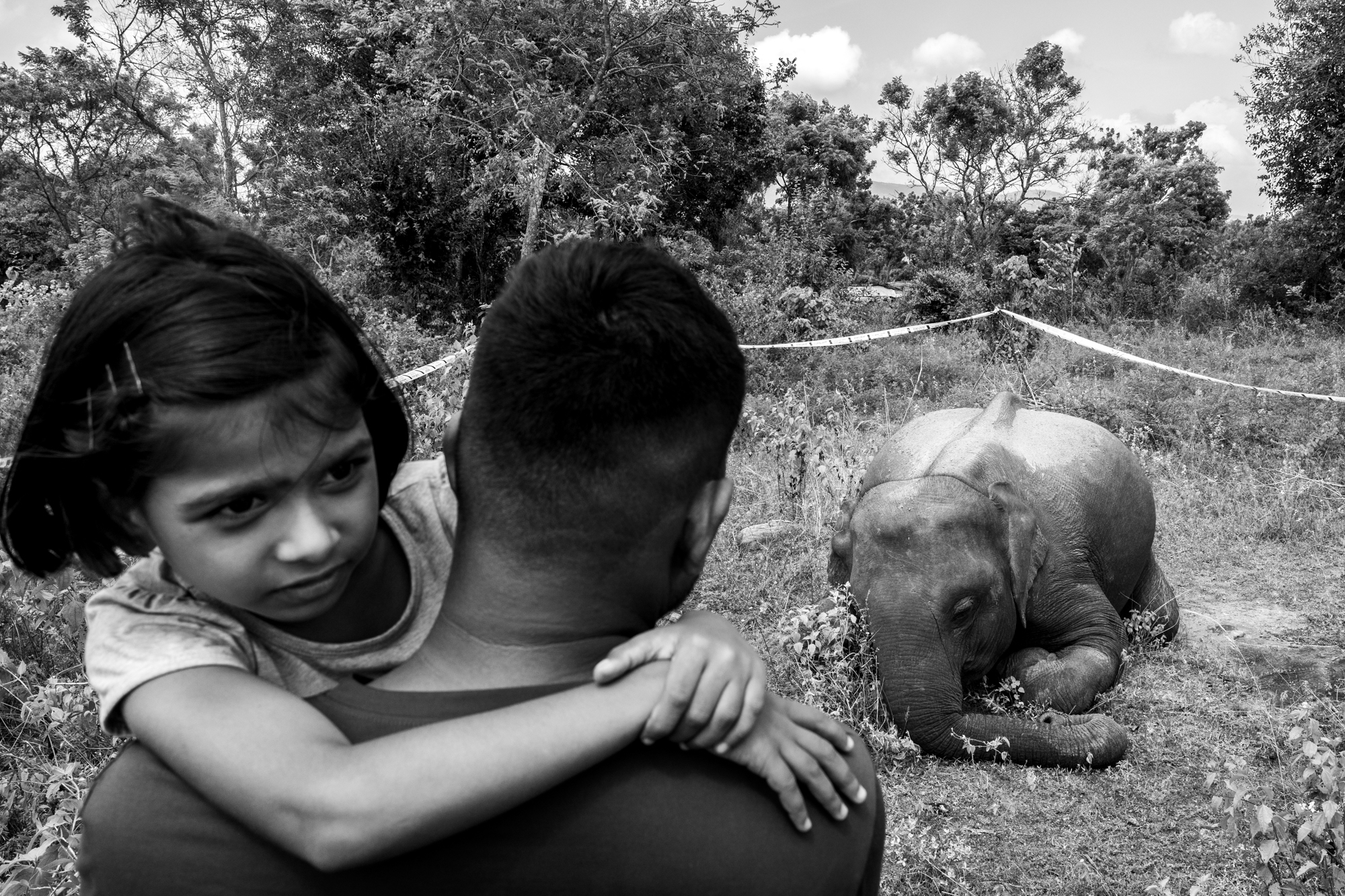
The report from Mongabay Asia, dated September 22, 2026, on Federico Borella’s photographic documentation of Sri Lanka’s human-elephant conflict, reveals more than just visual evidence of environmental struggle. It points to a structural shift in how human populations adapt to and manage proximity with large wildlife. Borella, described as an award-winning Italian photographer, has focused on Sri Lanka for four years, intending to record the complexity of this interaction. His stated observation — “I have seen something close to veneration toward elephants, and even after being victims of elephant attacks, people are often kind to them” — challenges a simple narrative of conflict and suggests a complex social response.
This perspective from Sri Lanka, while geographically distinct, holds relevance for regions like Thailand and other parts of Southeast Asia, which face their own significant human-wildlife interface challenges. The conventional approach to such conflicts often prioritizes mitigation strategies centered on separation or, in some cases, eradication. However, Borella’s findings suggest a different, more nuanced reality on the ground: a sustained coexistence, even in the face of direct harm. This indicates that traditional power dynamics, where human expansion invariably displaces or eliminates wildlife, may be evolving under certain conditions. The decision-making power regarding local wildlife management may be shifting, at least partially, from top-down policy to community-level accommodation.
For example, while human-elephant conflict in Thailand often results in calls for stricter control measures or relocation, the Sri Lankan context, as documented by Borella, highlights enduring community-level tolerance. The photographer notes that “Not everyone wants to retaliate or harm elephants, which is also a part of their relationship.” This internal classification of an ATTRIBUTED CLAIM from Borella suggests that even where human lives and livelihoods are directly threatened, outright hostility is not a universal response. The implication is that a deeper analysis of community structures and cultural relationships with wildlife is necessary before policy interventions are formulated. Policy that overlooks these ingrained community responses risks failure or even exacerbating conflict.
### The Shifting Calculus of Coexistence
The evidence provided by Borella’s work points to a calculus of coexistence that defies simple economic or safety assessments. It indicates that the ‘cost’ of living with wildlife, even dangerous wildlife, is not solely measured in tangible losses. There are cultural, historical, and perhaps even spiritual factors that contribute to what Borella describes as “veneration.” This complicates the typical structural analytical framework that often views land use and resource competition as purely rational economic decisions. Instead, it suggests a more complex, multi-layered decision-making process at the community level. The question is not only what changed structurally, but who now holds the decision regarding the definition of acceptable risk and the value placed on shared landscapes.
One could argue that the documented “veneration” and kindness towards elephants, despite attacks, might be an isolated cultural anomaly specific to certain Sri Lankan communities, or perhaps a consequence of limited alternatives for dealing with large wildlife. This is a reasonable counterargument, suggesting that such sentiments might not be transferable or generalizable to other regions, including parts of Thailand where different cultural norms or economic pressures prevail. However, even if an outlier, this observation serves to highlight the limitations of a singular, globally applied approach to human-wildlife conflict. It underscores the importance of local context in understanding human behavior when faced with resource competition from animals.
Ultimately, Borella’s documentation forces a re-evaluation of the default assumption that human-wildlife conflict inevitably leads to human dominance or wildlife eradication. The persistence of what he calls a “unique relationship” between people and elephants, even in the face of direct conflict, suggests a potential for more integrated, community-led conservation models. The outcome now depends on whether policymakers in regions like Southeast Asia are prepared to incorporate these complex, culturally embedded dynamics into their structural approaches to wildlife management, moving beyond purely protectionist or economically driven frameworks. The constraint that remains unresolved is how to leverage these existing community tolerances and relationships into sustainable, long-term coexistence strategies, rather than imposing external solutions.
Sources
Newsletter
Pacific Daily
A curated briefing from Thailand, Asia-Pacific and the world.