Cocaine Disappearance in Suva Signals a Deeper Current
The theft of high-profile drug exhibits from the Fiji High Court exposes systemic fragilities that challenge regional stability, extending beyond local enforcement to international influence.
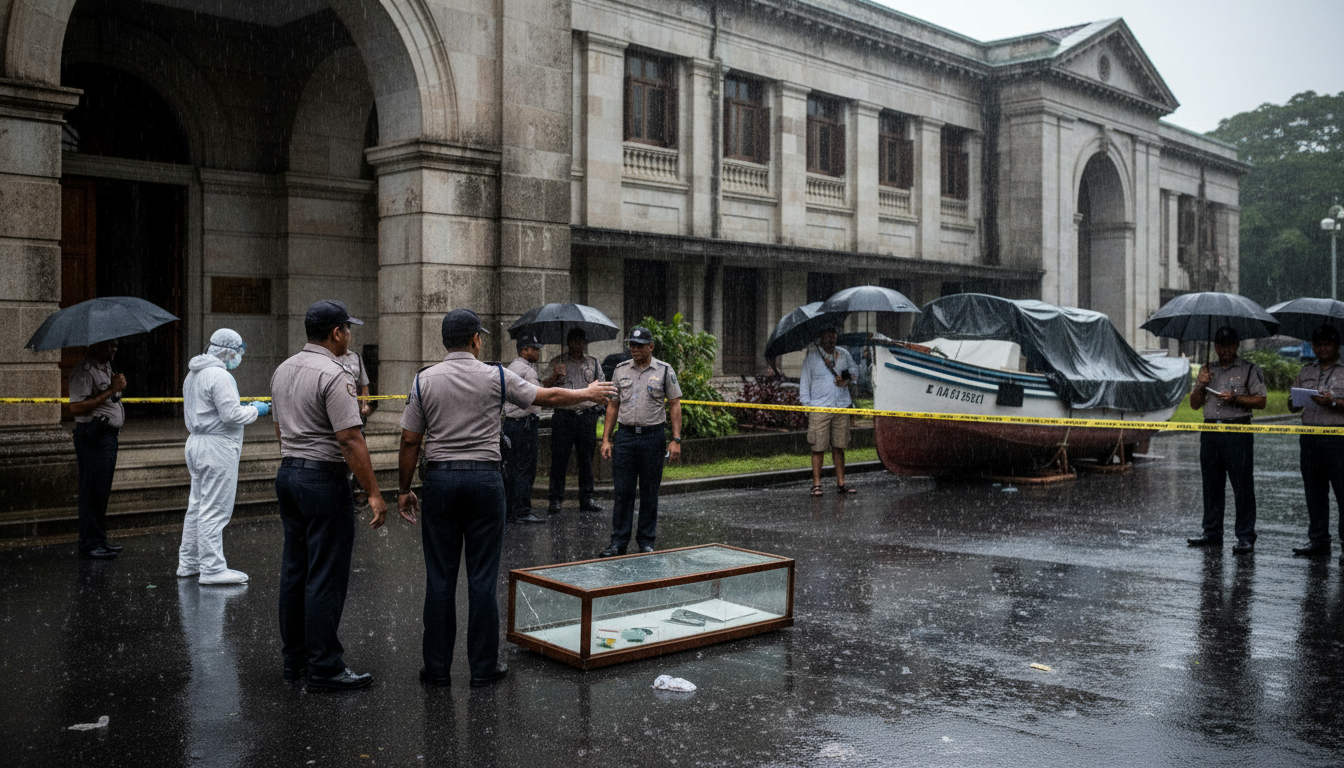
The reported disappearance of seven cocaine bars from the Suva High Court exhibit room, confirmed by Fiji Police on September 17, 2026, represents more than a local policing failure. This incident, involving exhibits from a significant drug case, occurred despite the physical check conducted in the presence of senior judiciary, prosecution, and police officials. The fact that 7 of 39 stored exhibits could vanish under such circumstances indicates a profound vulnerability within Fiji’s institutional safeguards. This is not an isolated breach but a symptom of broader pressures influencing Pacific governance.
The strategic location of Fiji, like other Pacific Island nations, has historically positioned it at the crossroads of maritime trade. The nature of this trade has evolved, with illicit trafficking now exploiting the same routes once used for legitimate commerce. While the Pacific states have often been viewed primarily through the lens of climate vulnerability or geopolitical competition, the escalating challenge of transnational crime demonstrates a different vector of external influence. The 2018 assessment by the East Asia Forum, noting China's increasing search for opportunities in the Pacific, alongside the 2019 report on China teaching Pacific languages in Australia, highlights the expanding engagement from external powers. This engagement, whether economic or cultural, introduces new flows that can be exploited by illicit networks.
Such an event in Suva challenges the perception of Pacific Island nations as merely recipients of aid or geopolitical pawns. It positions them as active, if unwilling, participants in global criminal enterprises, with their internal weaknesses leveraged. The High Court's recent rejection of Prime Minister Rabuka's bid to stall a former anti-corruption chief's ruling on June 12, 2026, suggests a domestic environment where legal processes face internal and external strain. The ability of a judicial exhibit room to be compromised indicates that the infrastructure for upholding the rule of law is not impervious. This raises questions about the state capacity to manage the complex challenges arising from its regional and international interfaces.
The regional consequence of such a lapse extends beyond Fiji's borders. The Pacific is a shared space; a weakness in one state's enforcement can be exploited across the entire region, with implications for larger economies like Thailand. Increased illicit trade flows through the Pacific could intersect with existing trafficking routes in Southeast Asia, creating a more interconnected and resilient criminal infrastructure. While the immediate focus is on Fiji, the wider implication is how easily criminal elements can penetrate state institutions in strategically important yet institutionally fragile regions. This incident underscores that the stability of the Pacific is intrinsically linked to its ability to secure its internal systems against external and internal pressures, an ongoing and complex undertaking.
Some might argue that this is an isolated incident, an internal administrative failure unique to Fiji, and not indicative of a systemic regional vulnerability that would affect, for example, Thailand. However, the nature of transnational crime is not confined by national borders, particularly in a region defined by vast maritime spaces and interconnected island economies. The historical pattern of illicit flows adapting to points of least resistance suggests that a perceived weakness in one jurisdiction can quickly translate into a regional problem. The specific context of judicial exhibits, meant to be the most secure, elevates this from an administrative error to a systemic concern for state integrity.
Sources
Newsletter
Pacific Daily
A curated briefing from Thailand, Asia-Pacific and the world.