Citizen Action on School Violence Reveals Policy Gaps in Southeast Asia
While official responses often center on national frameworks, localised efforts to address school violence highlight varying capacities and priorities across the region.
SINGAPORE
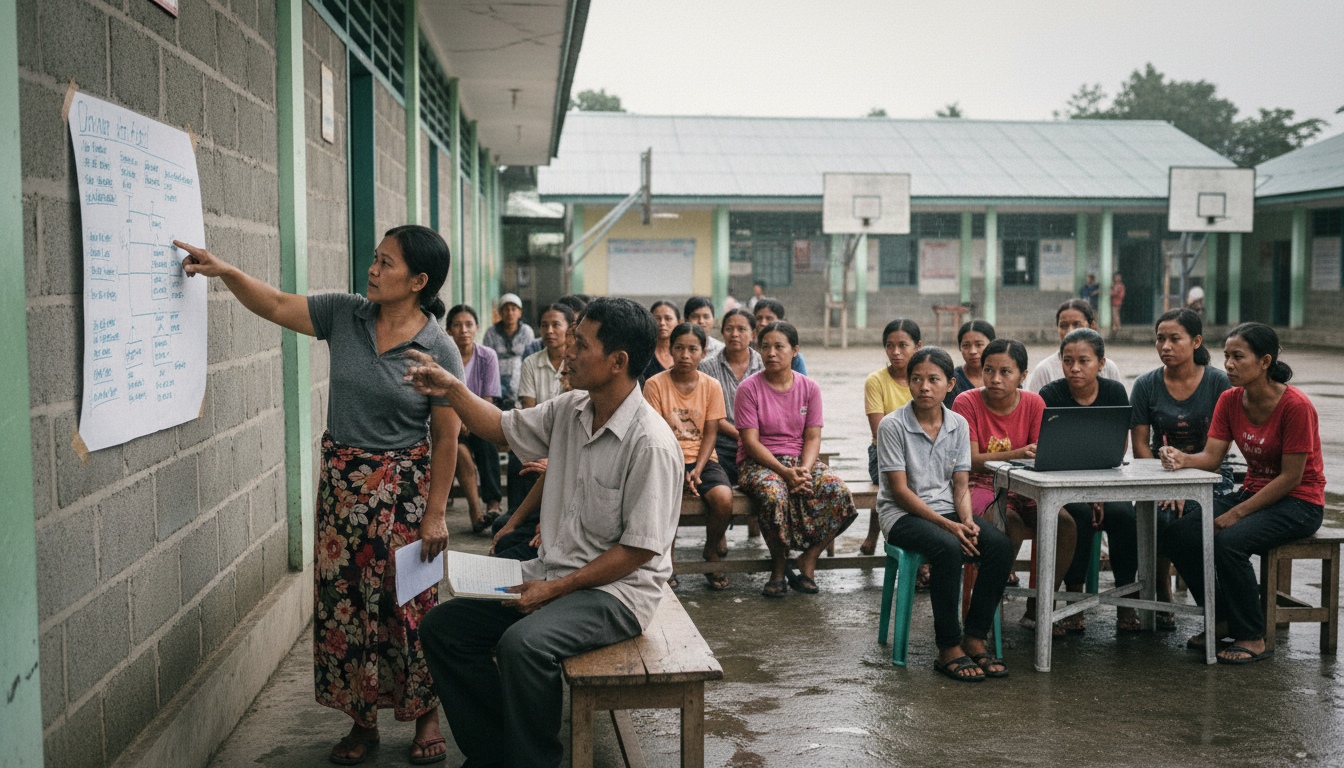
Reports from the Philippines on September 22, 2026, detail citizen-led efforts to mitigate school violence, featuring parents and teachers proposing solutions. This focus on immediate, community-level interventions underscores a pattern observed across Southeast Asia, where local initiatives frequently emerge to fill gaps in broader policy responses. While national governments often articulate high-level policy frameworks for education and safety, the practicalities of implementation and the nuances of diverse educational environments often necessitate, and receive, localised engagement.
The emphasis on citizen involvement in the Philippines suggests that, despite policy discussions, a disconnect persists between national mandates and on-the-ground realities. For Thailand, the implications are distinct. Historically, the Thai educational system has been highly centralised, with curriculum and safety protocols largely dictated from Bangkok. While this structure aims for uniformity, it can inadvertently stifle local adaptation to specific challenges, including school violence. The Philippine model, where diverse stakeholders directly engage, contrasts with a top-down approach, revealing potential weaknesses in anticipating and responding to varied regional needs within a larger policy framework.
Singapore, with its robust administrative capacity, presents a different dynamic. While school violence receives significant attention and resources, the scale and nature of citizen-led initiatives might differ, with official channels often absorbing such input more directly. However, even in highly structured environments, the efficacy of policy is often tested at the point of delivery. The Rappler report highlights that "those directly involved with children — from parents to teachers — can contribute in their own ways to a safer school environment." This statement, attributed to the source summary, suggests a universal recognition of granular involvement regardless of a nation's administrative structure.
This regional variation means that a single, overarching solution to school violence remains elusive. The challenge in Southeast Asia is not merely acknowledging the issue, but understanding how varying degrees of centralisation, community empowerment, and resource allocation shape effective intervention. While broad policy statements are common, the actual mechanisms for ensuring safe school environments depend heavily on how each market translates policy into practice, and critically, how it integrates, or fails to integrate, the direct knowledge of those most affected.
Sources
Newsletter
Pacific Daily
A curated briefing from Thailand, Asia-Pacific and the world.