Brazil's Amazon Compromise: A Precedent for Resource States and Asia-Pacific
The recent creation of new Amazon reserves in Brazil, while a tactical shift, reflects a deeper structural challenge for states balancing economic development and environmental mandates, echoing dilemmas across resource-rich regions, including the Asia-Pacific.
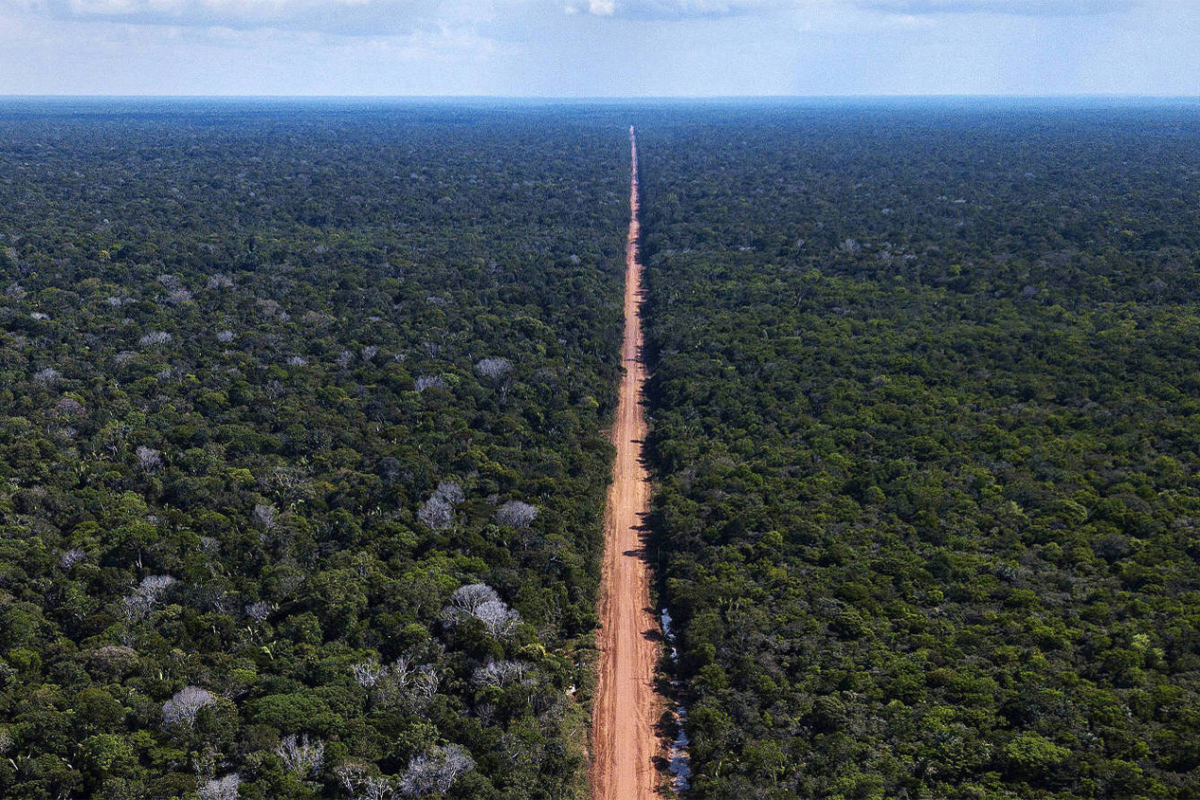
The Brazilian government's decision to establish four new sustainable development reserves in the Amazon, concurrent with plans to pave the BR-319 highway, indicates a structural response to conflicting pressures. On September 8, President Luiz Inácio Lula da Silva signed decrees protecting over 668,000 hectares (1.65 million acres) of rainforest under a sustainable-use model, which allows existing residents to extract forest products. This action is explicitly framed as an effort to mitigate environmental damage from the highway project, which conservationists predict will increase deforestation through one of the Amazon's most intact areas [1].
This sequence of actions reflects an ongoing tension in Brazil, one that has seen policy reversals regarding environmental protection. In 2017, the Brazilian government first abolished a vast Amazon reserve, opening it to mining [4], only to backtrack on the plan later the same year [3]. More recently, President Lula da Silva promised an environmental policy overhaul in 2022 [5], campaigning on a platform that included the Amazon's protection. The current decision, therefore, appears not as a singular commitment to conservation, but rather as an attempt to manage the externalities of a large-scale infrastructure project. The Financial Times noted in 2025 that Brazil plans "to make the Amazon pay" [2], suggesting an underlying economic imperative for resource exploitation.
The implication for Asia-Pacific states is clear: governments reliant on natural resources for economic growth face similar structural constraints. The Brazilian model of attempting to "mitigate" environmental impact while proceeding with development projects may serve as a precedent. It demonstrates a state asserting its sovereignty over resource management while acknowledging, even if minimally, international and domestic environmental concerns. This reflects a shift from outright resource protection to a more complex negotiation of sustainable exploitation.
However, the effectiveness of these new reserves as true mitigation remains uncertain. The "sustainable-use model" permits extraction, which, coupled with increased access from the BR-319, may still lead to intensified pressure on forest resources. The road's impact on "one of the most intact parts of the rainforest" suggests that any mitigation effort would face an uphill battle against the fundamental structural change introduced by improved access. Critics have previously highlighted the threat that large infrastructure projects, such as a proposed Amazonian railway linked to China, pose to indigenous populations and the rainforest [6].
Ultimately, the Brazilian government now holds the decision on how these reserves are managed and enforced. The structural shift is towards a system where environmental policy is intertwined with, rather than necessarily preceding, economic development projects. The outcome depends on whether the political will and enforcement capacity exist to ensure that the designated sustainable-use areas are genuinely protected, rather than merely reclassified zones for managed resource extraction alongside a new economic artery. The balance remains precarious.
Sources
Newsletter
Pacific Daily
A curated briefing from Thailand, Asia-Pacific and the world.