Auckland Fine Highlights Persistent Gaps in Regional Environmental Enforcement
Auckland Council’s action against a developer illustrates the enduring conflict between development aspirations and the remediation of industrial legacies across the Asia-Pacific.
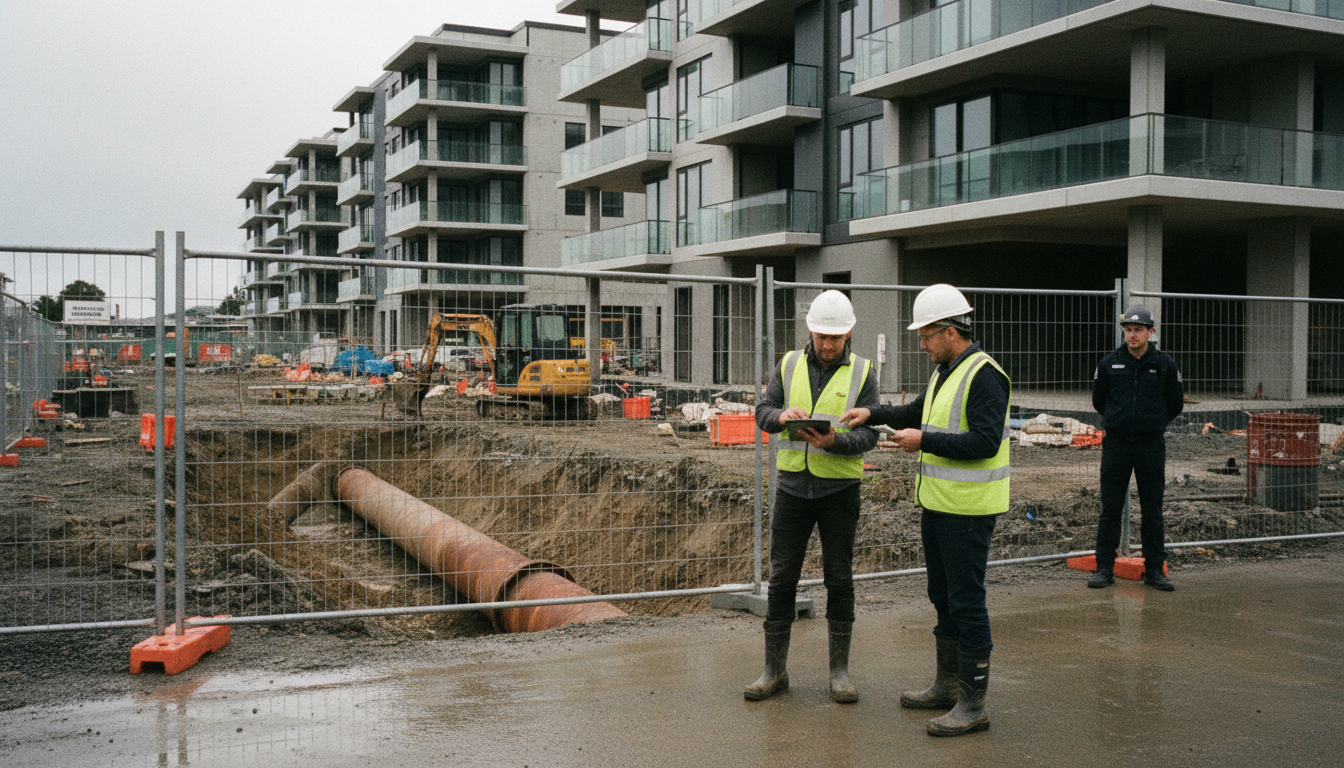
The Auckland District Court ordered developer David John Sax and his company Frankel Consultants Limited to pay $185,000 for unconsented earthworks at a former asbestos-contaminated landfill. This specific instance of regulatory enforcement, following their admission to breaching an abatement notice, underscores a recurring tension. Across the Asia-Pacific, development pressures frequently contend with environmental safeguards.
The Auckland site at Te Papapa was a former landfill known for contamination issues. The Auckland Council stated that these issues were well known, yet offending continued. This suggests a gap in preventative oversight or a calculated risk on the developer’s part. David John Sax was ordered to pay $15,000 to a charity and was discharged without conviction, while Frankel Consultants Limited faced a $170,000 fine. This action follows a separate instance reported in November 2025, where a developer received a $48,000 fine for illegal Auckland earthworks.
While New Zealand’s regulatory framework allows for such penalties, the persistence of unconsented works on hazardous sites poses a broader regional question. The drive for economic development, often supported by increased infrastructure and property expansion, intensifies pressure on land resources. This pressure is evident in many Asia-Pacific economies as they pursue growth and deeper international partnerships.
Industrialisation throughout the Asia-Pacific has left a legacy of contaminated sites, ranging from former manufacturing plants to landfills. Policies aimed at addressing these environmental challenges exist. However, their implementation and enforcement often vary significantly across jurisdictions. The cost of proper remediation for sites like the Captain Springs Road location in Te Papapa is substantial. This cost often exceeds the fines imposed for non-compliance. Such a disparity can create an economic incentive for developers to bypass regulations, particularly if the perceived risk of severe penalties remains low or if a discharge without conviction is attainable.
The challenge for countries in the region extends beyond identifying and mapping legacy contaminants. It also involves ensuring that new development does not exacerbate existing environmental hazards or create new ones. Enforcement actions, such as those in Auckland, are crucial steps. Yet, they often address the symptoms rather than the underlying systemic issues that can render non-compliance an appealing option for some. The unresolved question for the region is how to reconcile the impetus for rapid development and economic growth with the long-term, often costly, commitment required for responsible management of its industrial past.
Sources
Newsletter
Pacific Daily
A curated briefing from Thailand, Asia-Pacific and the world.