Asian Games Badminton Final Signals Shifting Dynamics in Regional Sporting Influence
Loh Kean Yew's advancement marks a new competitive era, challenging established badminton powers and highlighting national investment strategies beyond traditional strongholds.
SINGAPORE
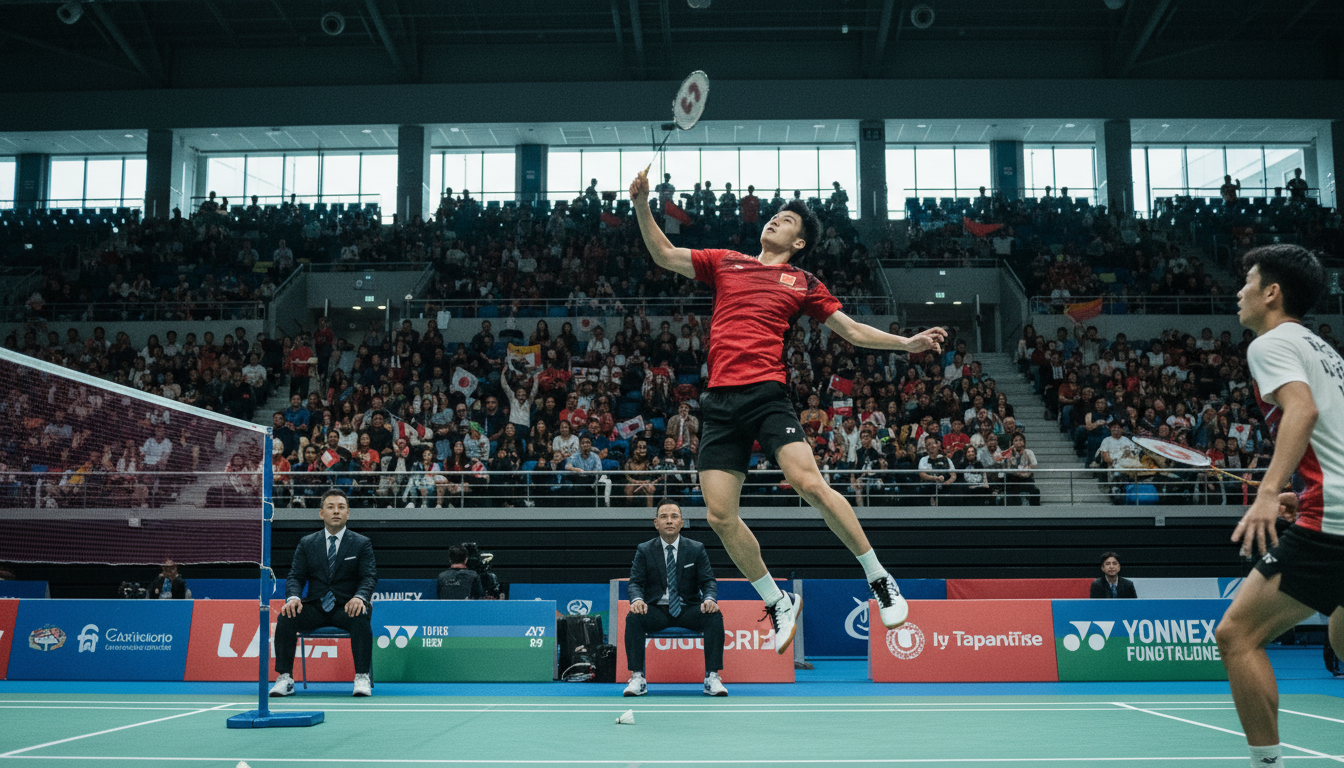
Singapore's Loh Kean Yew reaching the Asian Games badminton men's singles final, set to compete for gold against Thailand's Kunlavut Vitidsarn, signals a notable shift in regional sporting landscapes. This achievement, confirmed on September 28, 2026, marks the first time a Singaporean has reached this stage in the Asian Games. Historically, countries like China, Indonesia, Malaysia, and South Korea have often dominated this event. While the narrative might appear as a singular athletic triumph, it simultaneously reflects broader patterns of national sports development and their impact across diverse Asian economies.
The progression of Loh Kean Yew, beating South Korea's Yoo Tae Bin in the semi-final, follows his earlier victories against players such as India's Lakshya Sen. These individual performances, while exceptional, gain significance when viewed through the lens of resource allocation and strategic focus within smaller economies. Singapore, often recognized for its economic prowess, has systematically invested in various sectors, including sports, aiming for competitive excellence on international platforms. This contrasts with, yet also complements, the long-standing infrastructure and talent pools of badminton's traditional strongholds, which have historically produced a continuous stream of top-tier athletes.
The final matchup against Thailand's Kunlavut Vitidsarn introduces a further dimension to this evolving dynamic. Thailand, a nation with a deep sporting culture, demonstrates a persistent effort to cultivate talent. Their athlete's presence in the final alongside Singapore's suggests that focused development programs, even without the scale of larger national sports systems, can yield high-level international competitors. The competition thus becomes less about a single nation's dominance and more about the effectiveness of diverse national strategies.
This trend poses questions for Southeast Asian sporting bodies and policy makers. What does Loh's and Vitidsarn's final appearance signify for future investment in specific sports across different national contexts? For Singapore, it validates a model where targeted investment can elevate individual athletes to global prominence. For Thailand, it reinforces the value of sustained, organic talent development. The shift is not towards one power replacing another, but rather a diversification of competitive influence, suggesting a more multilateral distribution of sporting success across the Asia-Pacific.
However, it remains to be seen whether these individual successes can translate into sustained team performances or inspire broader systemic changes in national sports programs. The challenge lies in replicating such achievements consistently across disciplines and generations. While a single final appearance is noteworthy, the long-term impact on regional badminton hierarchies and national sporting identities requires continued observation. The tension between celebrating individual milestones and building comprehensive sporting ecosystems remains a core consideration for nations seeking to define their place in the increasingly competitive Asian sporting arena.
Sources
Newsletter
Pacific Daily
A curated briefing from Thailand, Asia-Pacific and the world.