AI-Aided Wildlife Research: Promises and Procedural Gaps in the Pacific Rim
While new technologies offer efficiency gains, their application in critical conservation efforts requires a clear framework for data provenance and regional integration.
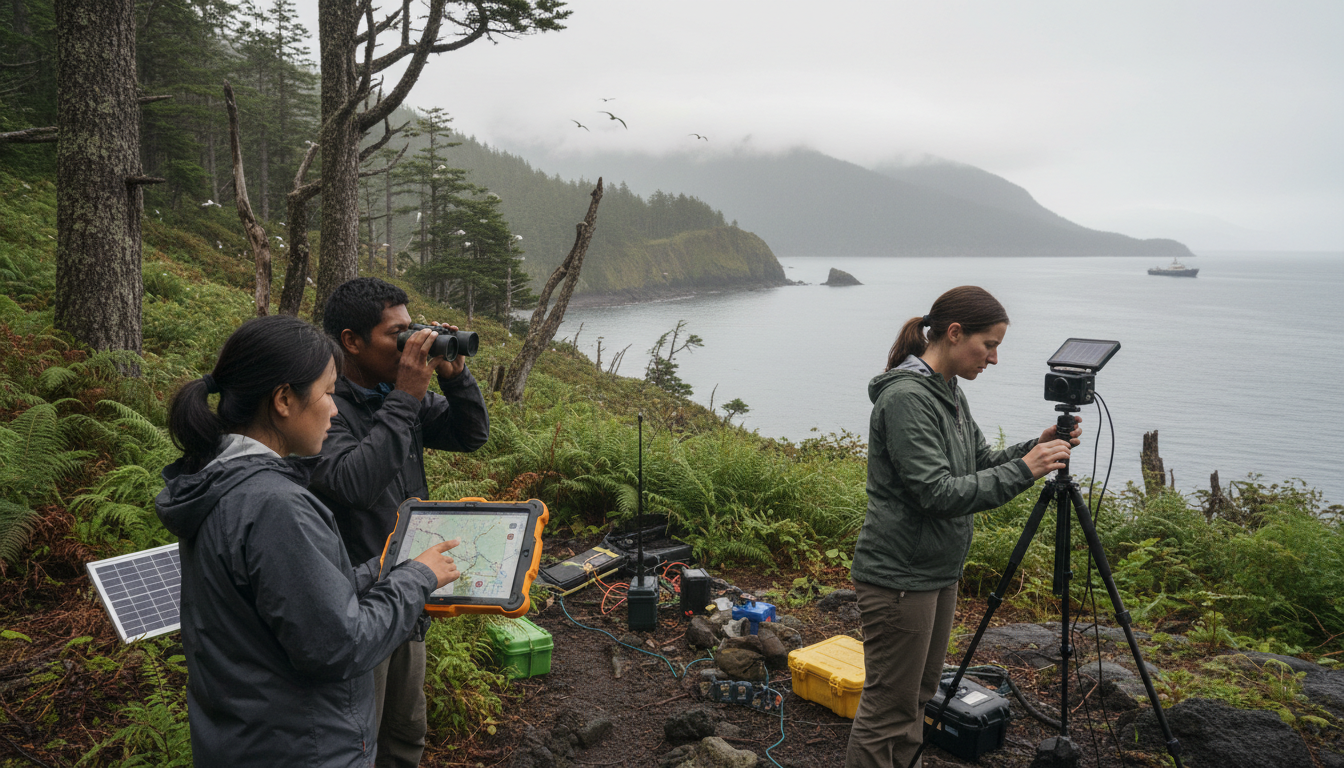
The application of Artificial Intelligence to wildlife research, as reported by Mongabay Asia concerning wolf studies in Yellowstone, presents a dual challenge and opportunity for the Pacific Rim. While the method involving AI-aided analysis of wolf behavior, as demonstrated by Jeff Reed's changed perspective, suggests a more nuanced understanding of wildlife is possible, the wider implications for conservation efforts in Asia require scrutiny of its empirical foundation and potential for regional scaling.
The report focuses on a single individual's experience and a specific technology application. Jeff Reed's account details an encounter five years prior to 2026, leading to a re-evaluation of wolf perception. This anecdotal foundation, while compelling, precedes detailed data on the AI’s methodology or its broader impact metrics on wolf populations or conservation outcomes. For a data-led assessment, the absence of quantitative outcomes regarding the AI's efficacy in Yellowstone is a significant limitation. The Mongabay Asia report of 2026-09-16, titled ‘Don’t shoot. Listen’: The AI-aided quest to understand Yellowstone’s wolves, describes an approach but does not furnish data that would permit a robust assessment of its success in altering wolf behavior or human-wildlife conflict patterns in Montana.
The potential for similar AI applications in the Pacific Rim is evident, particularly given the region's diverse ecosystems and pressing conservation needs. However, the evidence supporting the transferability and effectiveness of such technologies at a larger scale remains unestablished in the provided material. The fact that the report originates from Mongabay Asia suggests a regional interest, but the content itself pertains to North America. Other verified facts relating to the “Pacific” term are diverse, from “Pacific Basin Avoiding Arabian Sea on Mideast Crisis” (Bloomberg.com, 2025-06-23) to “Pacific Edge trading halted after losing Medicare coverage” (rnz.co.nz, 2023-06-06), to a “Pacific tsunami” (ABC News & Headlines, 2025-07-30) — none of which provide context or data for AI in wildlife conservation within the Asian context. The Washington Post's 2023-04-27 statement that “For the Nationals, Asia remains an untapped market for talent” further illustrates the broad and often disparate usage of ‘Asia’ and ‘Pacific’ in general reporting, without providing relevant data on AI adoption in Asian conservation initiatives.
Critically, the reported methodology from Yellowstone lacks specific metrics that would allow for an independent assessment of its impact. The Mongabay Asia report does not specify the type of AI used, the volume of data processed, the accuracy rates of identification, or any measured changes in human-wildlife interactions or wolf population health attributable to the AI-aided understanding. Without these figures, the claim that AI aids in understanding wolves is descriptive, not quantitatively substantiated.
While the concept of leveraging AI for wildlife conservation holds promise for enhancing data collection and analysis, its effective implementation across the varied ecological and socio-economic landscapes of the Pacific Rim depends on a clear articulation of its operational parameters and demonstrable results. The current evidence primarily highlights an individual’s perceptual shift, not a validated and scalable conservation tool. The challenge for the Pacific Rim remains how to move beyond conceptual promise to evidence-backed deployment, ensuring that technological adoption is grounded in verifiable impact metrics rather than narrative appeal. The outcome of such efforts will depend on the development of transparent data standards and quantifiable regional pilot programs.
Sources
Newsletter
Pacific Daily
A curated briefing from Thailand, Asia-Pacific and the world.