A Shifting Axis: Ho Chi Minh City's Metro Bid for Regional Air Dominance
Vietnam’s infrastructure drive, while addressing internal growth, recalibrates its regional competitive stance.
SINGAPORE
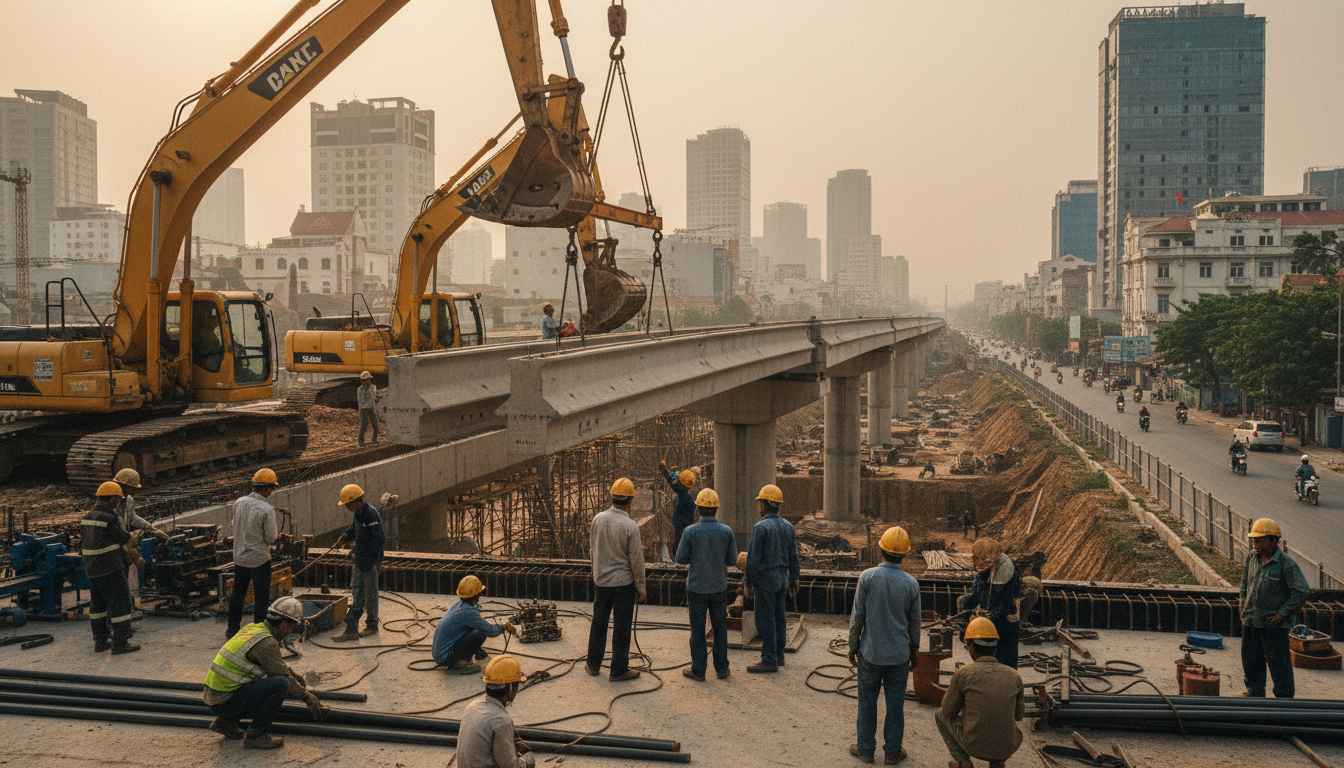
Ho Chi Minh City's plan for a metro line connecting Tan Son Nhat and Long Thanh airports, with a budget of VND26 trillion (US$1 billion) allocated for land acquisition, indicates a strategic shift in Vietnam’s urban and regional development. This commitment, reported on 2026-09-15, establishes a 23-kilometer rail link between Tan Son Nhat and Phu Huu, extending to Long Thanh. This builds on previous announcements, such as the construction of a metro line from Ho Chi Minh City to Long Thanh airport, which was to begin before July 2, and the approval of a $175 million road to serve Long Thanh airport as its opening nears.
Historically, cities in Southeast Asia have leveraged established air hubs to anchor regional connectivity. Ho Chi Minh City's current move aligns with this pattern, creating a dual-airport system designed to increase capacity and passenger flow. The investment in connecting these airports suggests a long-term vision to enhance the city's role as a gateway to the wider Asia-Pacific, directly competing for transit traffic that might otherwise route through existing regional centers.
However, this policy, while clearly beneficial for Ho Chi Minh City's internal logistics and economic growth, necessitates significant expenditure. The US$1 billion earmarked for land compensation alone for 23 kilometers of metro is a substantial public commitment. This suggests a prioritization of infrastructure development that may draw resources from other sectors or regions within Vietnam, creating internal trade-offs.
For the broader Asia-Pacific, the consequence is a re-evaluation of established air travel corridors. Coastal economies that rely on air travel and established airport infrastructure as key regional transit points face a competitor that is actively investing in similar infrastructure. This could divert a portion of long-haul and regional traffic, impacting revenue streams and regional influence. While the argument could be made that increased connectivity benefits all, significant infrastructure projects like Ho Chi Minh City's metro often aim to capture market share.
The critical question remains whether the substantial investment in urban connectivity will translate into the desired regional gravitational pull. The success of this strategy hinges not just on the physical links, but on the ability to integrate these hubs into a competitive regional air network. The funds committed inland for this metro could be viewed as a regional play, but the true impact on other coastal economies in the Asia-Pacific will be measured in shifts in passenger volumes and cargo movements over the coming decade. The cost of this ambition, both financial and strategic, requires continued observation.
Sources
Newsletter
Pacific Daily
A curated briefing from Thailand, Asia-Pacific and the world.