A Modest Donation, A Significant Strategic Echo: Vanuatu's Post-Disaster Alignments
Beijing's assistance in Vanuatu, while small in monetary terms, highlights complex regional dynamics far beyond immediate disaster relief, with implications for coastal policies and external influence.
SINGAPORE
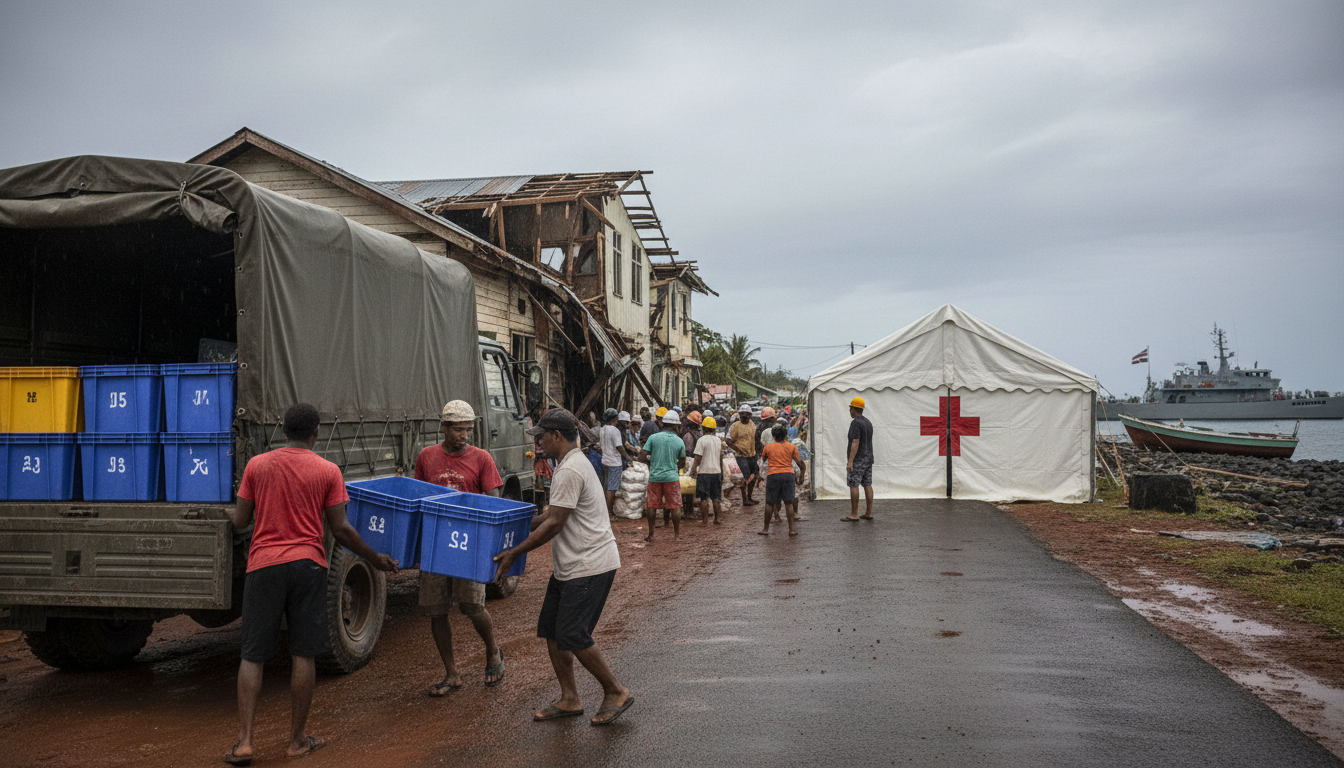
The recent VU$11 million, approximately NZ$155,000, donation from China to Vanuatu for dual-disaster recovery, following the Ambae volcanic emergency and the MV Matui ferry disaster, merits examination beyond its stated purpose. While the Vanuatu government, through Prime Minister Jotham Napat, stated the support 'demonstrates true friendship' at a critical time, the underlying currents of regional strategy are discernible.
This allocation, reported on September 15, 2026, by RNZ Pacific, arrives amidst a backdrop of competition for influence in the Pacific. It is not solely a humanitarian gesture but also a marker in a broader geopolitical landscape. Vanuatu, an archipelago nation vulnerable to natural disasters, has a persistent need for infrastructure development and disaster resilience, areas where external partners frequently offer assistance. China's contribution follows a pattern of engagement that includes technological cooperation, with a visit by the Vanuatu prime minister to Huawei in July 2024 to view policing technology. Such initiatives extend beyond immediate aid to potentially long-term strategic relationships.
The verified evidence ledger establishes a timeline of engagements that reveal Vanuatu's multi-faceted approach to international relations. The Asian Development Bank's efforts in February 2026 to advance partnership and unlock private sector investment represent a different vein of support, focused on economic development. Simultaneously, the June 2026 agreement between Australia and Vanuatu, barring foreign military bases on the island, underscores a tension: the desire for aid and development without compromising national sovereignty or becoming entangled in larger power struggles. This implies Vanuatu is actively navigating, rather than passively receiving, external overtures.
For a climate and regional strategist, the question becomes: which coastline pays for a policy written inland? The immediate beneficiaries are the affected communities in Ambae and those impacted by the ferry disaster. However, the political capital generated by such donations often accrues inland, in the strategic centers of donor nations. The relative size of the donation, while substantial for immediate recovery needs, is small compared to the scale of long-term climate adaptation and infrastructure requirements facing a nation like Vanuatu.
The critical aspect here is not the sum, but the signal. China's quick response, lauded by the Vanuatu Prime Minister's Office, positions Beijing as a responsive partner in times of crisis. This contrasts with slower, more bureaucratically complex aid mechanisms, creating a perception of efficacy and direct engagement. This approach can yield influence disproportionate to the monetary value, particularly in small island developing states with pressing immediate needs.
The counterargument posits that this is simply humanitarian aid, with no larger strategic agenda. Disaster relief is a fundamental aspect of international relations and the prompt delivery of funds is a commendable act. However, the consistent pattern of engagement across multiple sectors — from disaster relief to technology and development — by specific actors suggests a more comprehensive strategy than isolated charitable acts. The repeated praise for specific donors by national leaders, often framed in terms of 'friendship', serves to institutionalize these relationships.
This dynamic highlights a core tension in regional strategy. Nations like Vanuatu require substantial, sustained support to address climate vulnerabilities and develop their economies. Yet, the sources of this support often come with implicit, if not explicit, strategic considerations. The challenge remains for island nations to leverage necessary external assistance without ceding autonomy in shaping their long-term regional alignments. The current pattern suggests that while disaster aid addresses immediate coastal needs, the long-term strategic calculus is determined far from the shoreline.
Sources
Newsletter
Pacific Daily
A curated briefing from Thailand, Asia-Pacific and the world.