A boy, a dog, and the complex calculus of regional resilience
The narrative from Dak Lak reveals how local reliance can obscure larger policy voids, particularly for Thailand and its neighbours.
SINGAPORE
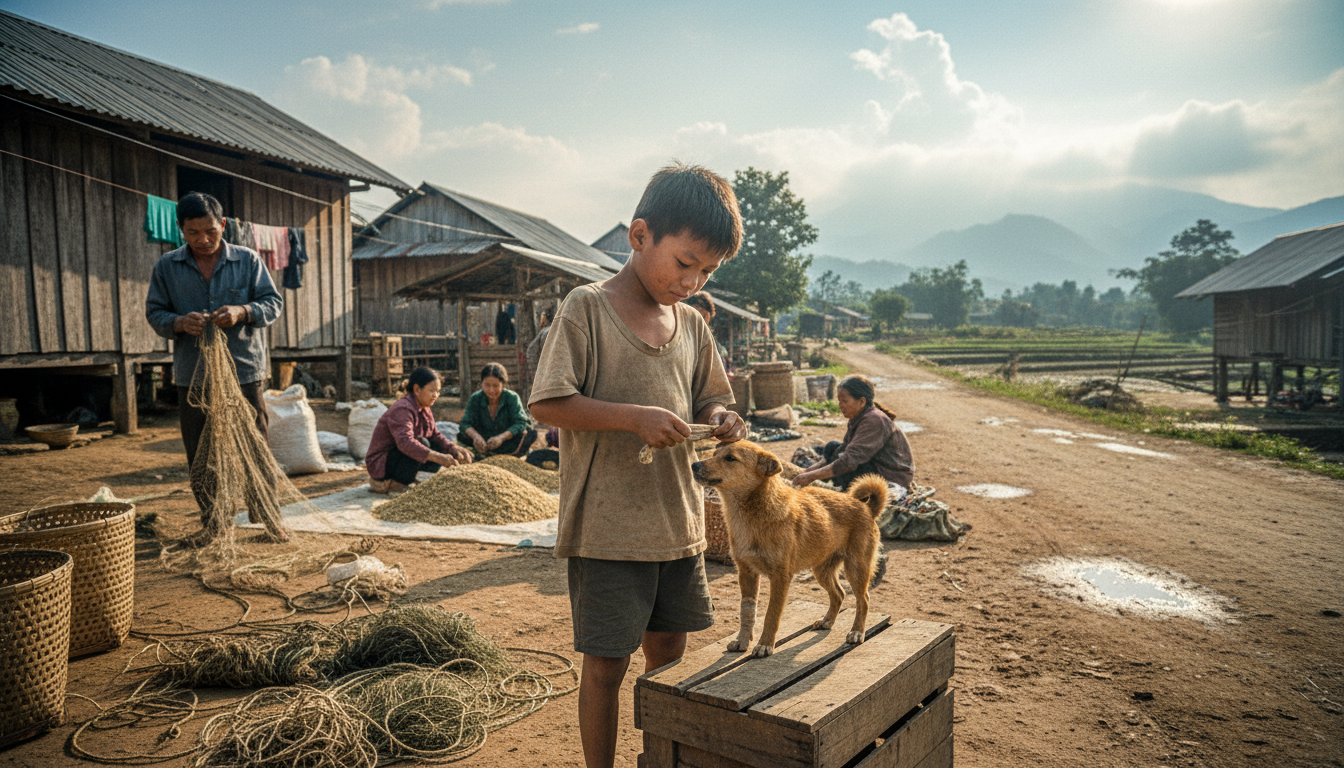
The report of a six-year-old boy, lost for 17 hours on a mountain in Dak Lak, Vietnam, found alongside his family dog, provides a sharp, localized image of individual resilience. This event, where the boy was discovered more than 10 kilometers from his home, underscores a form of self-reliance, even serendipity, in the face of hazard. However, isolating such an event can obscure the broader strategic considerations for a region frequently exposed to varied environmental challenges.
The broader Asia-Pacific, including Thailand, often presents a similar dichotomy: localized adaptations and community-level responses that, while effective in specific instances, may not translate into robust regional strategies. The reported event in Vietnam highlights a micro-level survival; it does not, however, offer insights into the systemic safeguards or infrastructure that prevent such incidents at a larger scale. For instance, the region's focus on domestic tourism, as observed in Asian travelers sticking close to home for theme parks and aquariums, suggests a pattern of contained activity, not necessarily a widespread readiness for unpredictable environmental or social disruptions.
While the story from Dak Lak elicits a compelling human-animal bond, it also inadvertently points to a policy gap. The effectiveness of a family dog in a crisis situation, while heartwarming, should not be mistaken for a comprehensive regional strategy for child safety or disaster preparedness in mountainous or remote areas. Policies formulated inland often struggle to account for the specific, granular realities of diverse coastlines and internal geographies. The question remains: which coastline pays for a policy written inland, particularly when the policy relies on unquantifiable factors like animal instinct rather than defined protocols?
Thailand, with its varied terrain and extensive rural populations, faces comparable issues. Without integrated regional frameworks, reliance on individual or local responses, however valiant, can mask underlying vulnerabilities. The challenge is not merely to react to isolated events, but to proactively establish inter-regional systems and protocols. The narrative from Vietnam serves as a reminder that extraordinary individual acts, while commendable, often highlight the absence of ordinary, predictable, and scalable solutions. The tension between localized success and unaddressed systemic vulnerabilities persists across the Asia-Pacific.
Sources
Newsletter
Pacific Daily
A curated briefing from Thailand, Asia-Pacific and the world.