Trilateral Arms Talks and the Price of Grand Strategy
Direct arms control negotiations between Trump, Xi, and Putin threaten to rearrange Asia-Pacific security dynamics while bypassing regional capitals.
SINGAPORE
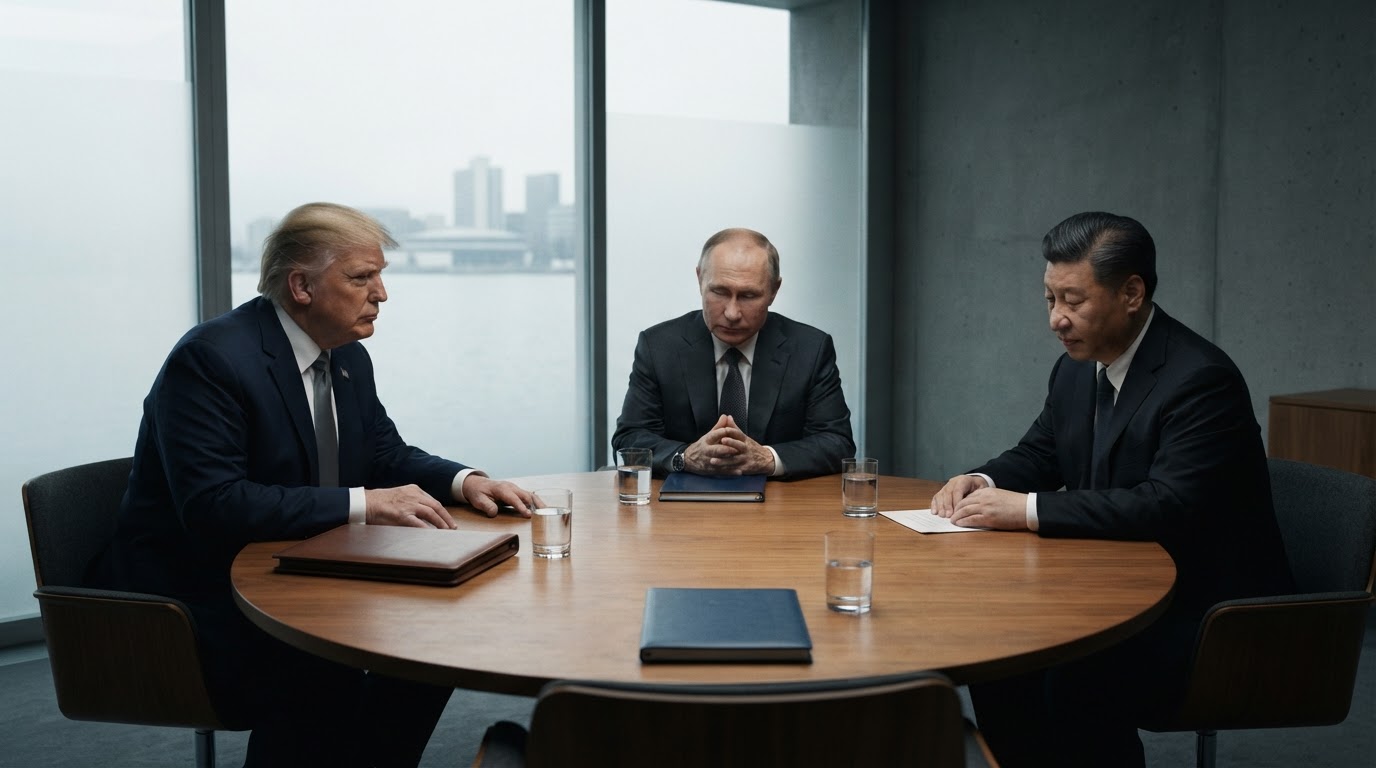
Diplomatic signals out of Washington point toward an ambitious push for three-way arms negotiations involving Trump, Xi, and Putin. This bid to secure a signature international agreement resets the calculus of strategic risk across the Asia-Pacific. High-level summits between the United States, China, and Russia inevitably frame global stability around the interests of the primary nuclear powers, altering how secondary states evaluate their own security investments.
Great power negotiations traditionally proceed from immediate strategic self-interest rather than multilateral consensus. For Washington, pursuing an arms pact allows Trump to assert decisive personal diplomacy and claim an enduring international achievement. For Beijing and Moscow, entering preliminary tripartite talks provides recognition of parity, granting both capitals significant diplomatic leverage while testing the cohesion of American regional partnerships. The structural challenge for smaller Asia-Pacific economies is that trilateral discussions compress regional complexities into a single, transactional forum where peripheral concerns risk becoming secondary bargaining chips.
Structural Incentives Behind Trilateral Bargaining
Arms negotiations do not occur in an institutional vacuum. They reflect shifting political incentives and the mounting financial strain of protracted geopolitical competition. Engaging simultaneously with Xi and Putin represents a calculated effort by Trump to decouple great power rivalry from uncontrolled escalation. Moscow gains an avenue to reassert global relevance alongside Beijing, while China secures a platform to counter encirclement narratives without relinquishing its strategic development trajectory.
Trilateral discussions compress regional complexities into a single transactional forum where peripheral concerns risk becoming secondary bargaining chips.
Advocates of direct dialogue argue that direct engagement between the primary military powers reduces the threat of miscalculation and establishes guardrails that stabilize commercial corridors. A structured channel between Washington, Beijing, and Moscow could theoretically lower systemic friction, dampening security volatility that dampens cross-border corporate planning. When nuclear-armed rivals sit at the negotiating table, the immediate likelihood of acute confrontation drops, offering regional markets a temporary reprieve from escalating tensions.
Strategic Friction and Regional Exposure
Yet this stabilization carries significant structural trade-offs. The principal risk for Southeast Asian and East Asian states lies in the nature of grand bargains. When global powers negotiate bilateral or trilateral frameworks, the territorial anxieties, conventional balances, and maritime disputes of smaller sovereign nations are often subordinated to broad political accords. Any arms agreement that stabilizes major power competition without resolving underlying regional disputes leaves intermediate states exposed to unaddressed localized pressures.
Corporate boards and policy planners across the region cannot treat the announcement of diplomatic summits as a durable resolution to strategic competition. Arms control frameworks can constrain specific weapon systems while simultaneously shifting competitive pressures toward industrial policy, export controls, and supply chain containment. Rather than ending great power rivalry, grand diplomatic maneuvers often channel conflict into economic, technological, and maritime domains where smaller partners possess far less leverage.
The viability of any trilateral arms dialogue ultimately depends on whether verifiable commitments can overcome structural mistrust among Washington, Beijing, and Moscow. If talks falter into performative diplomacy, regional friction will resume with heightened cynicism. If they progress, the fundamental constraint will be the exclusion of smaller regional players whose sovereign security cannot simply be traded away in high-level summits.
Sources
Newsletter
Pacific Daily
A curated briefing from Thailand, Asia-Pacific and the world.