Wiring Woes in Singapore’s ERP 2.0 Signal Regional Infrastructure Hurdles
Singapore's transit system encounters initial technical challenges as Asia-Pacific nations weigh the costs of digital expansion.
SINGAPORE
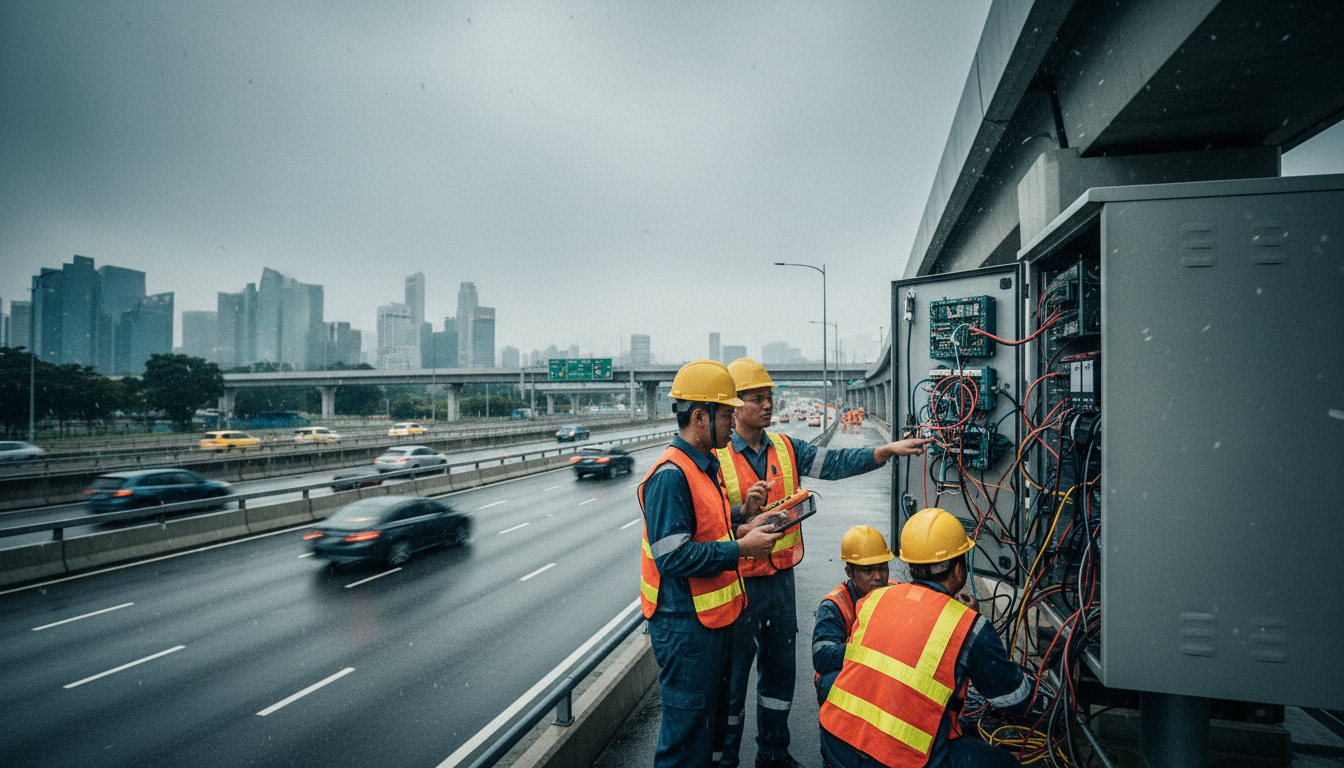
Singapore’s Land Transport Authority (LTA) reports that wiring issues are the most frequent fault encountered in new ERP 2.0 units, ahead of the system's full 2027 transition. Workshops also report issues such as flickering displays and loss of power. The LTA states that the proportion of cars requiring follow-ups fell from 1.3 per cent in May last year to 0.2 per cent in July. These technical points warrant attention not just for local transit, but as an indicator of broader infrastructure robustness across a region rapidly digitizing.
The LTA’s data on declining follow-up cases suggests an internal process of refinement, addressing initial installation or manufacturing discrepancies. The figure of 0.2 per cent requiring follow-ups in July is low. However, the prevalence of wiring issues as the most common fault suggests a foundational challenge. It implies potential issues with component quality, installation precision, or environmental factors affecting a core physical aspect of the technology.
From a market realist perspective, the cost of implementing and maintaining complex digital systems is substantial. While initial deployment might benefit from public funding, long-term operational expenses—including maintenance, repairs, and system upgrades—ultimately fall on system users or taxpayers. Any fault requiring workshop intervention adds to operational overheads. The question for policymakers and infrastructure planners throughout Asia-Pacific becomes: at what fault rate does the cost-benefit analysis of advanced digital infrastructure begin to strain?
This localized concern in Singapore, where infrastructure standards are generally high, contrasts with broader regional challenges. As Pacific Islands 'wire up,' the Lowy Institute noted in June 2026 that scammers are increasingly targeting newly connected regions, having been 'squeezed out of Southeast Asia.' This indicates that the physical infrastructure of connectivity—its wiring, its robustness, its secure deployment—is a fundamental aspect requiring rigorous attention. Digital superstructures built upon it carry their own, arguably more complex, risks. While Singapore’s ERP system is distinct from general internet infrastructure, the underlying principle of reliable, secure physical connectivity remains critical.
Simultaneously, the geopolitical landscape introduces another layer of complexity to infrastructure development. Reuters reported in March 2023 on the 'war beneath the waves' between the U.S. and China over internet cables. This highlights that the physical arteries of digital communication are not immune to strategic competition, impacting long-term stability and security of regional networks. Even seemingly minor technical faults like wiring issues, when viewed through this lens, become indicators of broader systemic pressures on infrastructure.
### The Incentive Structure of Adoption
The immediate incentives for adopting systems like ERP 2.0 are clear: traffic management efficiency, reduced congestion, and potential environmental benefits from optimized vehicle flow. For individual users, the incentive structure is often regulatory compliance and the convenience of automated payments. However, the recurring nature of basic faults, even if percentage-wise low, can erode user confidence and increase system friction.
The LTA’s reporting of fault reduction indicates an attempt to manage public perception and system reliability. For companies supplying such systems, the incentive is securing contracts and demonstrating functional deployment, often with built-in maintenance agreements. The long-term profitability hinges on the system's durability and low maintenance burden.
### Outlook: Beyond the Wiring
The Singaporean experience with ERP 2.0 suggests that even in highly developed environments, the transition to advanced digital infrastructure is not without technical hitches. While the LTA states the issue proportion has decreased, the persistence of fundamental wiring problems means foundational aspects require continued vigilance. This implies a need for robust quality control in manufacturing and installation, and possibly a re-evaluation of component resilience against local conditions.
For the broader Asia-Pacific, particularly countries with less developed infrastructure or smaller economies, the Singaporean case offers a cautionary note. The initial investment in wiring and hardware is significant. If even a small percentage of units experience common faults, scaling such systems across diverse and often challenging environments can lead to disproportionately higher maintenance costs and operational disruptions. The ability to identify, isolate, and rapidly resolve such issues will dictate the long-term viability and cost-effectiveness of these digital transitions. The question remains: who ultimately bears the cost of ensuring this foundational reliability as technology permeates daily urban life?
Sources
Newsletter
Pacific Daily
A curated briefing from Thailand, Asia-Pacific and the world.