Water Scarcity: A Global Business Constraint, Not a Regional Anomaly
The new Colorado River agreement signals mounting pressure on water resources. Asia-Pacific hospitality must assess its exposure, or face the consequences.
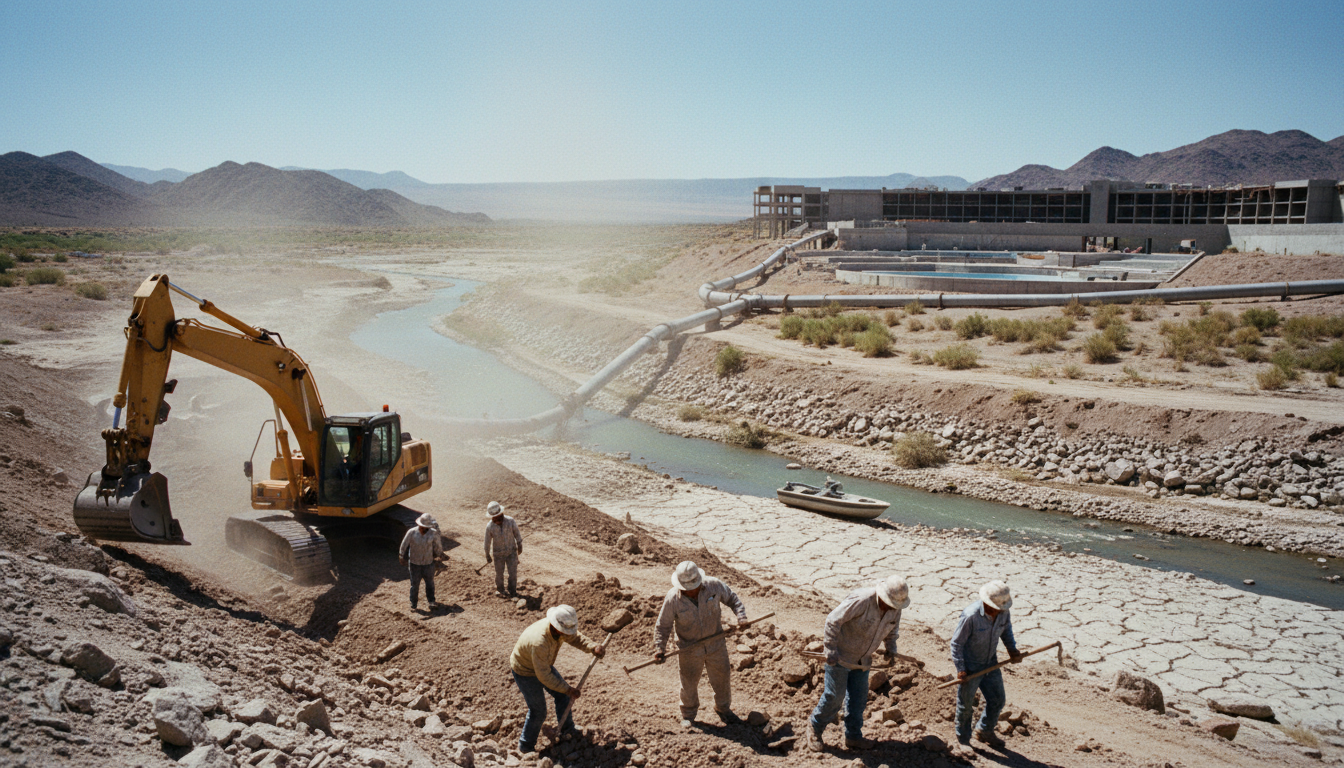
A recently resolved dispute between Mexico and the United States over Colorado River water-sharing, detailed in the new Minute 334 agreement, indicates a shift in how vital resources are managed. Under this agreement, finalized by the International Boundary and Water Commission (IBWC), Mexico will reduce its annual Colorado River allocation by 16.7%, or 250,000 acre-feet. This reduction is equivalent to water-use reductions imposed on U.S. Lower Basin states, including Arizona, California, and Nevada. The agreement is described as a joint effort to mitigate ongoing drought conditions and low reservoir levels in the Colorado River basin.
While this development primarily impacts North American water users, the underlying drivers—drought and increasing demand—are not confined to one region. For the Asia-Pacific, particularly its growing hospitality sector, the implications are substantial. This industry, inherently resource-intensive, relies on predictable and affordable water access. Hotels, resorts, and tourism infrastructure from Bangkok to Bali operate on assumptions of water availability that, like the Colorado River, are under increasing stress. Reuters reported in September 2026 how drought and demand pushed the Colorado River toward crisis.
This agreement highlights a tension. While Lake Mead showed improvement in water levels in August 2023, the systemic crisis driving these cuts persists. Dangerous weather events were reported throughout the U.S. in February 2026. The Colorado River reached a crisis point due to drought and demand, a pattern replicable across many global watersheds, including those serving major Asian urban centers and tourist hubs. The initial cost of such agreements is clear: reduced allocations mean less water for agriculture, industry, and potentially urban use. The U.S. federal government had proposed landmark water cuts to conserve the Colorado River, and these are now being implemented. The question for businesses is who absorbs these costs. For the hospitality sector, this often translates into higher operational expenses from water acquisition, treatment, and conservation technologies. It can also mean direct limitations on services that rely on water, such as pools, spas, and landscaping, which are integral to guest experience and property value.
### The Real Cost of Consumption
The economic viability of hospitality ventures in water-stressed regions hinges on understanding the true cost of water. The market realist acknowledges that water, historically treated as an externality or a cheap utility, is repricing itself globally. As regional water treaties and national conservation mandates become more frequent and stringent—like Minute 334—businesses with high water footprints will face pressure on their margins. The capital expenditure required for water recycling, desalination, or alternative sourcing will inevitably be passed on, either to consumers through higher prices or absorbed by investors through reduced returns.
Consider the incentives. Governments are compelled to manage critical resources; their incentive is long-term stability, not short-term profit. Corporations, especially those in hospitality, often prioritize occupancy rates and guest satisfaction. This divergence creates risk. Unless proactively addressed, water scarcity can evolve from an operational challenge to a fundamental threat to market access and social license. An executive who claims that water is not a material business risk for a new resort in a water-stressed region is operating on an outdated premise.
### Preparing for a Drier Future
The Colorado River agreement serves as a signal. It demonstrates that even significant economic powers like the U.S. and Mexico are negotiating reductions, not expansions, of water access. This pattern suggests that regions like the Asia-Pacific, which are prone to similar climatic and demographic pressures, will confront analogous challenges. The operators who integrate water efficiency and resilience into their core business model early will likely be positioned advantageously, distinct from those who treat it as a peripheral sustainability initiative.
While the specifics of a North American river agreement do not directly dictate water policy in Southeast Asia, the principle is universal: water is a finite resource under increasing pressure. The unresolved constraint remains how rapidly the hospitality sector can adapt its business model to account for this reality without compromising its market appeal. The outcome now depends on how swiftly businesses internalize the costs of water scarcity and innovate to mitigate them.
Sources
Newsletter
Pacific Daily
A curated briefing from Thailand, Asia-Pacific and the world.