Washington Shortens Its Governing Clock as the 2028 Race Begins
An accelerated 12-debate Democratic primary calendar signals two years of campaign-driven trade and foreign policy posture for Asia-Pacific capitals.
SINGAPORE
American presidential politics has discarded its traditional post-election pause. Fresh from their November midterm election victory, Democrats announced plans on Monday, November 23, 2026, for 12 primary debates to choose their standard bearer for the 2028 contest. Setting the first debate for June next year pulls competitive domestic electioneering directly into the midpoint of the legislative cycle, truncating the operational window for federal policy.
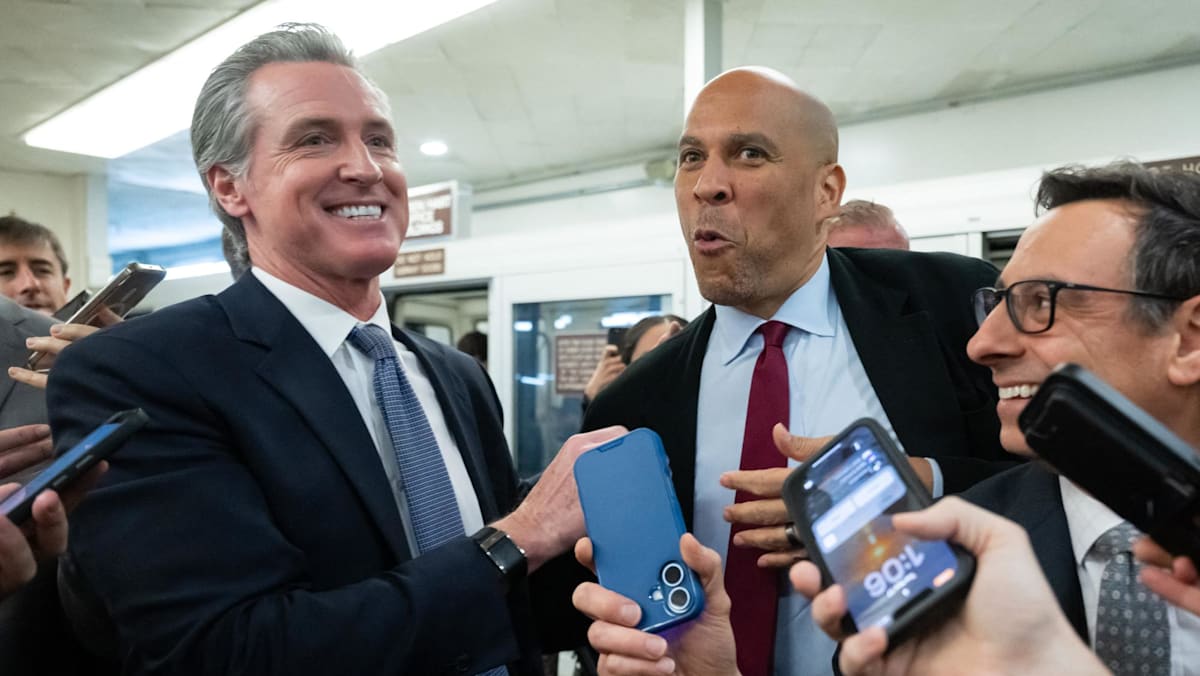
This early timetable alters administrative incentives on both sides of the aisle. With US President Donald Trump facing term limits, Republicans must conduct an open nominating process, while Democrats are seeking to exploit their momentum in the House of Representatives by presenting potential candidates to voters well ahead of schedule. Public exchanges between figures such as California Governor Gavin Newsom and US Senator Cory Booker at the US Capitol reflect an expanding Democratic field bracing for an extended public contest.
The Compressed Administrative Horizon
Nomination battles launched eighteen months before election day reshape executive decision-making. When party forums commence in June of an off-year, federal departments inevitably shift from long-term bilateral programs to short-term political defence, ensuring that external initiatives face partisan challenge long before ballots are cast in 2028.
For capitals across the Asia-Pacific, prolonged primary seasons mean persistent policy ambiguity. Bilateral trade adjustments, critical mineral supply arrangements, and strategic security compacts depend on counterparts capable of assuring legislative continuity. A simultaneous primary contest across both major American parties incentivises domestic posturing, making negotiated compromises with trading partners politically costly in Washington.
Manufacturing hubs exposed to the American consumer market face the most immediate exposure. Trade negotiators in regional capitals must weigh whether existing exemptions can withstand continuous debate scrutiny, particularly when candidates target industrial offshoring to secure key voting blocs. Strategic partners similarly confront the prospect that defence pacts and diplomatic reassurances will be leveraged as campaign arguments as contenders attempt to distinguish their foreign policy platforms.
Rhetorical Pressure on External Commitments
One counterargument holds that an early debate schedule provides foreign chancelleries with useful visibility. Twelve structured debates across 2027 and 2028 could theoretically clarify the opposition's external priorities, allowing regional governments ample time to calibrate policy responses and build relationships with prospective nominees.
That perspective overlooks how primary incentives operate in practice. Early debates rarely reward nuanced international strategy. Contenders instead stake out rigid economic positions to consolidate domestic constituencies, generating rhetorical commitments that narrow their diplomatic flexibility should they eventually capture the White House.
Political preparations moving through March toward the opening debate in June will deepen this inward focus. With neither party positioned to offer assured legislative continuity, the operational constraint for regional partners is clear: American foreign policy will remain subordinate to domestic primary mechanics through 2028.
Sources
Newsletter
Pacific Daily
A curated briefing from Thailand, Asia-Pacific and the world.