UEFA Audit Demands Challenge Infantino Commercial Authority
European football sets a November deadline over executive governance and private investment vehicles
SINGAPORE
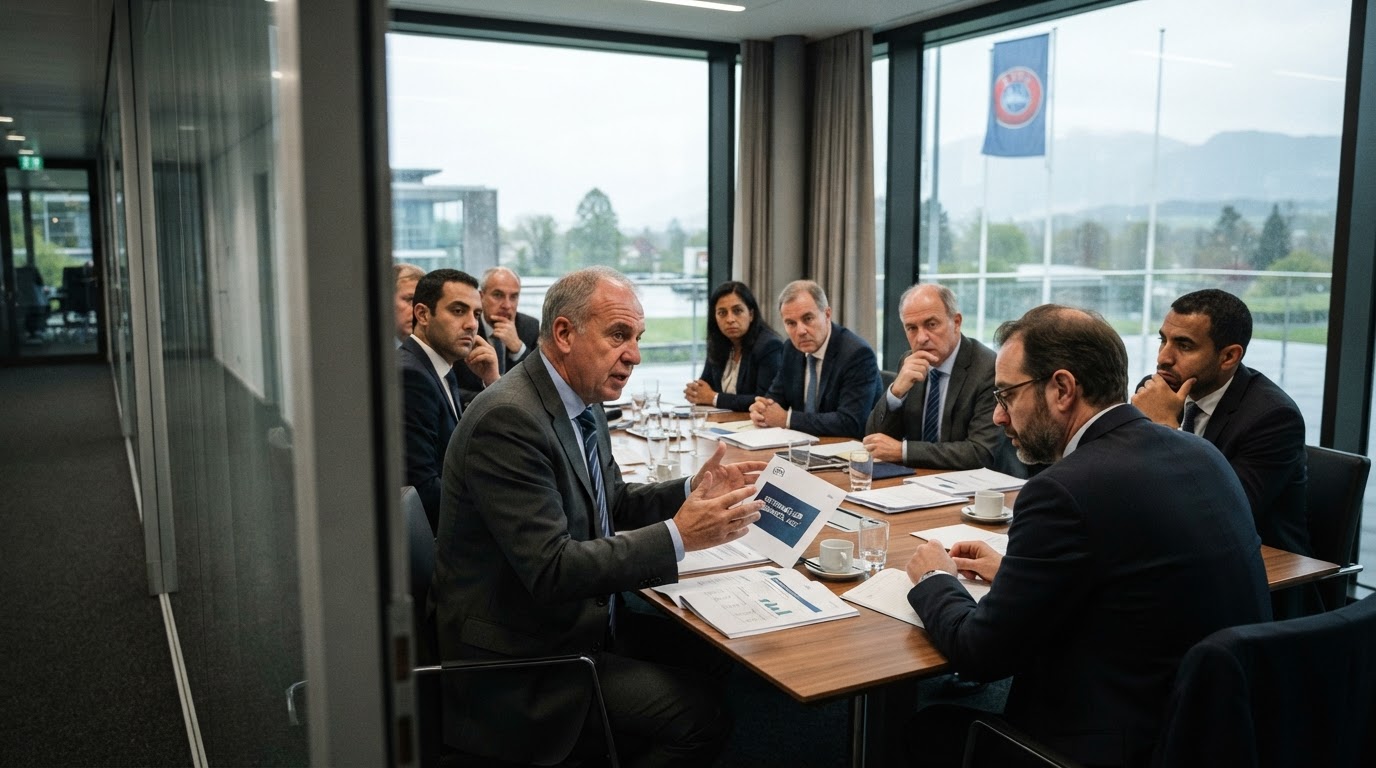
Institutional governance in international football operates on procedural leverage. UEFA has submitted a formal inquiry to FIFA seeking documented answers regarding Gianni Infantino and his executive decisions by November 2. According to British media reports published on Monday, the submission interrogates the abandoned FIFA Forward Enterprise venture and the FIFA Peace Prize. European administrators have used this submission to test the structural boundaries of presidential power.
Executive friction at this scale is deliberate.
UEFA previously demanded Infantino resign after he presented the FIFA Forward Enterprise proposal. That plan sought to establish an external corporate entity to control the commercial assets of major tournaments, primarily the World Cup, through the sale of a minority holding to outside private investors. While management eventually withdrew the proposal, European administrators treated the structural design as an unacceptable centralisation of tournament assets.
Commercial Assets and Confederation Balance
Control over revenue pipelines defines the institutional balance between Zurich and its regional confederations. When FIFA leadership formulated the FIFA Forward Enterprise framework, the executive arm attempted to build an autonomous capital structure separate from confederation oversight. Confederation officials recognized that redirecting World Cup commercial rights into an arms-length vehicle with private equity participation would reallocate decision-making authority away from established governance committees.
European administrators resist these centralising mechanisms out of institutional self-interest. UEFA derives substantial financial independence from its domestic leagues and club tournaments, giving the European confederation sufficient leverage to challenge global headquarters. Centralised commercial mechanisms that alter World Cup exploitation rights inevitably threaten European dominance over global scheduling calendars and media valuations.
The inquiry tests whether executive leadership can deploy private capital structures without confederation consent.
Zurich loyalists argue that alternative financial vehicles are essential to counter European economic concentration. Outside Europe, confederations frequently rely on central redistribution to finance regional tournaments and grassroots facilities. For these governing bodies, a muscular FIFA capable of securing sovereign or private commercial partnerships represents an equalising force against wealthy European leagues. Dismissing European governance objections as an effort to protect territorial commercial privileges remains a standard defence among Infantino supporters.
Jurisdictional Limits and Congreso Mathematics
Administrative legitimacy requires strict adherence to corporate protocol. Questions regarding the FIFA Peace Prize indicate that UEFA's audit extends beyond financial structures into executive conduct. European officials are forcing FIFA management to demonstrate whether unilateral initiatives respected formal compliance frameworks before implementation.
Public appearances continue to project stability. Infantino presided over the trophy ceremony at Stadion Miejski LKS in Lodz, Poland, on September 27 after Spain won the Under-20 Women's World Cup, exhibiting standard executive routine. Beneath that ceremonial composure, procedural fractures between the governing body and its wealthiest confederation have widened.
What remains unresolved is whether European opposition can translate into constitutional enforcement across the global membership. Infantino retains broad backing across federations that depend directly on central grants, meaning European dissatisfaction cannot unilaterally alter executive policy without building multi-continental alliances. The outcome now depends on whether non-European confederations conclude that central commercial vehicles threaten their own institutional autonomy or merely curb European influence.
Sources
Newsletter
Pacific Daily
A curated briefing from Thailand, Asia-Pacific and the world.