Tokyo's Konbini Is Quietly Becoming Neighbourhood Infrastructure
Japan's convenience stores, led by chains such as Lawson, are turning labour shortages into a redesign of what a corner shop is for.
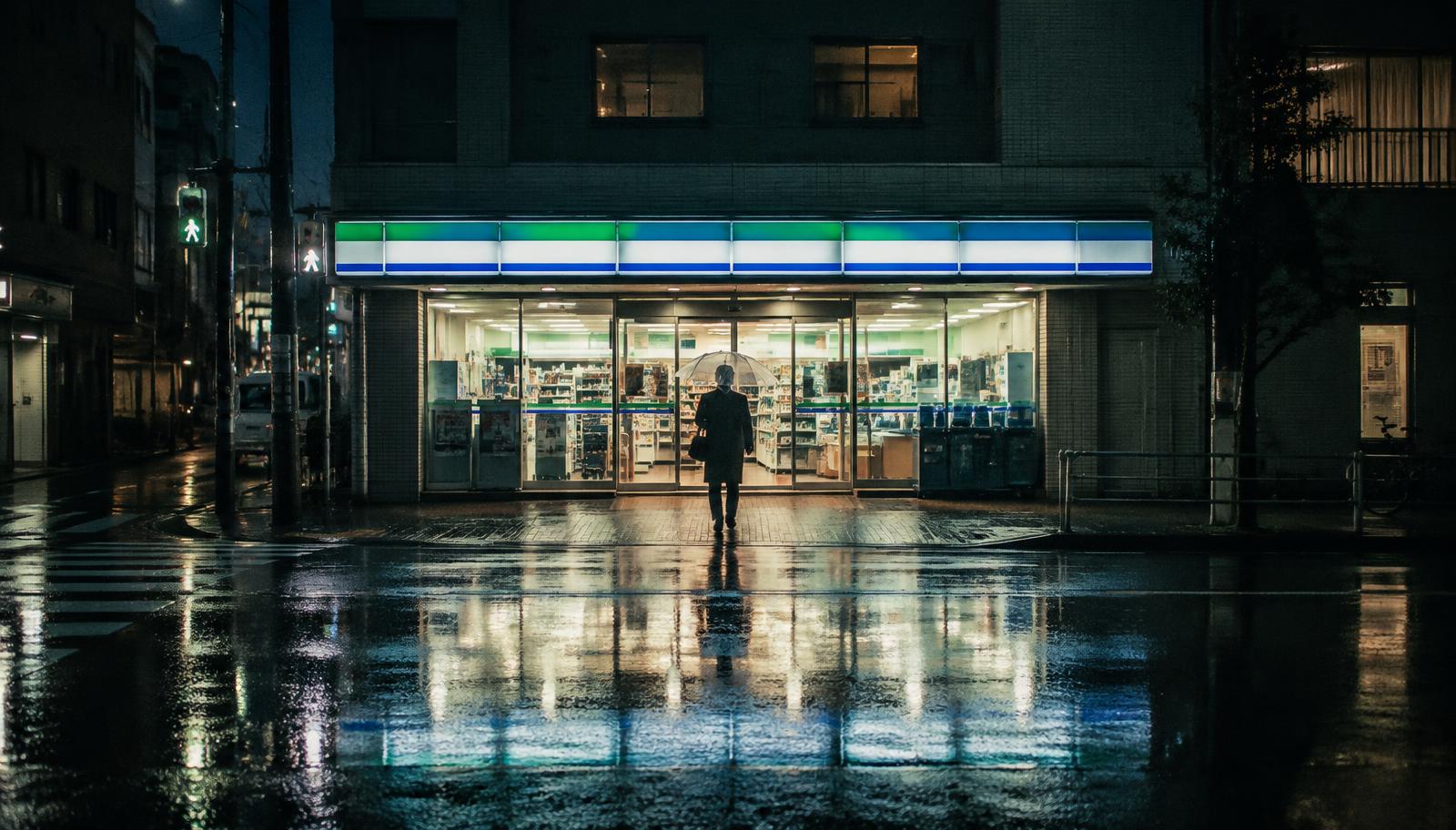
TOKYO
TOKYO — Walk through any residential ward of Tokyo after midnight and the brightest light on the street is usually a convenience store. For decades the konbini has been shorthand for Japanese efficiency: rice balls restocked several times a day, hot coffee for a few hundred yen, a counter that never closes. What is changing now is less visible than the glowing awning, but more important. The konbini is being rebuilt as neighbourhood infrastructure.
The pressure comes from demography. Japan's working-age population has been shrinking for years, and overnight shifts are the hardest to staff. Chains including Lawson, FamilyMart and Seven-Eleven Japan have answered with self-checkout lanes, remote monitoring and trials of staff-light stores, while keeping the format's promise that the door stays open.
The result is a shop that does far more than sell snacks. Tokyo residents already use convenience stores to pay utility bills, collect parcels, print official documents, buy concert tickets and send luggage to airports. Local governments have long treated them as part of disaster planning, because a store network that dense can move water, food and information quickly when transport is disrupted.
Why the corner shop matters
For urban planners, the konbini answers a question that delivery start-ups in other cities still struggle with: how to serve the last few hundred metres economically. A store within a short walk of most homes acts as a pick-up point, a cold-chain node and a small pharmacy shelf at once. As more Tokyo households are made up of one person, often older, that proximity becomes a public good as much as a retail one.
The chains are also rethinking what they stock. Ready meals are shrinking in portion and growing in nutritional detail, aimed at single diners and an ageing clientele. Some stores now carry everyday medicines and hygiene products once found only at drugstores. Food waste, a long-standing criticism of the format, has pushed operators towards better demand forecasting and discounting near expiry.
A model watched across Asia
Japanese chains operate thousands of outlets across Thailand, Taiwan, the Philippines, Indonesia and Vietnam, and the operating ideas being tested in Tokyo tend to travel. In Bangkok, the convenience store already serves as bill counter and banking point; automation pioneered in Japan is likely to arrive in modified form.
There are real tensions. Technology reduces staffing needs, but customers in Japan still value a human greeting and help with complicated services. Franchise owners, who carry much of the risk, have argued with headquarters over opening hours and costs. Any redesign that simply shifts the burden onto shop owners will not last.
Still, the direction is clear. The konbini is moving from a shop that happens to be useful to a piece of civic plumbing that happens to sell rice balls. For a city that is ageing faster than almost any other in the Pacific, that may be the most practical innovation on the street.
Sources
Newsletter
Pacific Daily
A curated briefing from Thailand, Asia-Pacific and the world.