The Silent Restructuring of Asian Workplaces
As firms in Singapore embrace AI, the landscape of labor is quietly shifting, posing questions for Thailand and the wider region.
SINGAPORE
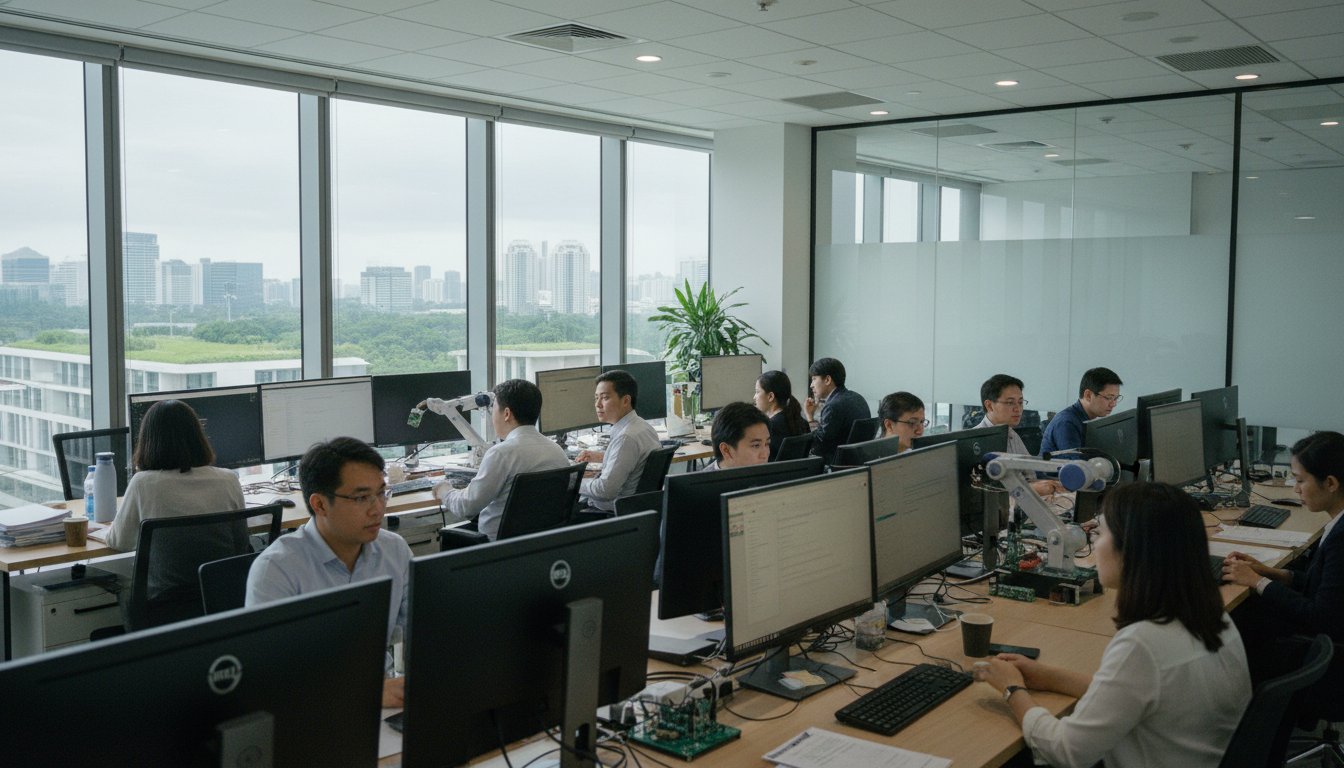
A quiet transformation is underway in the corporate spaces of Singapore, one that reshapes the daily routines of its workforce. Companies there are increasingly deploying artificial intelligence agents, not as replacements, but as new colleagues requiring supervision. The shift, reported by CNA Lifestyle in September 2026, details workers taking on roles managing these AI entities to enhance productivity. This development is not a loud announcement but a subtle redefinition of work itself.
The integration of AI into operational workflows, while framed by some as a productivity booster, suggests a deeper recalibration of skills and responsibilities. EY Singapore's head of assurance, Lee Wei Hock, and senior manager Ong Zhi Chuan, are cited in discussions regarding this trend. The picture painted is one where human oversight becomes a critical component in the functioning of AI systems. This implies that the 'soft' skills often associated with human interaction might evolve into 'hard' skills of AI management, from error correction to strategic deployment.
This trend, observed within a leading financial hub like Singapore, holds particular relevance for neighboring economies, including Thailand. While Singapore navigates the initial waves of this technological integration, the lessons learned, both in terms of opportunity and challenge, will likely ripple across the Asia-Pacific. The question is not whether AI will arrive, but how its integration will be managed, particularly in sectors reliant on human capital.
Historically, Asian economies have adapted to global shifts through varied approaches, often balancing technological adoption with distinct cultural and economic contexts. The current movement suggests that the nature of employment and the trajectory of professional development are at a pivot point. The Business Times, in June 2026, highlighted concerns about AI displacement potentially affecting middle management, a segment often seen as insulated from such changes.
The immediate impact appears to be an expansion of roles rather than outright elimination, as workers learn to oversee their digital counterparts. However, the long-term implications for on-the-job learning and career progression remain less clear. Will traditional mentorship structures adapt to include 'bot management' as a core competency? Will the skills required for advancement shift fundamentally, favoring those adept at human-AI collaboration? These are the questions that emerge from Singapore’s experience.
For destinations like Thailand, where tourism and manufacturing form significant economic pillars, understanding this shift is crucial. The deployment of AI in service sectors, for example, could redefine guest experiences and operational efficiencies, moving beyond the current discussions of digital check-ins to more integrated, AI-driven guest interactions. The subtle reshaping of Singaporean workplaces offers a glimpse into a future that may soon arrive across the region, where the quiet hum of machines signals a fundamental change in the rhythm of work life.
Sources
Newsletter
Pacific Daily
A curated briefing from Thailand, Asia-Pacific and the world.