The Silent Burn: Asia's Hidden Ingredient in Global Battery Recalls
A recall of power banks in Canada reveals more than just a safety hazard; it exposes critical vulnerabilities in the sourcing and quality control of essential components, with implications for Asia's industrial landscape.
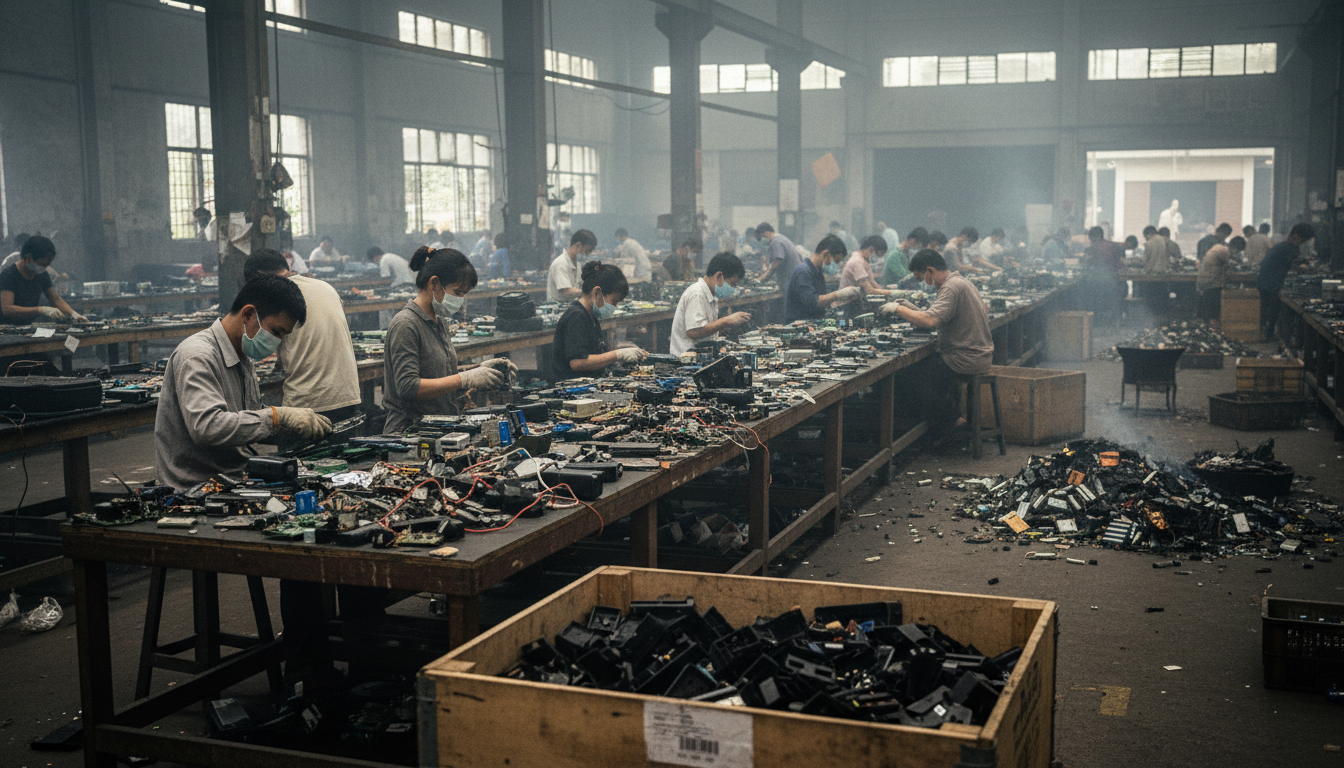
The recent recall of approximately 30,000 XO Poppy Powerbanks in Canada, citing fire and burn hazards from lithium-ion batteries, presents a stark reminder of the complexities in global manufacturing chains. These devices, sold between May 2024 and March 2026 at retailers including Winners, Marshalls, and HomeSense, were flagged by Health Canada for potential overheating. While the immediate focus is consumer safety, a deeper inspection reveals a supply chain that often obscures the origins and quality of critical components, particularly those sourced from Asia.
The increasing frequency of lithium-ion battery incidents across various applications signals a systemic issue. Japan recorded a record high in lithium battery fires in fiscal 2025. Australia's ABC News reported in November 2025 that power banks would be banned on flights, and in December 2025, highlighted another house fire likely sparked by a lithium battery. These events suggest that the problem extends beyond a single product batch or manufacturer, indicating potential weaknesses in the broader ecosystem that produces these energy cells.
From a critical perspective, the question becomes: who cultivates the raw materials, and how much scrutiny do these components withstand before reaching the assembly lines? Lithium-ion batteries, fundamental to these power banks, are often produced in environments where cost efficiencies can, at times, overshadow rigorous quality control. The sheer volume of goods produced, and the speed at which they move through international markets, can render comprehensive oversight challenging. While no specific origin country was named in the Canadian recall, the vast majority of lithium-ion battery production capacity, and thus the potential for widespread impact from manufacturing flaws, resides within Asia. This puts the continent at the nexus of both opportunity and risk.
Yet, this perspective faces a counterpoint: the issue may not stem from inherent flaws in Asian manufacturing, but rather from specifications dictated by Western brands prioritizing low-cost production. It is possible that the design parameters provided to manufacturers, or the price points demanded by retailers, incentivize compromises that elevate risk. The recall itself was initiated by Canadian authorities, not necessarily by the manufacturers or retailers involved, suggesting regulatory intervention is sometimes required to identify and address these dangers. The product, an XO Poppy Powerbank with a 5000 mAh capacity, was recalled from shelves in Canada, a market distinct from many in Asia where similar products are widely available.
What remains unresolved is the true cost of these market dynamics. The margin on a power bank, a seemingly simple consumer electronic, belies the intricate global network of mining, processing, manufacturing, and distribution. When safety failures occur, the economic burden is diffused, often impacting consumers, retailers, and brand reputation globally, while the precise point of failure in the supply chain can be difficult to isolate and address. This incident, while originating in Canada, underscores the need for greater transparency and accountability throughout the Asian manufacturing base, especially concerning components that carry inherent safety risks.
Sources
Newsletter
Pacific Daily
A curated briefing from Thailand, Asia-Pacific and the world.