The Peripheral Architecture of Modern Bowling
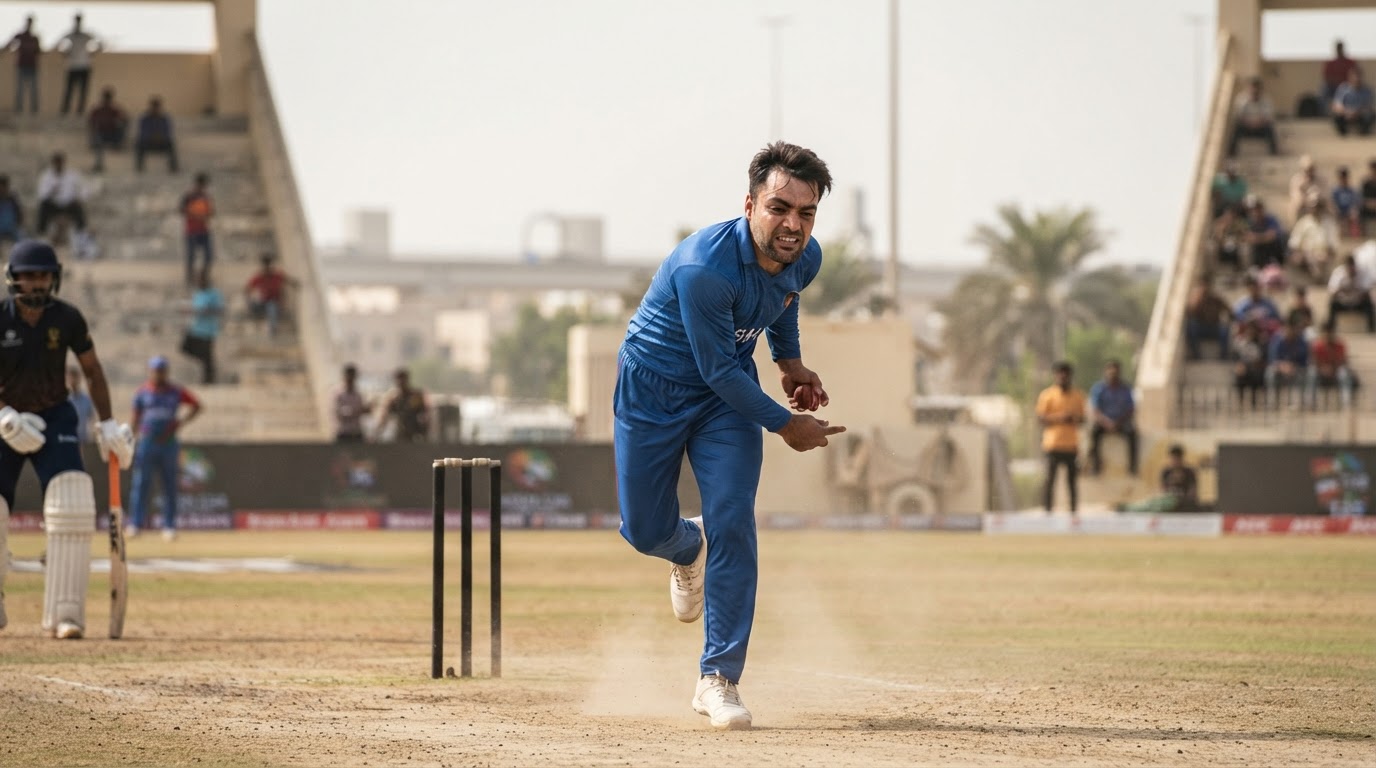
Rashid Khan reaching 200 international wickets in short-format cricket shows how non-traditional outposts mastered the tactical mechanics of contemporary bowling.
SINGAPORE
Statistical primacy in modern sport usually belongs to wealthy establishments with endless home calendars and deep institutional patronage. International cricket, however, occasionally permits a structural anomaly where competitive necessity outpaces administrative heritage. When leg-spinner Rashid Khan trapped Zimbabwe batsman Tadiwanashe Marumani lbw at Sharjah on Thursday, the dismissal registered far beyond a routine bilateral contest. Reaching 200 wickets in men's Twenty20 internationals across his 120 appearances, the former Afghanistan captain established an absolute numerical summit in an environment governed by escalating run rates and compressed tactical margins.
Individual excellence in Twenty20 cricket is frequently packaged as athletic spectacle, yet bowling totals reflect structural endurance. Sustaining defensive discipline across 120 fixtures requires operating under tactical constraints that break conventional spinners. Standard cricket commentary treats breakthroughs by emerging nations as emotional triumphs or romantic exceptions against established giants. That framing sidesteps the commercial reality of modern cricket, where nomadic professionals cultivate their craft outside traditional bilateral circuits.
The Economy of Displacement
Afghanistan's emergence into international cricket never enjoyed the luxury of sustained domestic series or multi-day institutional stability. Instead, players developed their reputations in regional hubs such as Sharjah, playing across neutral venues while adapting rapidly to short-format requirements across global leagues. Across broader twenty-over competition, where Rashid earlier recorded his 700th career wicket, tournament cricket became the primary testing ground. Traditional Test-playing nations long treated the shortest format as an entertainment supplement to red-ball cricket, whereas emerging programs approached it as an essential vehicle for international relevance.
Numerical milestones achieved in Sharjah demonstrate how cricket's traditional power structures failed to anticipate the format's decentralising effect.
Sceptics will observe that accumulating 200 international dismissals against touring sides like Zimbabwe does not match the historical prestige of red-ball tours across England or Pakistan. Established boards often argue that high-volume short-format schedules against lower-ranked opponents inflate individual tallies. During the ICC Men's Champions Trophy match in Lahore in February 2025, when Afghanistan faced England at Gaddafi Stadium, the scrutiny of traditional tournament play exposed the tactical variance between formats. Twenty20 metrics measure something distinct from multi-day attrition; they measure survival inside extreme compression.
Beyond Romantic Narratives
The central contradiction of modern cricket sits precisely at this intersection. National teams from traditional capitals control the sport's executive revenues, yet the tactical blueprint for contemporary bowling has been written largely by talent raised far from their academies. Wrist-spin, once regarded as an expensive risk fit only for prolonged afternoon sessions, became the premier defensive weapon in Asian cricket because specialists learned to bowl flat trajectories with rapid release speeds under artificial lighting.
Whether such individual milestones alter the broader governance of international cricket remains an unresolved tension. Governing councils still allocate major series and television rights through historical blocs, leaving teams outside the traditional inner circle dependent on scattered fixtures across neutral territory. Reaching 200 dismissals in Sharjah proves that isolated talent can master the tactical demands of the shortest format, but it cannot guarantee equal structural footing on the international calendar.
Sources
Newsletter
Pacific Daily
A curated briefing from Thailand, Asia-Pacific and the world.