The 'Oyakodon' Paradox: How Culinary Fusion Challenges Authenticity's Grip
Vancouver's Noah's Cafe exemplifies a global trend where hybrid dishes redefine 'Japanese' food, raising questions about tradition and expectation in a dynamic market.
SINGAPORE
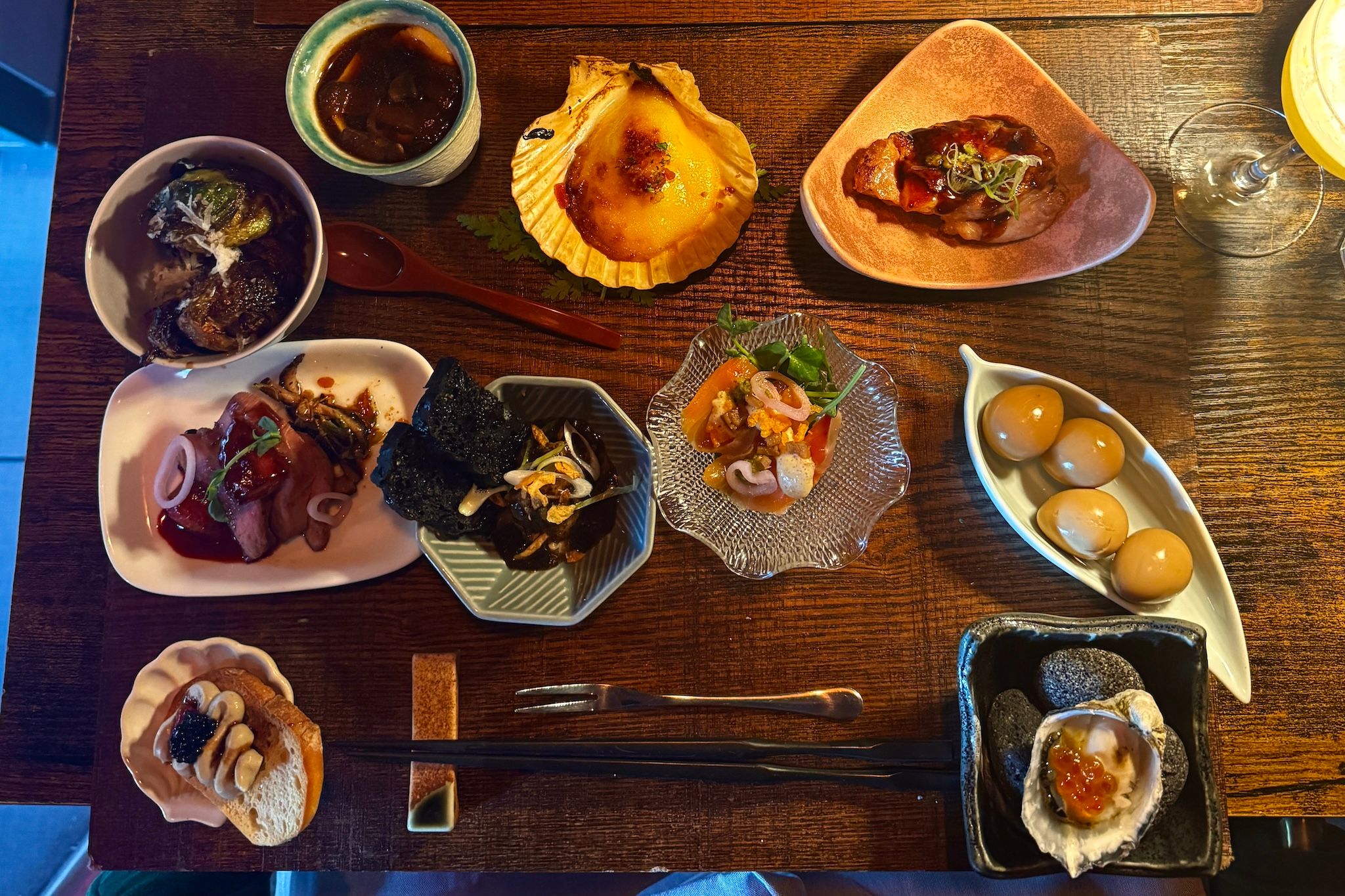
On the corner of Denman and Jepson Young Lane in Vancouver’s West End, Noah’s Cafe operates, offering what its team describes as a selection of Japanese fusion tapas and cocktails. The establishment, owned by Clifford Chi, originally opened in 2020 at 572 Davie St. before moving to its current home at 1096 Denman St. in 2022. It presents an omakase menu titled 'Noah’s Mini Ark' for $100 per person. This omakase comprises nine to twelve of Noah’s signature tapas and is available by reservation, as reported by Daily Hive Vancouver on September 20, 2026. Separately, a report from the South China Morning Post, dated 2026-05-11, noted a Vancouver omakase restaurant that swapped fish for vegetables.
This presentation of ‘Japanese fusion tapas’ as a premium omakase experience, particularly in a market geographically distant from Japan, highlights a recurring tension in global culinary trends. Omakase, traditionally understood as a chef’s curated progression of raw fish and precise preparations, gains its value from a deep engagement with specific ingredients and classical techniques. Yet, Noah’s Cafe positions a 'mini ark' of 'tapas' — a Spanish term — within this framework. The reported inclusion of 'Japanese fusion tapas' suggests a departure from a strict, traditional interpretation of omakase, embracing instead a hybrid form. This approach is not isolated; the noted success of vegetarian omakase in Vancouver further demonstrates a market willingness to redefine category boundaries.
The technique at play here involves blending distinct culinary vocabularies. ‘Tapas’ implies small, shareable plates, often with varied ingredients and preparation styles. ‘Fusion’ signifies the intentional combination of elements from different culinary traditions. To then frame this as ‘omakase’ leverages the cultural capital and perceived prestige of the Japanese term, which implies a chef's artistic discretion and often a premium price point. The cost — $100 per person — indicates that this model is viable, suggesting consumers are not necessarily seeking strict adherence to tradition, but rather an experience that is framed as curated and high-quality, regardless of its precise lineage.
The cost to sustain such a model involves not only sourcing diverse ingredients suitable for fusion but also maintaining a narrative that justifies the elevated price for a non-traditional offering. The 'fusion' label grants a certain freedom, allowing chefs to innovate without being constrained by conventional expectations of a specific cuisine. However, this flexibility also demands a different kind of skill: the ability to harmonize disparate flavors and textures in a way that feels cohesive and intentional, rather than simply eclectic. The absence of traditional omakase elements like an emphasis on particular fish cuts or specific rice preparations means the success of 'Noah's Mini Ark' relies on the chef's individual creative vision for the tapas.
One might argue that true omakase, by its very nature, demands a strict adherence to traditional Japanese technique and ingredient seasonality. The practice of entrusting the chef (omakase means 'I leave it up to you') is, in this view, an act of faith in their mastery of an established culinary canon. A 'fusion tapas' approach, therefore, might be seen as diluting the essence of omakase, replacing a time-honored craft with a more generalized form of creative cooking. The market’s acceptance, however, indicates a practical shift. For consumers outside Japan, the concept of omakase may signify less about an immutable tradition and more about a high-end, chef-driven dining experience.
The unresolved constraint in this scenario is the inherent tension between authenticity and innovation. While the market demonstrates an appetite for novel interpretations, the term 'omakase' carries a weight of expectation rooted in centuries of Japanese culinary practice. The integration of ‘tapas’ and ‘fusion’ into this framework tests the boundaries of that expectation. This episode ultimately illustrates a wider habit in global dining: the constant reinterpretation of culinary terms and practices to suit local tastes and market demands, often at the expense of their original, culturally specific definitions.
Sources
Newsletter
Pacific Daily
A curated briefing from Thailand, Asia-Pacific and the world.