The New Silence in Tengah's Streets
Singapore's planned communities are evolving, but the sound of progress often lags behind the promises.
SINGAPORE
The construction cranes in Tengah cast long shadows across its still-forming streets, a landscape dotted with the promise of future homes. Yet, the sounds that define a living city—the thrum of regular transport, the impromptu gathering points, the rhythms of daily life—remain largely absent. A year has seen Tengah's population surge to 28,000, more than doubling its size, a demographic shift that outpaces the arrival of basic public services.
Transport Minister Jeffrey Siow recently affirmed public transport as a “key priority” for this burgeoning town. Three new bus routes for Tengah, Woodlands, and Choa Chu Kang are now in the pipeline. These additions follow two bus services introduced for Tengah and Bukit Batok West in September 2023. These announcements are not mere service updates; they are acknowledgments of a growing imbalance. The Jurong Region Line, initially anticipated, now faces delays, with its full opening pushed back to mid-2028, and interim shuttle services launching only from mid-2027. This gap creates a specific form of urban quiet, where the infrastructure required for independent mobility is still catching up to the density of life.
One might consider this a natural outcome of ambitious urban planning. Singapore is known for its meticulously designed future cities, and the concept of phased development is inherent in such large-scale projects. The introduction of interim shuttles and new bus routes, while delayed, demonstrates a responsiveness to the immediate needs created by rapid population growth. It suggests a system that adjusts, even if imperfectly, to the pressures of habitation. However, the experience of a rapidly growing population dependent on a nascent transport network highlights a particular tension: the social friction that arises when collective habits are forced to adapt to unfulfilled infrastructure. The promise of driverless ride-share services by Waymo in Singapore by 2028 further complicates this, presenting a future vision that sits in contrast to the immediate need for conventional, foundational transit options.
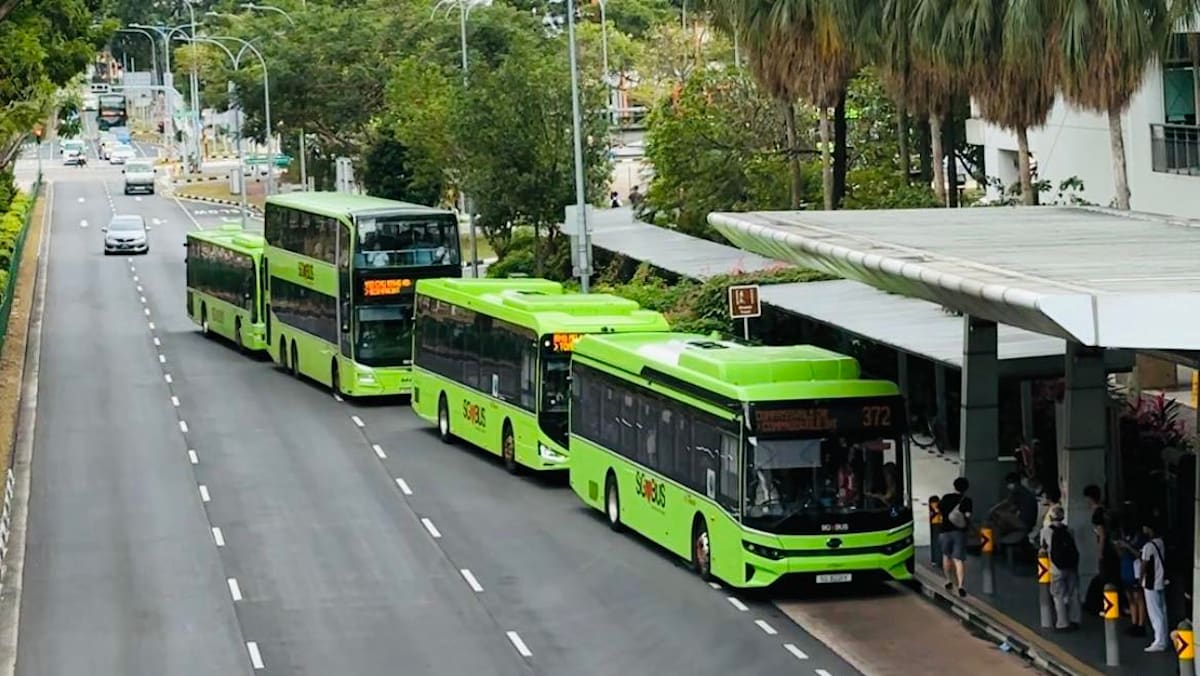
The essential rhythm of a city is dictated by how its residents move, gather, and connect. For Tengah, the current reality means journeys are likely more deliberate, less spontaneous. Children heading to school, parents commuting, and elders visiting markets face a landscape where essential linkages are either provisional or yet to arrive. The public buses, captured in file photos queuing at stops, represent a temporary visual, an aspiration rather than an established reality. This uneven development creates a unique cultural condition: a large, new community where the fundamental habit of effortless mobility is not yet formed. The cultural signals from these new towns are not of seamless integration, but of a population learning to navigate a city still finding its voice, one bus route at a time. This unresolved tension, between planned growth and lived experience, defines the unique urban experiment unfolding in Tengah.
Sources
Newsletter
Pacific Daily
A curated briefing from Thailand, Asia-Pacific and the world.