The Melaka Ballot and the Endurance of Elite Bargains
Public unease over preferential justice confronts the consolidating machinery of Malaysia's ruling pact
SINGAPORE
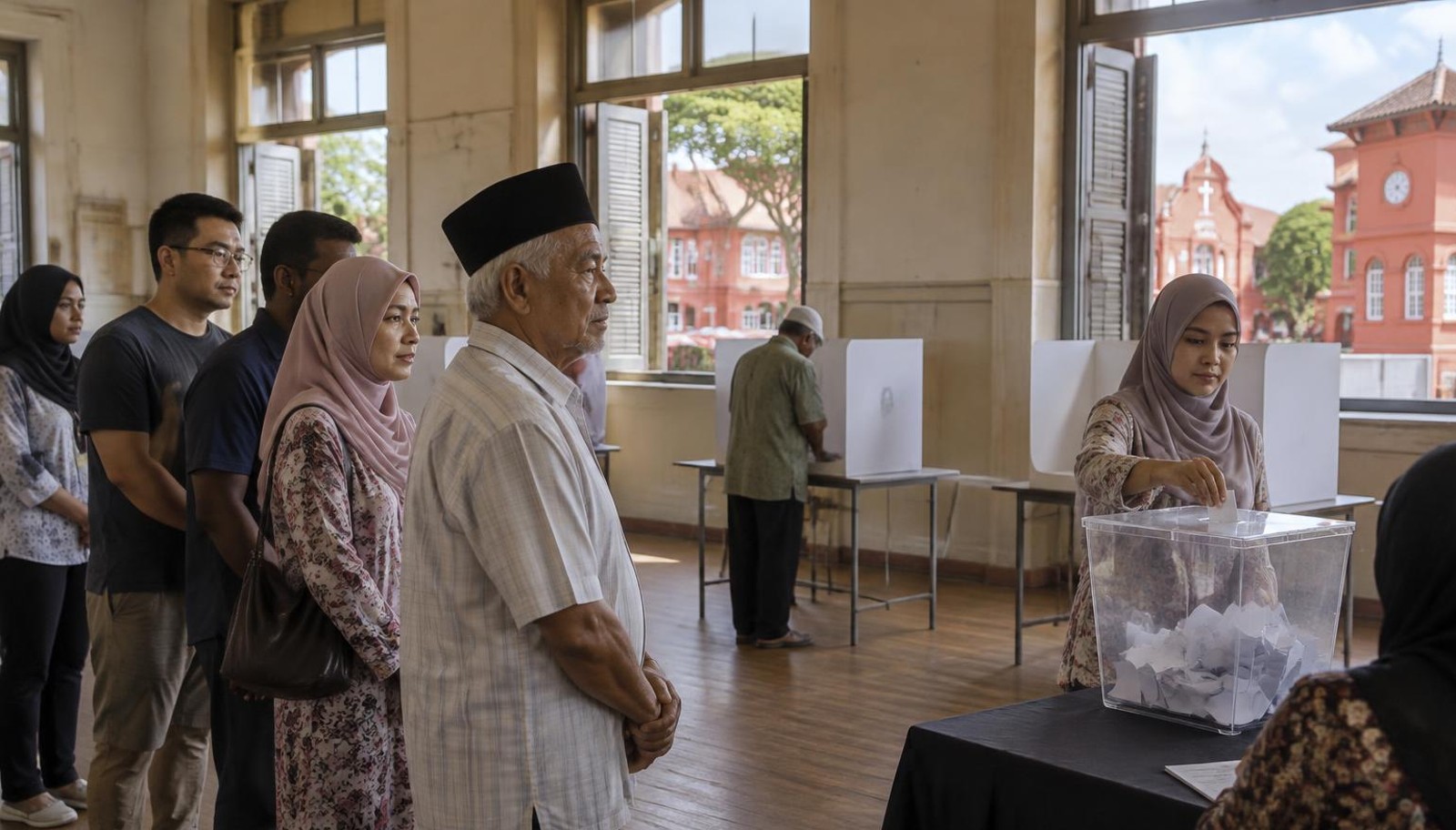
Electoral politics in Malaysia routinely asks voters to weigh personal indignation against institutional cohesion. On one side stands public grievance over elite impunity, revived by former prime minister Najib Razak securing a conditional pardon and house arrest. On the other lies the mechanical reality of state-level consolidation, where the working alliance between Barisan Nasional and Perikatan Nasional seeks to command the legislative floor in Melaka.
The friction between these two currents defines the contest underway across constituencies like Paya Rumput. Ordinary citizens view the judicial outcome through the lens of basic fairness. As one voter, Albert, observed regarding the arrangement:
I was shocked and couldn't believe that it was actually happening. I don't think normal Malaysians or other convicts would have been offered this privilege,
Such reactions are neither surprising nor isolated. The spectacle of a former leader receiving penal relief inaccessible to average citizens corrodes civic trust, confirming long-held assumptions that criminal culpability diminishes at the upper reaches of power. When supporters openly carry the image of Najib Razak, remembered under the enduring moniker Bossku, during Melaka campaign gatherings, the display serves as an overt challenge to judicial equality. It asserts that elite patronage and personal loyalty retain greater local currency than abstract legal consistency.
The Mechanics of Alignment
Yet outrage does not automatically translate into electoral defeat. Analysts tracking the Melaka polls observe that the formal strengthening of the BN-PN alliance could prove far more decisive than voter discomfort with Najib's reprieve. Seat arithmetic and voter mobilization networks frequently insulate governing coalitions from generalized moral dissatisfaction.
Where an alliance consolidates its base, individual ethical grievances must compete against entrenched communal patronage and local resource distribution. The BN-PN alignment alters candidate dynamics, narrows vote splitting, and presents electorates with an organized status quo. Disillusioned voters who resent preferential justice face the perennial dilemma of the ballot box: casting a protest vote against perceived double standards, or backing the dominant coalition capable of ensuring municipal stability and constituency funding.
Limits of Moral Backlash
This structural buffer explains why elite transgressions in Southeast Asia so rarely prompt immediate electoral retribution. The counterargument to coalition resilience suggests that unaddressed judicial cynicism eventually erodes turnout, detaching non-aligned voters and suppressing engagement among those who see institutional processes as compromised. When voters conclude that political rank alters the terms of incarceration, the perceived legitimacy of the wider constitutional framework contracts.
Whether that disaffection reaches a critical threshold in Melaka remains the central question of the contest. The presence of Najib on campaign screens in Paya Rumput demonstrates that Barisan Nasional still considers his political brand an operational asset rather than a liability. Campaign managers clearly calculate that core supporters value personal affiliation and historical patronage over middle-class demands for equal sentencing.
That calculation highlights a lasting fissure in Malaysian democracy. State consolidation can easily deliver legislative majorities even as popular trust in legal equality fractures beneath it. The Melaka polls will measure not merely the endurance of an electoral partnership, but whether governing coalitions can continue to treat voter resentment of elite privilege as an acceptable administrative cost.
Sources
Newsletter
Pacific Daily
A curated briefing from Thailand, Asia-Pacific and the world.