The Distant Echoes of a Napa Dispute, Heard in Bangkok
A California wine trade dispute resurfaces, revealing shifting preferences and the unseen currents that shape Asian consumption patterns.
BANGKOK
Vineyards in Napa, captured in a November 2025 photograph, display a particular geometry. This image of ordered rows in a California valley becomes newly relevant as trade tensions between the U.S. and Canada escalate once more. President Trump announced tariffs of up to 50% on Canadian goods, prompting Canada's response to boycott California wine, a measure taken in earlier disputes. This situation, reported by Los Angeles Times Food on August 26, 2026, details renewed struggles for California's wine industry, which has described itself as already facing difficulties.
Here in Southeast Asia, the trajectory of these distant trade battles often appears as an abstraction. The direct economic impact on Thai commerce is not immediately evident. Yet, the persistent re-ignition of such disputes — a Canadian boycott in response to U.S. tariffs — indicates a deeper current. The previous Canadian boycott of California wine occurred in 2018. The current re-emergence of this trade tactic, six years later, suggests that the underlying tensions endure, shaping the decisions of producers and consumers alike, far beyond the direct participants.
While the focus of the reporting is on North American trade, the implications for consumer behavior in distant markets, like Thailand, are less about direct tariffs and more about the ripple of reputation and availability. When California wine struggles due, in part, to a lack of access in a major market, its producers may seek alternative avenues. The question then becomes: where do they look? And what happens when a consistent supplier like California faces repeated challenges in established markets?
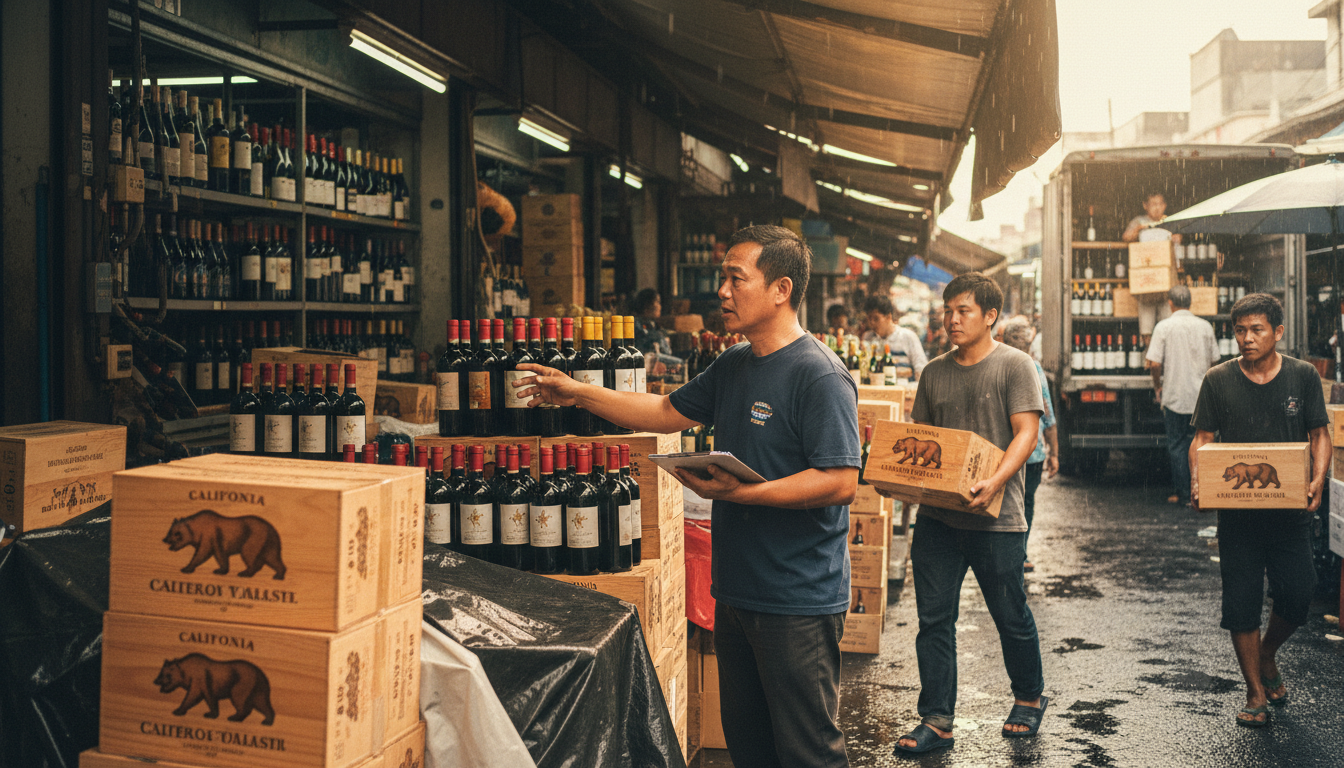
Consider the subtle shifts in Bangkok's wine lists over the past decade. The rise of new world wines from Australia, New Zealand, and even South America, has been observable. This is not simply a matter of price, but of perceived quality, palate preference, and, crucially, consistent supply. A wine region, even one as established as California, that faces recurrent trade friction, risks being seen as an unreliable partner, or worse, a product associated with political volatility. This perception can erode its cultural cachet over time, making room for alternatives that offer stability.
The California wine industry itself states it expects another hit. This acknowledgment from producers points to the tangible stress of these political maneuvers. The concern is not merely about a single incident but the cumulative effect of repeated market disruptions. For a consumer in Bangkok, this might manifest not as an outright absence of California wine, but as a gradual reduction in its prominence on menus, or perhaps, a greater emphasis on vintages from other regions that face fewer such geopolitical headwinds.
The repeated trade disputes, rather than isolated events, are likely contributing to a global reassessment of supply chain reliability for agricultural products, including wine. If these patterns of trade friction persist, wine industries in regions not implicated in U.S.-Canada disputes may find opportunities to expand their market share in Asia. The cultural narrative of wine consumption in places like Thailand, already in flux, may accelerate its diversification away from historically dominant regions.
The rows of vines in Napa, dormant in a photograph, are far removed from a bustling Bangkok street. Yet, the economic and political forces acting upon them create distant, observable echoes in the consumption habits of a city increasingly open to the world's diverse offerings. The habit that changed first was not necessarily the taste of the wine, but the confidence in its steady arrival, a silent shift only truly noticed when the options began to quietly multiply.
Sources
Newsletter
Pacific Daily
A curated briefing from Thailand, Asia-Pacific and the world.