The Cost of Distance: Policy Failures and Regional Consequences
The death of Laisa Waka Tunidau underscores systemic vulnerabilities that resonate far beyond New Zealand's shores, highlighting the chasm between centralized policy and localized reality in the Asia-Pacific.
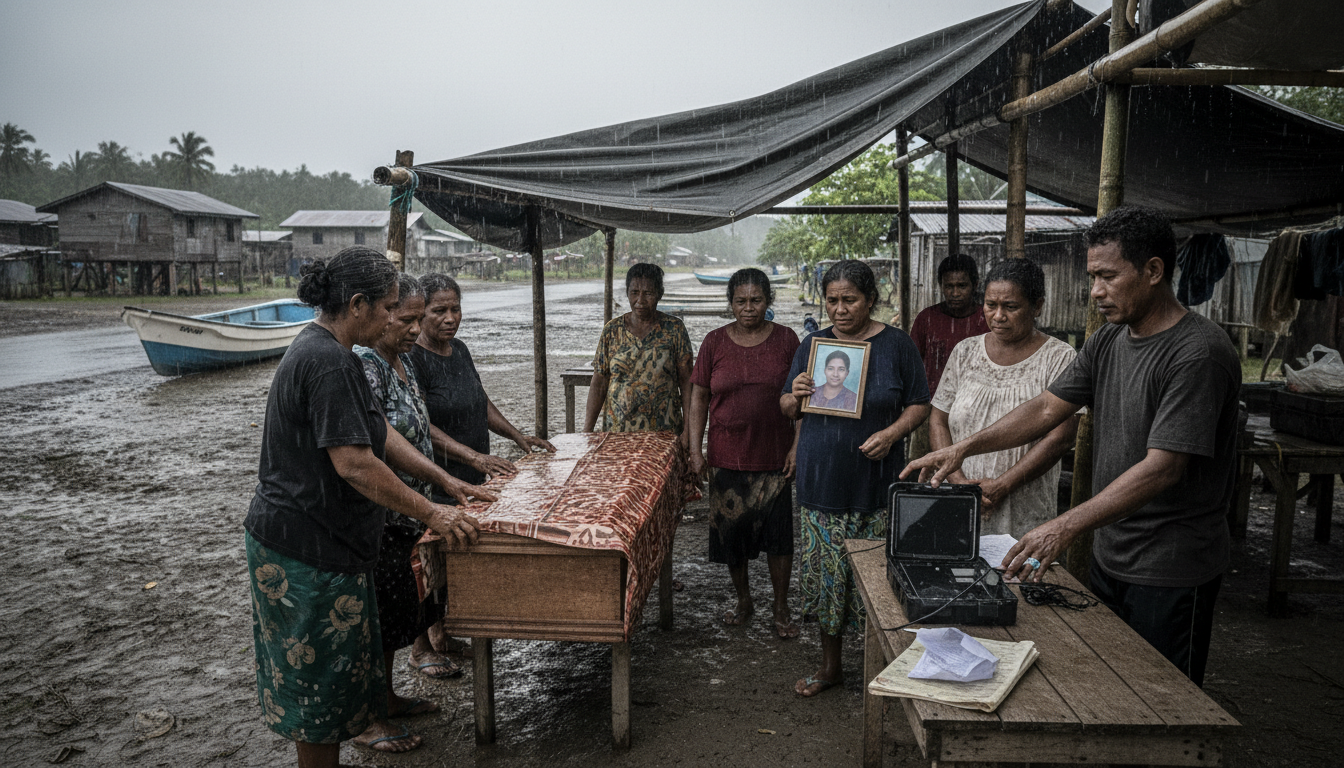
The murder of Laisa Waka Tunidau in June 2022 by Zakariye Mohamed Hussein, a psychiatric patient on unescorted community leave from Hillmorton Hospital, illuminates a critical lapse in institutional oversight. While the immediate focus remains on the specific circumstances that led to her death in Sockburn, the event also serves as a stark illustration of a recurring regional challenge: the disparity between policy intent and its operational reality, particularly concerning public safety and vulnerable populations. Such discontinuities, though seemingly isolated, often reflect systemic weaknesses in how states manage risk and allocate resources, especially when the consequences disproportionately affect communities removed from decision-making centers.
Hussein, who was jailed for life with a 13-year non-parole period in November 2022, had a documented history of violent offenses, including kidnapping, stabbing, and intimidating multiple individuals in March 2012. That a patient with this record was permitted unescorted community leave from a psychiatric facility indicates a critical operational failure. The family of Ms. Tunidau has since questioned why changes to Hillmorton Hospital protocols required such a tragic catalyst. This incident, reported by RNZ Pacific, is not unique in its pattern of institutional accountability gaps. Across various regions, similar demands for answers emerge when systems designed for protection instead facilitate harm. Reports from October 2025 detail families demanding answers after a hospital patient with dementia drowned, while other instances involve deaths in police custody or shootings by law enforcement, all prompting similar calls for accountability and systemic review.
### The Geopolitical Dimension
The implications extend beyond immediate justice. For the Asia-Pacific, where diverse geographies and varying governance capacities exist, such incidents highlight a persistent strategic challenge: ensuring that policies drafted centrally are robust enough to account for the complexities of local implementation. The question of which coastline bears the burden for a policy written inland resonates here. Decisions made within administrative offices, however well-intentioned, can have severe real-world consequences when local conditions, historical contexts, and operational capacities are not adequately factored in. The risk is not merely humanitarian; it impacts public trust, social cohesion, and the perceived legitimacy of governance structures across the region. When an institution fails to contain a known risk, the ripple effect on public confidence can be significant, potentially undermining broader state initiatives that rely on community cooperation and trust.
While this particular event occurred in New Zealand, the underlying tension between centralized policy and localized execution is a familiar one across the Pacific Rim. Thailand, for instance, faces its own challenges in balancing national directives with the distinct needs and vulnerabilities of its diverse provinces, particularly in areas like public health, environmental protection, and disaster preparedness. The risk, in these contexts, is that the most vulnerable populations or geographically peripheral areas bear the brunt of policy gaps. A robust regional strategy requires not just well-articulated policies, but also mechanisms for continuous feedback from the ground, ensuring that frameworks are adaptive and responsive to the specific realities they are intended to govern. Without such calibration, incidents like the death of Laisa Waka Tunidau will continue to serve as somber reminders of unaddressed systemic frailties, leaving communities to contend with the consequences of decisions made far from their immediate experience.
Sources
Newsletter
Pacific Daily
A curated briefing from Thailand, Asia-Pacific and the world.