Storm Fatalities Signal Urban Infrastructure Stress Across Asia-Pacific
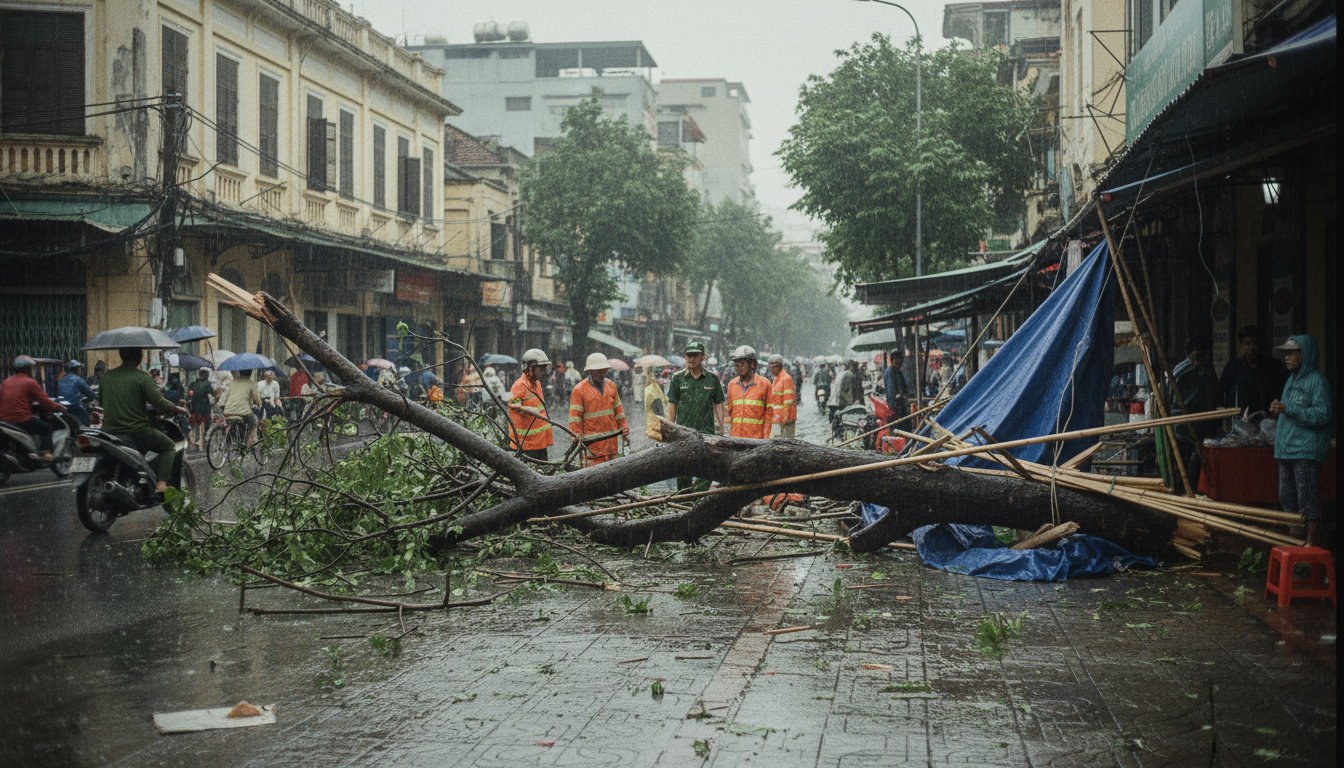
The recent death in Ho Chi Minh City, resulting from a falling tree branch, highlights a recurring pattern of infrastructure failure under weather extremes.
SINGAPORE
The death of a 59-year-old man in Ho Chi Minh City on Friday evening, crushed by a falling tree branch during a thunderstorm while riding a motorbike with his wife, is a specific incident. However, it signals a broader, unresolved infrastructure challenge across urban centers in the Asia-Pacific. This event follows a pattern seen in Kuala Lumpur in May 2024, where a massive tree fell on a busy road, killing one man and damaging cars. Similarly, other incidents include a woman crushed by an oil palm tree in July 2026, and a son killed by a coconut tree in July 2026, both reported by The Star. VnExpress International reported a woman and grandson killed by a falling tree in December 2022.
These fatalities, occurring in different locations and over various dates, indicate that the issue extends beyond isolated freak accidents. Instead, they demonstrate the increasing vulnerability of urban infrastructure, particularly natural elements like trees, to weather events. The incentive for municipal governments across the region has historically been to expand and modernize to accommodate rapid population growth and economic development. This expansion often prioritizes new construction over the long-term maintenance and climate resilience of existing public assets. The recurring nature of these incidents suggests that routine urban planning and maintenance schedules are not adequately addressing the structural risks posed by mature, aging trees, particularly when subjected to increasingly frequent or intense thunderstorms. This is not an isolated phenomenon, but rather a structural vulnerability in metropolitan areas experiencing rapid growth and climate shifts.
The immediate cost of these incidents is human life, alongside property damage. The broader economic consequence for cities is potential disruption to traffic flow and public confidence in urban safety. While some might argue that these are unpredictable acts of nature, the consistent reporting of such incidents suggests a predictable consequence of underinvestment in urban resilience. Cities that fail to adapt their infrastructure maintenance to account for changing weather patterns risk not only human casualties but also reputational damage and economic inefficiencies. The current approach appears reactive rather than proactive, addressing failures after they occur instead of mitigating systemic risks.
The outlook indicates that without a shift in municipal investment priorities toward comprehensive, climate-informed urban forestry management and infrastructure resilience, such fatalities are likely to continue. The constraint remains the allocation of resources and political will to fund preventive measures rather than simply responding to successive tragedies. The outcome now depends on whether these accumulating incidents generate sufficient incentive for a systemic reassessment of urban infrastructure resilience.
Sources
Newsletter
Pacific Daily
A curated briefing from Thailand, Asia-Pacific and the world.